

5 Best Brewing Methods for Smooth Coffee
Table of Contents
- 1. Pour-Over: How to Make Pour Over Coffee for Beginners
- 2. French Press: Full-Bodied Immersion Brewing
- 3. AeroPress: Pressure and Control in Four Minutes
- 4. Cold Brew: The Smoothest Cup You Can Make
- 5. Drip Coffee Maker: Consistency Without the Ritual
- Best Grind Size for Smooth Coffee
- Coffee Brewing Water Temperature Guide
- Conclusion: Match the Method to Your Morning
- Frequently Asked Questions
Last Updated: September 23, 2026
1. Pour-Over: How to Make Pour Over Coffee for Beginners
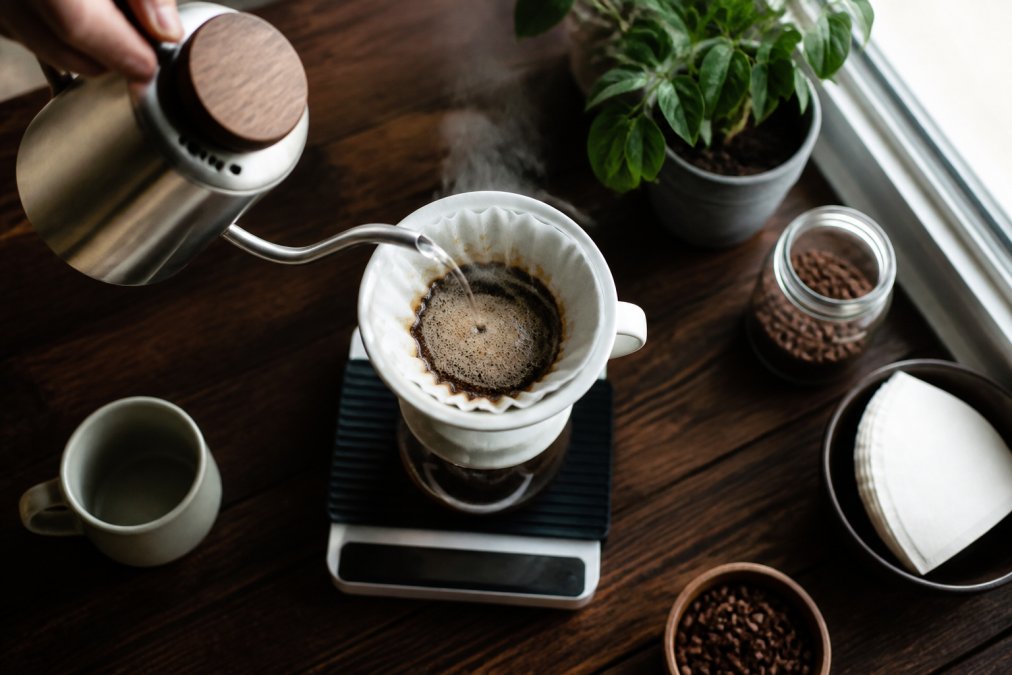
Smooth coffee starts with control, and pour-over gives you more of it than any other manual method. The process is simpler than the gear lists suggest: heat water, bloom the grounds, pour in slow circles, and let gravity do the rest.
Step-by-Step Pour-Over Process
- Rinse a paper filter with hot water to remove paper taste, then discard the rinse water
- Add 22 grams of medium-fine ground coffee to the dripper
- Pour 60 grams of water just off the boil over the grounds and wait 30 seconds for the bloom
- Pour in slow spirals, keeping the water level steady, until you reach 360 grams total
- Let the bed drain fully; total brew time should land between 2:30 and 3:30
Pros and Cons of Pour-Over
2. French Press: Full-Bodied Immersion Brewing
Immersion brewing trades clarity for body, and the French press is the purest expression of that trade. Grounds steep fully in water, so the cup arrives rich, heavy, and full-bodied.
Pros and Cons of French Press
What works: minimal gear, no paper waste, and a forgiving process. You can brew four cups at once with almost no technique.
3. AeroPress: Pressure and Control in Four Minutes
Pressure shortens the feedback loop. The AeroPress pushes water through a compact bed of grounds in about two minutes, so you taste the result almost immediately and can adjust the next attempt right away.
Pros and Cons of AeroPress
What works: total brew time under four minutes, easy cleanup, and near-total control over strength. It travels well and needs no special kettle.
4. Cold Brew: The Smoothest Cup You Can Make
Cold water extracts slowly, and slow extraction leaves the harsh compounds behind. That is the secret behind cold brew: no heat means fewer tannins and less bitterness, so the cup lands velvety and mellow with a soft, almost creamy mouthfeel.

Pros and Cons of Cold Brew
What works: the lowest bitterness of any method here, plus a concentrate that holds for several days.
5. Drip Coffee Maker: Consistency Without the Ritual
Automation solves the one problem manual brewing cannot: repetition. A drip machine hits the same water temperature and brew time every morning, which matters more than most enthusiasts admit.
Pros and Cons of Drip Coffee Makers
What works: hands-off operation, batch brewing for multiple people, and a thermal carafe that holds temperature for hours.
Best Grind Size for Smooth Coffee
Grind size is the single biggest lever you control, and the best grind size for smooth coffee depends on how long water touches the grounds: shorter contact time needs a finer grind, longer contact time needs coarser. But first you need to know which kind of smooth you are chasing, "smooth" means two different things to two different drinkers, and they pull grind size in opposite directions.
What "Smooth" Actually Means
Smoothness is not one sensation. It is the absence of two distinct problems with different causes:
- Low bitterness, the harsh, drying, ashy edge from over-extraction. Fix it by grinding coarser, lowering temperature, or shortening brew time.
- Low acidity, the bright, tart, sometimes sour edge from under-extraction or the bean itself. Fix it by grinding finer, raising temperature, or extending brew time.
Grind Size by Method
Method |
Grind Size |
Brew Time |
Why It Works |
|---|---|---|---|
Pour-over |
Medium-fine |
2:30-3:30 |
Fast flow needs more surface area |
French press |
Coarse |
4:00 |
Long steep, mesh filter |
AeroPress |
Fine to medium |
1:30-2:30 |
Pressure compensates for short time |
Cold brew |
Very coarse |
12-18 hours |
Prevents over-extraction overnight |
Drip |
Medium |
5:00 |
Matches the machine's fixed cycle |
Reading the Cup: A Diagnostic
Too fine and you pull tannins and bitterness. Too coarse and the cup tastes weak and sour. Use taste, not the clock, as your guide:
- Harsh, drying, bitter finish → go coarser, or shorten the brew.
- Thin, sour, hollow, or watery → go finer, or extend the brew.
- Smooth but boring → you have traded away too much acidity. Go one step finer and accept a touch more brightness for flavor.
The Grinder Matters More Than the Setting
Coffee Brewing Water Temperature Guide
Water temperature decides which compounds dissolve, and this coffee brewing water temperature guide follows one rule: hotter water extracts faster and pulls more bitterness with it. But temperature is only half the story. The other half is what is dissolved in the water before it touches the grounds, and that is where most smoothness problems live.
Temperature: The Working Range
The sweet spot for most hot methods sits between 195°F and 205°F. Below 195°F, the cup tastes sour and underdeveloped. Above 205°F, you scald the grounds and the finish turns ashy. Light roasts tolerate the top of that range; dark roasts do better near the bottom.
Water Chemistry: The Lever Nobody Talks About
Smoothness is not only about what you avoid extracting, it is about what the water contributes. Two minerals do most of the work:
- Magnesium binds to fruity and chocolatey flavor compounds and pulls them into the cup. Too little and the coffee tastes flat and hollow; too much and the cup turns sharp and drying.
- Calcium adds body and rounds out texture, but in excess it reads as chalky and mutes aroma.
- Bicarbonate (alkalinity) is the buffer that neutralizes coffee's natural acids. This is the single most important number for smoothness: higher alkalinity means a softer, less bright cup, while very low alkalinity lets acidity cut through and taste sour or thin.
Three Water Fixes You Can Try This Week
- If your tap water tastes good, brew with it, but check it first. Municipal water varies widely, and hard water (high calcium and magnesium) is a common cause of a harsh, drying finish that no grind adjustment will fix.
- If your coffee tastes flat or hollow, add minerals, don't subtract them. Distilled or reverse-osmosis water with no minerals produces a famously lifeless cup. Re-mineralize before you blame the bean.
- If your coffee tastes sour or thin, raise alkalinity slightly. A pinch of baking soda in a gallon of brewing water is a classic home fix, start small and taste side by side.
Matching Water to Method
- Pour-over and AeroPress: These reward clarity, so lean toward lower-alkalinity water that lets acidity and fruit read cleanly.
- French press and drip: Fuller body and longer contact time benefit from slightly higher mineral content, which rounds the texture.
- Cold brew: Cold extraction already suppresses bitterness, so water chemistry matters less, but very hard water will still leave a chalky edge on the finish.
Conclusion: Match the Method to Your Morning
Smooth coffee is not a bean problem alone. It is a method problem, and the five approaches here each solve it differently: pour-over for clarity, French press for body, AeroPress for speed, cold brew for the softest cup, and drip for consistency.
Frequently Asked Questions
Which coffee brewing method produces the least acidity?
Cold brew typically produces the least acidity because cool water extracts fewer acids over a long steep. An AeroPress brew with a shorter contact time and lower water temperature also lands on the gentler end. If you are sensitive to brightness, start with cold brew and adjust from there. Using a medium or medium-dark roast, like a Breakfast Blend, further softens the cup.
How does grind size affect the smoothness of coffee?
Grind size controls how fast water pulls flavor from the bean. Too fine and you get over-extraction, which reads as bitterness and a drying finish. Too coarse and the cup tastes thin and sour. For smooth coffee, aim for a medium grind on pour-over and drip, coarse on French press and cold brew, and fine on AeroPress. A burr grinder gives you the uniformity that a blade grinder cannot.
Is immersion or pour-over better for a smooth flavor profile?
Immersion methods like French press and cold brew tend to produce a rounder, fuller body with less perceived acidity, because the grounds stay in contact with the water the whole time. Pour-over delivers a cleaner, brighter cup with more clarity. If smoothness means low bitterness and a soft mouthfeel, immersion usually wins. If it means a clean, tea-like cup, pour-over is the better fit.
What is the secret to making coffee less bitter at home?
Bitterness comes from over-extraction, not from the bean itself. Three fixes do most of the work: grind coarser, drop your water temperature below a rolling boil (about 195 to 205 degrees Fahrenheit), and shorten the brew time. Freshly roasted beans also help, since stale coffee tastes flat and ashy no matter how you brew it. Start with one change at a time so you can taste the difference.
Does water temperature impact the smoothness of my brew?
Yes. Water above 205 degrees Fahrenheit strips bitter compounds and tannins from the grounds faster than it should. Water below 195 degrees under-extracts and leaves the cup sour and hollow. The sweet spot for most methods sits between 195 and 205 degrees Fahrenheit. For cold brew, you skip heat entirely and steep for 12 to 18 hours at room temperature or in the fridge.
The hardest part of smooth coffee is not technique. It is finding beans that were roasted to be smooth in the first place. Everything I Need sources small-batch, high-elevation beans, roasts them to order with precision thermal mapping, and delivers them fresh so your method has the best possible starting point. Order once, brew with confidence, and let the roast do the heavy lifting.