

Alternatives to Acidic Coffee Beans: 7 Smooth Swaps
Table of Contents
- Why Some Coffee Beans Are More Acidic Than Others
- Cold Brew vs Hot Brew Acidity: What Changes in the Cup
- How to Reduce Coffee Acidity Without Losing Flavor
- Low Acid Coffee Brands and Bean Choices That Deliver
- Coffee Alternatives: Chicory, Roasted Barley, and Dandelion Root
- Tea as a Caffeine Alternative: Matcha, Hojicha, and Rooibos
- Caffeine Sensitivity vs Acid Sensitivity: Knowing Which One You Have
- Conclusion
- Frequently Asked Questions
Last Updated: September 28, 2026
Why Some Coffee Beans Are More Acidic Than Others
If your morning cup of acidic coffee beans leaves your stomach burning, the culprit is rarely the caffeine alone. Acidity in coffee is a measurable chemical property, and it varies enormously by bean, roast, and brew method. This guide from Everything I Need breaks down why some beans bite back, and which alternatives to acidic coffee beans actually deliver a smooth, comfortable cup.
Coffee acidity is the concentration of natural acids, chiefly chlorogenic acid, that develop in the bean and change with roast level. A green bean starts acidic. Roasting destroys much of that acidity, which is why darker roasts tend to sit easier on a sensitive stomach. Bean origin and altitude matter too: beans grown at higher elevations in mineral-heavy soil typically develop more complexity, and often more perceived brightness.
The Role of Chlorogenic Acid and Roast Level
Chlorogenic acid is the dominant acid in green coffee, and it is the one that most affects how a cup sits in your stomach. As beans roast longer and darker, chlorogenic acid breaks down. A light roast preserves more of it, which is why light roasts taste brighter and can trigger heartburn more readily. Dark roast acidity sits lower, but the tradeoff is that darker roasting can introduce bitterness if the roaster is careless.
What most guides miss is that roast level and bitterness are not the same thing. A well-roasted dark bean can be smooth and sweet. A poorly roasted light bean can taste sharp and ashy. The roast matters, but so does the discipline behind it.
Testing pH: How to Measure Acidity at Home
You can measure your coffee's pH without a lab. A pH level test is a simple way to see how acidic your brew actually is, and it takes about five minutes.
- Brew a fresh cup and let it cool to room temperature
- Dip a pH test strip into the liquid for two seconds
- Compare the color against the strip's chart
- Log the reading alongside your bean and brew method
Most coffee lands somewhere between 4.85 and 5.10 on the pH scale, which is mildly acidic. Cold brew often reads slightly higher, meaning less acidic, than the same bean brewed hot. Test strips cost a few dollars and give you a baseline you can compare against as you switch beans.

Cold Brew vs Hot Brew Acidity: What Changes in the Cup
Cold brew is measurably less acidic than hot brew made from the same bean, and the reason is extraction chemistry rather than marketing. Hot water is an aggressive solvent: at temperatures near 200°F, it pulls chlorogenic acid, citric acid, and malic acid out of the grounds within the first two to four minutes of contact. Cold water works far more slowly, and over a 12- to 18-hour steep it extracts fewer of the titratable acids that irritate a sensitive stomach lining.
The mechanism has two parts. First, heat increases the solubility of acidic compounds, so a hot brew reaches its acid peak fast. Second, prolonged cold contact favors the extraction of sugars, lipids, and Maillard reaction products, the compounds behind chocolate and caramel notes, while leaving a portion of the sharper acids behind in the spent grounds. The result is a cup that reads smoother not because acid was removed, but because the acid-to-sweetness ratio shifted.
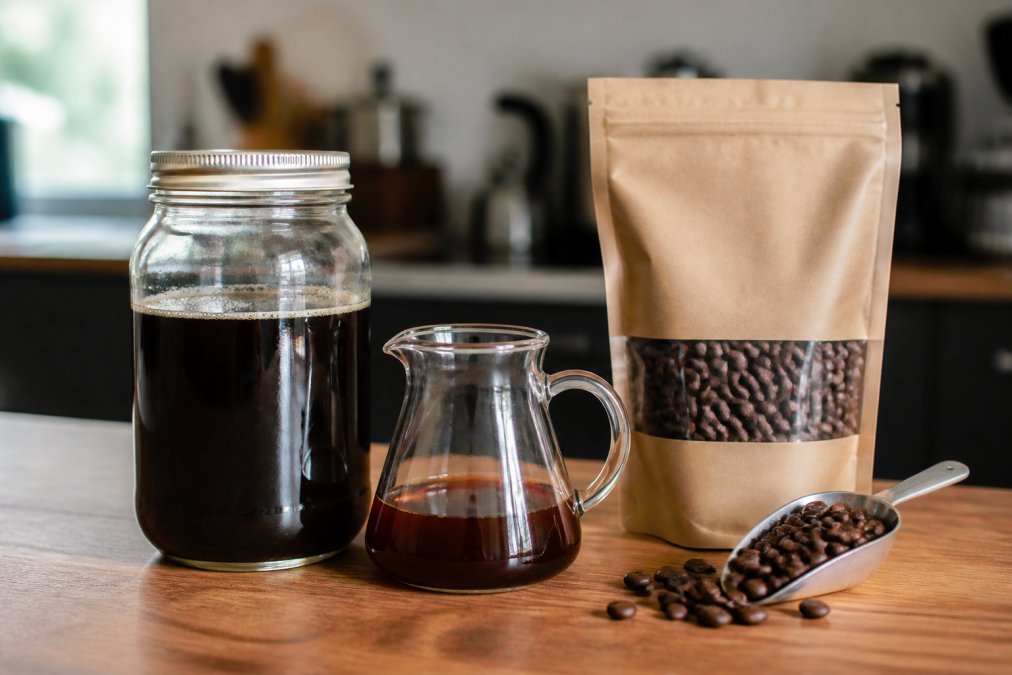
A useful rule of thumb: the same bean brewed hot often lands near the lower end of the 4.85-5.10 pH range, while a cold brew of that bean tends to read toward the higher, less acidic end. The gap is small on paper but noticeable in the cup for anyone with reflux.
Brewing temperature and time work together. Water just off the boil extracts acids fast. Water a few degrees cooler, paired with a longer steep, pulls more sweetness and less bite. For cold brew, a 1:8 concentrate ratio steeped 14-16 hours at room temperature, then diluted 1:1 with water or milk, is a reliable starting point. Grind coarse, roughly the texture of raw sugar, so the long steep does not turn bitter.
If you want to test this yourself, brew the same bean both ways and compare. Everything I Need's Cold Brew Coffee is built for exactly this: steeped slowly in cool water, it lands with velvety notes of dark chocolate and toasted caramel rather than a sharp edge.
How to Reduce Coffee Acidity Without Losing Flavor
You do not have to give up coffee to protect your digestive health. A few adjustments to how you brew can lower acidity substantially while keeping the flavor profile intact.
- Choose a darker roast. Longer roasting breaks down more chlorogenic acid.
- Brew with cold water. Cold brew extracts fewer irritants over a longer steep.
- Lower your brewing temperature. Water around 195°F extracts less acid than water at a rolling boil.
- Grind coarser. A coarser grind slows extraction and reduces the acidic bite.
- Add a pinch of salt. A small amount can act as an acid neutralizer and soften the cup.
- Skip the dark, long steep. Over-extracted coffee tastes bitter and can feel harsher on the stomach.
Water hardness plays a role too, and most guides ignore it. Hard water, rich in dissolved minerals, buffers acidity and can make a cup taste flatter but gentler. Soft water lets acidity come through more sharply. If your tap water is very soft, a filtered option with a bit more mineral content may help.
Low Acid Coffee Brands and Bean Choices That Deliver
The most reliable low acid coffee brands and beans share three traits: darker roasting, careful sourcing, and honest labeling. Rather than chase a marketing claim, look for beans that tell you where they came from and how they were roasted.
Origin matters more than most buyers realize.
| Option | Roast Level | Best For | Why It Works |
|---|---|---|---|
| Cold Brew Coffee | Slow-steeped blend | Hot-brew sensitivity | No heat extraction, fewer acids |
| Peru Decaf | Medium, water-processed | Evening drinking | Gentle, round acidity |
| Dark roast single origin | Dark | Reflux-prone drinkers | Chlorogenic acid broken down |
| Chicory blend | Roasted root | Coffee-free mornings | Naturally acid-free |
Coffee Alternatives: Chicory, Roasted Barley, and Dandelion Root
When coffee itself is the problem, several caffeine-free alternatives deliver a similar roasted, warming cup without the acid load. Each has its own flavor profile and its own trade-offs.

Tea as a Caffeine Alternative: Matcha, Hojicha, and Rooibos
Tea is not automatically gentler than coffee, but certain teas are. The key is choosing a type with low acidity and a caffeine level that suits your sensitivity.
| Tea | Caffeine | Acidity | Best Time |
|---|---|---|---|
| Matcha | Moderate | Low | Morning |
| Hojicha | Low | Low | Afternoon or evening |
| Rooibos | None | Very low | Any time |
Caffeine Sensitivity vs Acid Sensitivity: Knowing Which One You Have
These are two different problems, and most people confuse them. Caffeine sensitivity is a reaction to the stimulant itself, showing up as jitteriness, a racing heart, or insomnia. Acid sensitivity is a reaction to the acids in the brew, showing up as heartburn, reflux, or stomach discomfort.
Conclusion
The discomfort in your morning cup is solvable. Darker roasts, cold brewing, cooler water, and lower-caffeine options each reduce the acids that irritate a sensitive stomach, and combining them works better than any single change.
Frequently Asked Questions
What are the least acidic coffee beans?
Beans from lower-acid regions like Peru, Brazil, and Sumatra tend to be less acidic. Darker roasts also reduce acidity because the roasting process breaks down chlorogenic acid. Cold brew made from these beans further lowers perceived acidity. For a gentle option, try a single-origin Peru Decaf, which has a smooth, round profile with minimal sharpness.
What are some good alternatives to coffee that are less acidic?
Teas like matcha, hojicha, and rooibos offer complex flavor without the acid load. Cold brew coffee made from low-acid beans is another option. Each provides a different flavor profile, so you can choose based on whether you want a coffee-like taste or something entirely new.
What is the safest coffee for acid reflux?
Cold brew made from dark-roasted, low-acid beans is often the safest choice for acid reflux. The cold extraction process reduces the acids that hot water pulls from the grounds. Avoiding added sweeteners and drinking it on an empty stomach can also help. If symptoms persist, consult a doctor, as individual tolerance varies.
Does dark roast coffee have less acid than light roast?
Yes. Dark roast coffee has less acid than light roast because the longer roasting time breaks down chlorogenic acid, the main contributor to coffee acidity. Dark roasts also tend to have a smoother, less bitter flavor. If you are sensitive to acidity, choosing a dark roast is a simple way to reduce your intake without giving up coffee.
How does cold brew compare to hot coffee regarding acidity?
Cold brew is significantly less acidic than hot coffee. Hot water extracts more acids during brewing, while cold water extracts fewer. Cold brew also has a smoother, sweeter flavor because the lower temperature preserves certain compounds. If you love coffee but need to reduce acidity, cold brew is an excellent alternative to acidic coffee beans.
Finding a cup that tastes like coffee without the burn comes down to three choices: the bean, the roast, and the brew. Everything I Need handles the first two with small-batch roasting and high-elevation estate sourcing, and the third is up to you. Start with a cold brew or a gentle decaf, and get your mornings back.