

Benefits of Freshly Roasted Specialty Coffee
Table of Contents
- Why Freshly Roasted Coffee Tastes Better
- How to Read a Coffee Roast Date Before You Buy
- How to Choose Specialty Coffee Beans for Your Taste
- Understanding Specialty Coffee Flavor Notes
- What Small-Batch Coffee Roasters Do Differently
- Storing Freshly Roasted Beans: What Works and What Doesn't
- Health, Value, and the Real Cost Per Cup
- Conclusion
- Frequently Asked Questions
Last Updated: October 9, 2026
Why Freshly Roasted Coffee Tastes Better
Freshly roasted coffee tastes better because the flavors and aromas that define a great cup are still intact when you brew it. This guide from Everything I Need explains why timing matters more than almost any other variable. Coffee is an agricultural product, and like all agricultural products, it fades. Oxygen, moisture, and time work against the bean from the moment it leaves the roaster. Buy freshly roasted specialty coffee and you are buying a narrower gap between roast and brew, which is where flavor lives.
The Role of Carbon Dioxide and Degassing
Right after roasting, beans release carbon dioxide in a process called degassing. This matters for two reasons. First, too much gas trapped in the bean pushes water away during brewing, which produces uneven extraction. That is why a bean roasted yesterday can taste flat and hollow even though it is technically "fresh." Second, once degassing slows, the bean is at its most stable and most flavorful. A short resting period of a few days lets the coffee settle into its peak freshness window. The exact timing depends on the roast level and brew method, which we cover below.
Aroma and Flavor Complexity at Peak Freshness
What you smell when you open a bag is volatile aromatic compounds escaping. Those same compounds create the flavor notes you taste: cacao, hazelnut, berry, citrus, jasmine. They are fragile. A common mistake is judging a coffee only by its first sniff and assuming that intensity will hold for weeks. It will not. Flavor complexity and clarity peak in a narrow window, then decline steadily. This is the core argument of this article: freshness is not a marketing label, it is the single biggest variable you control after you choose a roaster.
How to Read a Coffee Roast Date Before You Buy
A roast date tells you when the beans left the roaster, and it is the only date that matters for coffee. A "best by" date is a shelf-life estimate, not a freshness signal. If a bag shows only a best-by date, treat that as a red flag.
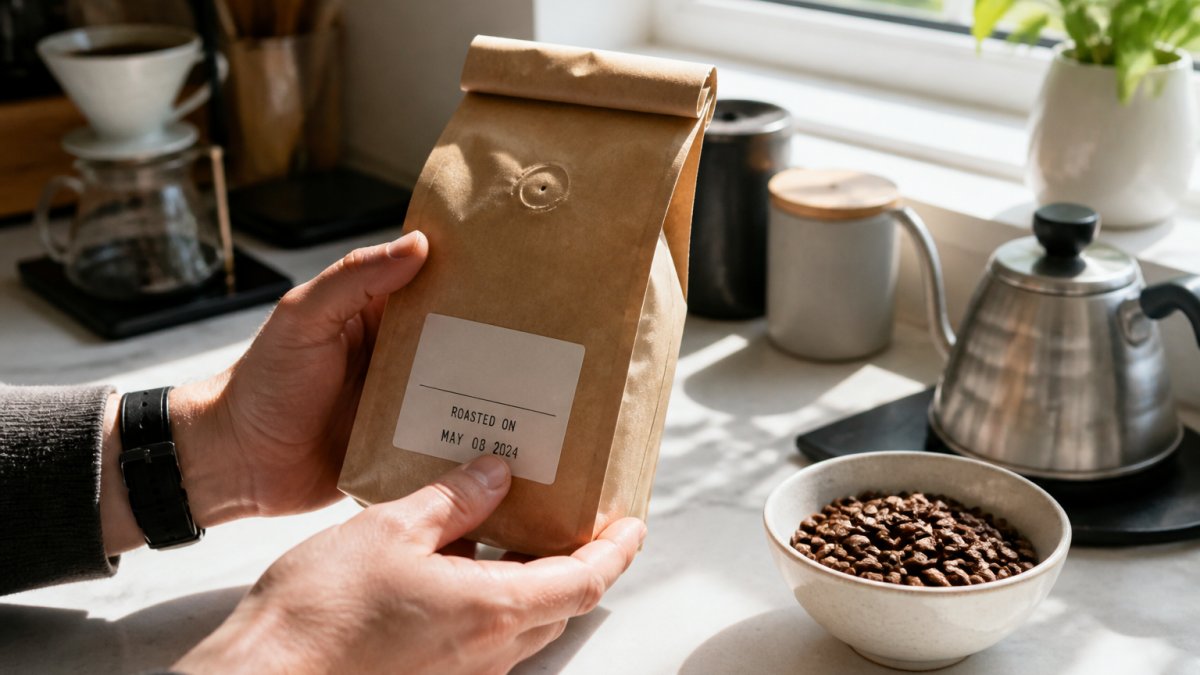
Here is how to verify freshness before you buy:
- Look for a printed roast date, not a best-by date
- Check that the date is within the last two to three weeks for most roasts
- Confirm the bag is airtight with a one-way degassing valve
- Ask how often the roaster roasts, ideally to order or in small batches
- Buy whole beans when you can, and grind just before brewing
Best Freshness Windows by Roast Level and Brew Method
The freshness window shifts with roast level and how you brew. Lighter roasts hold up longer because they are denser. Darker roasts degas faster and fade sooner. Espresso wants a longer rest so the gas does not fight the puck. French press and cold brew are more forgiving.
Roast Level |
Rest Before Peak |
Best Brew Window |
Brew Method Match |
|---|---|---|---|
Light roast |
3-5 days |
Days 5-21 |
Pour-over, drip |
Medium roast |
2-4 days |
Days 4-18 |
Drip, French press |
Dark roast |
1-3 days |
Days 3-14 |
Espresso, latte |
Cold brew base |
3-7 days |
Days 7-21 |
Cold brew, iced |
How to Choose Specialty Coffee Beans for Your Taste
Choosing specialty coffee beans comes down to matching three things: roast level, origin character, and your brew method. Start with what you already like. If you drink milk-based drinks, a fuller-bodied coffee holds its own against milk. If you drink black pour-over, a brighter, fruit-forward coffee shows more nuance.
- Want balance and approachability? Choose a medium roast from a classic origin.
- Want fruit and florals? Choose a natural-process coffee.
- Want depth and earthiness? Choose a wet-hulled Indonesian coffee.
- Want brightness and structure? Choose a high-elevation washed coffee.
For example, our Colombia delivers caramel and milk chocolate with red grape and nectarine, an easy entry point. Our Ethiopia Natural brings blueberry, strawberry jam, jasmine, and rose for drinkers who want a bolder, fruit-driven cup.


Understanding Specialty Coffee Flavor Notes
Specialty coffee flavor notes are the specific taste descriptors a coffee carries, such as cacao, hazelnut, citrus, or jasmine. They are not added flavors. They come from the bean's origin, variety, processing, and roast profile, and they are most vivid when the coffee is fresh.
Specialty-grade coffee is coffee that scores high enough on recognized quality evaluations to earn the specialty label, generally above commodity grade. That grading covers bean quality, defects, and cup clarity. But the label alone does not tell you where the coffee came from or how it was handled.
Flavor clarity is what separates specialty coffee from mass-produced coffee. Grocery-store coffee is built for shelf stability and scale, which usually means older beans, larger roast batches, and packaging designed to sit for months.
What many flavor-note guides leave out is the link between traceability and taste. A coffee labeled "Ethiopia" could be a blend from hundreds of smallholders or a single washed lot from one washing station. Knowing which you are buying tells you what to expect in the cup.
Processing method is the other variable most guides skip:
- Washed: Clean, bright, and structured. The bean is stripped of fruit before drying, so origin and variety show through clearly.
- Natural: Fruit-forward and heavier. The bean dries inside the cherry, absorbing sugars and fermented notes.
- Wet-hulled: Earthy, syrupy, and low-acid. Common in Indonesia, where humid conditions make other methods difficult.
- Honey: Between washed and natural. Some fruit mucilage stays on the bean during drying, adding sweetness and body.
When you buy from a roaster that publishes farm names, altitudes, varieties, and processing methods, you are getting the information you need to trace it back to the people who grew it.
If you want to explore this directly, our Single Origin Favorites Sample Pack lets you compare origins side by side and taste how processing and terroir change the cup.
What Small-Batch Coffee Roasters Do Differently
Small-batch coffee roasters roast in smaller quantities, which gives them tighter control over the roast profile. That control is the whole point. A roast profile is the curve of time and temperature the beans travel through. Get it right and you develop sweetness and structure. Get it wrong and you get bitterness and ash.
Locally roasted and small-batch operations can adjust batch by batch. They can roast to order so beans ship close to the roast date. They can also trace coffee back to specific farms and lots, which is where sourcing transparency and traceability come in. At Everything I Need, we use precision thermal mapping and roast to order so each bag reaches you inside its best window. Our Bali Blue shows what disciplined roasting does for a wet-hulled coffee: dark chocolate, roasted cedar, and a soft, low acidity that stays smooth.

Bali Blue
Storing Freshly Roasted Beans: What Works and What Doesn't
Storing freshly roasted beans well means protecting them from four enemies: oxygen, moisture, heat, and light. Whole beans keep far better than ground coffee because grinding exposes far more surface area to air. Grind right before you brew.
What works:
- An airtight container kept in a cool, dark cabinet
- The original bag with its one-way valve, sealed tight
- Buying in amounts you will finish within a few weeks
What does not work:
- The refrigerator, where moisture and odors migrate into the beans
- A clear jar on a sunny counter
- Pre-grinding a week of coffee at once
Health, Value, and the Real Cost Per Cup
Coffee contains antioxidants and other beneficial compounds, and these are best preserved in fresh beans. The honest limit: much of the research on coffee and health looks at coffee consumption broadly, not at freshness specifically. So treat freshness as a flavor and quality argument first, and a plausible health argument second. For general guidance on coffee and health, the Dietary Guidelines for Americans and the FDA guidance on caffeine are useful starting points.
What the evidence actually supports:
- Plausible but not proven for freshness: Fresh beans retain more volatile aromatic compounds and oils, which may preserve antioxidant content. No large study isolates "freshly roasted" as a variable.
- Plausible for coffee generally: Moderate coffee consumption is associated with lower risk of certain chronic conditions in observational research, but association is not causation.
- Not supported: Claims that fresh coffee cures, detoxifies, or delivers specific therapeutic doses of antioxidants. Those overreach the data.
Freshness is a quality choice.
Now the value math. A $23 bag of single origin coffee yields roughly 16 to 18 cups at a standard 18-gram dose, which works out to about $1.30 to $1.45 per cup. A daily café latte at $5 to $6 runs $150 to $180 per month. The USDA Economic Research Service food expenditure data shows how much of the food dollar goes to away-from-home purchases, and coffee is a clear example.
But the bag price is not the real cost. The real cost is the bag price divided by the cups you actually enjoy. Stale coffee you pour out is the most expensive coffee you buy. Freshly roasted coffee also means less waste: you are not throwing out stale beans you never finished, and you are not replacing them as often.
The trade-off to weigh: specialty coffee has a higher upfront price per bag. If you drink coffee rarely, the bag may go stale before you finish it, which erodes the value. Buy in amounts you will finish within the freshness window.
Conclusion
Freshness is the variable most coffee drinkers ignore and the one that changes the cup most. Roast date, resting period, storage, and grind timing all decide whether you taste cacao and hazelnut or ash and cardboard. If you want those flavors without the guesswork, Everything I Need roasts to order in small batches, sources from high-elevation estates, and delivers fast so your beans arrive inside their best window. Start with a single origin or a sample pack and taste the difference freshness makes.
Frequently Asked Questions
Is freshly roasted coffee better than grocery store coffee?
Freshly roasted specialty coffee is generally better than grocery store coffee because it retains more aromatic compounds and natural oils. Grocery store beans often sit on shelves for months, losing flavor. Freshly roasted beans, especially those with a clear roast date, deliver more complex flavor notes and richer aroma. The difference is most noticeable in the first two to four weeks after roasting.
How soon after the roast date should I brew my coffee?
Most freshly roasted coffee reaches peak flavor three to seven days after the roast date. Light roasts benefit from a longer resting period, around seven to ten days, while dark roasts are ready sooner. Espresso often works best five to twelve days post-roast. After four to six weeks, flavor declines noticeably. Always check the roast date on the bag before buying.
What should I look for when buying specialty coffee beans?
Look for a clear roast date, not just a best-by date. Choose whole beans over ground coffee for longer freshness. Check for single-origin or traceable sourcing information. Consider the roast level and flavor notes that match your brew method. Small-batch coffee roasters often provide more detail about origin and processing. Sample packs, like the Single Origin Favorites Sample Pack, let you explore different flavor profiles before committing to a full bag.
Does freshly roasted coffee have health benefits?
Freshly roasted coffee tastes better. The key benefit is flavor and enjoyment. Always consult a healthcare provider for personalized health advice.
Buying freshly roasted specialty coffee is a timing problem as much as a taste problem. Most people chasing a better cup keep changing brewers and grinders when the real gap is how long the beans sat before they arrived. Everything I Need closes that gap with small-batch craft roasting, precision thermal mapping, and roasted-to-order delivery, plus simple ordering so you never run out and end up with stale beans. Get started with Everything I Need and taste what peak freshness actually delivers.