

How to Clean a Coffee Maker for Better Taste
Table of Contents
- Why Cleaning Your Coffee Maker Affects Taste
- How to Clean a Coffee Maker with Vinegar
- How to Descale a Coffee Maker
- How to Clean a Coffee Maker Without Vinegar
- How Often to Clean a Coffee Maker
- Cleaning Parts You Might Overlook
- How to Tell If Cleaning Improved Your Coffee Taste
- Machine-Specific Cleaning Guidance
- Frequently Asked Questions
Last Updated: October 10, 2026
Why Cleaning Your Coffee Maker Affects Taste
A dirty coffee maker produces stale, bitter coffee that undermines clean coffee maker taste. Clean equipment brews better-tasting coffee every time.
Coffee oils and mineral deposits build up on the heating element, brew basket, and water lines, creating off-flavors that mask the complex sweetness and nuanced notes in quality beans.
Even the finest beans can't shine in a dirty brewer. A clean machine lets the full flavor profile come through.
Cleaning takes less than an hour and costs almost nothing. Regular maintenance transforms your morning cup.
How to Clean a Coffee Maker with Vinegar
White vinegar cuts through coffee oils and mineral buildup. It's the most effective and affordable cleaning method.
The Vinegar Solution Method
Fill your water reservoir with equal parts white vinegar and water to dissolve mineral deposits and remove oily residue.
- Empty the machine, Remove any leftover coffee grounds and used filter
- Fill the reservoir, Mix equal parts distilled white vinegar and water (for example, 4 cups vinegar + 4 cups water)
- Start a brew cycle, Run the vinegar solution through as if you were making coffee
- Let it sit halfway, After about half the solution has brewed, turn off the machine and let it sit for 15 minutes
- Finish the cycle, Turn the machine back on and let the remaining solution brew through
Rinsing and Finishing
- Empty the carafe, Discard the vinegar solution
- Refill with fresh water, Use only plain water, no vinegar
- Run 2-3 full brew cycles, Each cycle rinses internal pipes more thoroughly
- Smell the carafe, If vinegar smell remains, run one more cycle
- Wipe the exterior, Use a damp cloth on the outside of the machine
How to Descale a Coffee Maker
Descaling removes stubborn mineral buildup, especially important for hard water areas.
Identifying Mineral Buildup
Scale appears as white or gray crusty deposits and causes slow brewing, sputtering sounds, reduced water output, or bitter taste despite fresh beans.
Running the Descaling Cycle
If your machine has a dedicated descaling button, fill the reservoir with a commercial descaling solution or vinegar-water mixture, press the button, and let it complete. Then rinse with 3-4 cycles of plain water. If your machine lacks a descaling cycle, use the vinegar method above.
How to Clean a Coffee Maker Without Vinegar
Some people can't use vinegar due to allergies or sensitivity. Other options work well.
Citric Acid Method
Citric acid powder cleans as effectively as vinegar without the smell.
- Mix the solution, Dissolve 1-2 tablespoons of citric acid powder in water (follow package instructions for ratio)
- Fill the reservoir, Pour the citric acid solution into the water tank
- Run a brew cycle, Let the solution run through like normal coffee
- Let it sit, Wait 15 minutes, then finish the cycle
- Rinse with plain water, Run 3 full cycles of water through to rinse completely
Commercial Descaling Tablets
Descaling tablets dissolve in water and clean effectively. Follow package instructions, which typically involve:
- Drop a tablet into the water reservoir
- Fill with water to the marked line
- Run a brew cycle, The tablet dissolves and cleans as the water passes through
- Empty and rinse, Discard the solution and run 3-4 cycles of plain water
How Often to Clean a Coffee Maker
Cleaning frequency depends on water hardness, daily brewing volume, and machine type. Use this framework to build a maintenance plan for your household.
Determine Your Water Hardness
Water hardness is the primary driver of mineral buildup. Contact your local water utility for a water quality report listing hardness in parts per million (ppm) or grains per gallon (gpg).
- Soft water: 0-60 ppm (0-3.5 gpg)
- Moderately hard water: 61-120 ppm (3.6-7 gpg)
- Hard water: 121-180 ppm (7.1-10.5 gpg)
- Very hard water: 180+ ppm (10.5+ gpg)
Cleaning Schedule by Water Hardness and Usage
Combine your water hardness with your daily brewing volume to set a realistic schedule:
Soft water (0-60 ppm)
- Light use (1-2 cups daily): Deep clean every 6-8 months
- Moderate use (3-5 cups daily): Deep clean every 4-6 months
- Heavy use (6+ cups daily): Deep clean every 3-4 months
Moderately hard water (61-120 ppm)
- Light use: Deep clean every 4-5 months
- Moderate use: Deep clean every 2-3 months
- Heavy use: Deep clean every 6-8 weeks
Hard water (121-180 ppm)
- Light use: Deep clean every 3-4 months
- Moderate use: Deep clean every 6-8 weeks
- Heavy use: Deep clean every 3-4 weeks
Very hard water (180+ ppm)
- Light use: Deep clean every 6-8 weeks
- Moderate use: Deep clean every 3-4 weeks
- Heavy use: Deep clean every 2-3 weeks
Visual and Performance Signals to Clean Early
Don't wait for the calendar. Clean immediately if you notice:
Slow brewing: Water takes noticeably longer to drip through. This signals mineral scale blocking the heating element or water lines.
Sputtering or gurgling sounds: Air bubbles trapped by scale create unusual noises during brewing.
Reduced water output: Less coffee in the carafe than usual, even with a full reservoir.
Bitter or off-taste: Mineral deposits and stale coffee oils mask flavor.
White or gray crusty deposits: Visible scale inside the reservoir or on the heating element.
Weak or lukewarm coffee: Scale reduces heat transfer, so the final cup is cooler and extraction is incomplete.
If any of these appear before your scheduled cleaning date, run a cleaning cycle immediately.
Machine-Specific Frequency Adjustments
Drip coffee makers: Follow the schedule above; most prone to mineral buildup. Single-serve pod machines: Clean monthly using the machine's built-in cycle or vinegar solution. French press: Soak the metal filter in vinegar weekly; deep clean every 2-3 months. Pour-over brewers: Rinse after each use; soak monthly in vinegar. Espresso machines: Backflush daily, run cleaning cycle weekly, and descale every 2-4 weeks depending on water hardness.
Daily and Weekly Maintenance (All Machines)
Regular light maintenance extends time between deep cleans. After each brew, empty grounds and rinse the brew basket. Weekly, soak removable parts in hot water, scrub with a soft brush, and wipe the exterior. Monthly, inspect the reservoir for deposits and run a vinegar cycle if visible.
Set a Reminder
Mark your calendar or set a phone reminder for your first scheduled deep clean. After the first cleaning, you'll have a baseline for how often your machine needs maintenance. Adjust the schedule if you notice early warning signs.
Cleaning Parts You Might Overlook
Most people clean the carafe and brew basket. Other parts need attention too.
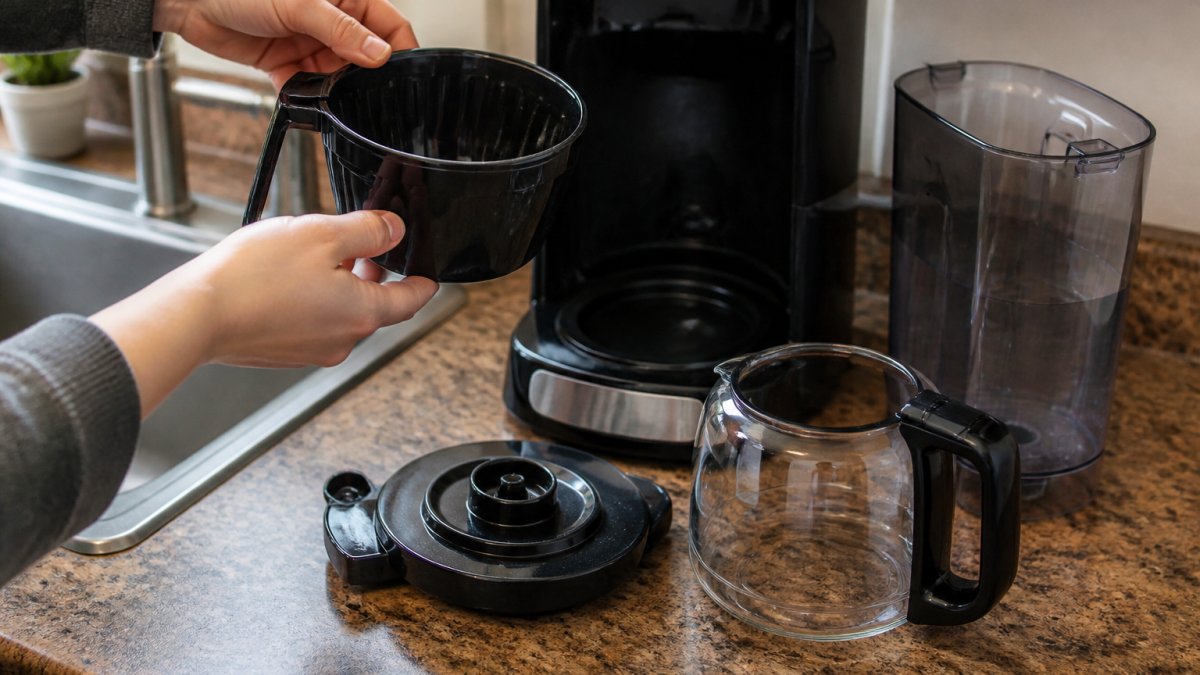
The water reservoir collects mineral deposits; rinse with a bottle brush or soak in vinegar for stubborn buildup. The brew basket accumulates coffee oils; soak weekly in hot water and scrub. The heating element collects scale; vinegar solution cleans it effectively. The spray head can clog with deposits; use a paperclip to clear blocked holes for even water distribution. The drip stop valve can get sticky; soak in hot water to restore function.
How to Tell If Cleaning Improved Your Coffee Taste
After cleaning, brew a cup and evaluate how the clean coffee maker taste compares to before. A structured before-and-after comparison isolates cleaning as the variable and confirms whether maintenance actually improved your cup.
Taste Comparison Method
Brew two identical cups before and after cleaning using the same beans, grind, and water temperature. Compare:
Flavor clarity: A clean machine extracts nuanced notes, sweetness, fruit, chocolate, or nutty undertones masked by stale oils. Bitterness: Should recede noticeably; if it persists, check grind size or brew time. Acidity: Clean machines preserve natural liveliness. Aroma: A clean machine releases more aromatic compounds.
Brew speed: Time how long a full pot takes before and after cleaning. Mineral scale slows water flow. Faster brewing (by 30 seconds to 2 minutes) signals successful descaling.
Temperature Check
Use a kitchen thermometer to measure the final cup temperature. Mineral buildup on heating elements reduces heat transfer. A clean machine should deliver coffee 5-10°F hotter than before cleaning. Hotter coffee extracts and carries flavor better.
Visual Inspection
Look at the brewed coffee in a clear glass. Coffee from a clean machine appears brighter and more transparent. Buildup causes cloudiness or a dull, murky appearance. The carafe itself should also look clearer, no oily film on the glass.
When Cleaning Alone Doesn't Fix Taste
If you notice no improvement after cleaning, investigate other causes:
Stale beans: Coffee loses flavor within 2-4 weeks of roasting. Check the roast date on the bag. Stale beans taste flat no matter how clean the machine.
Incorrect grind size: Too fine causes over-extraction and bitterness; too coarse causes under-extraction and sourness. Cleaning won't fix this, adjust your grinder.
Water quality: Chlorine, sediment, or off-flavors in tap water affect taste. Try filtered or bottled water for one brew to test.
Brew ratio: Too much coffee grounds or too little water produces bitter or weak coffee.
Persistent odors after cleaning: If vinegar smell lingers after 3-4 rinse cycles, run one more cycle with plain water and a pinch of baking soda.
Slow brewing that doesn't improve: If brew time remains slow after descaling, mineral scale may be lodged deep in the heating element or pump.
Machine-Specific Cleaning Guidance
Different machines have different designs. Check your manual for specific instructions.
Drip coffee makers, Most follow the vinegar method above. Some have a dedicated cleaning cycle button.
Single-serve pod machines, Run a cleaning cycle monthly using the machine's own cleaning pods or a vinegar solution.
French press, No internal pipes, so descaling isn't necessary.
Pour-over brewers, Rinse the dripper and carafe after each use. Soak in vinegar solution monthly.
Espresso machines, These require backflushing and descaling. Follow the manufacturer's instructions carefully, as improper cleaning can damage the pump.
Always consult your machine's manual before using vinegar or any cleaning solution.
Frequently Asked Questions
Does descaling a coffee maker really improve taste?
Yes. Mineral deposits and scale buildup restrict water flow through the brewer, causing uneven extraction and bitter flavors. Descaling removes these deposits, allowing hot water to flow freely and extract the full flavor complexity from your coffee beans. You'll notice a cleaner, smoother taste and faster brew times after descaling.
How do I get vinegar taste out of my coffee maker?
Run multiple brew cycles with fresh water only—typically 3 to 5 full reservoirs—to flush out residual vinegar. Fill the water reservoir completely, run it through without coffee grounds, and discard the brewed water. Repeat until you no longer detect vinegar aroma. If taste persists, soak the carafe and removable parts in fresh water for 30 minutes.
Can I clean my coffee maker without vinegar?
Yes. Citric acid is effective for descaling and leaves no vinegar aftertaste. Mix one tablespoon of citric acid with water, run it through the brew cycle, then rinse thoroughly. Commercial descaling tablets designed for coffee makers also work well and follow the manufacturer's instructions precisely. Both alternatives are ideal if vinegar irritates your respiratory system or you prefer a neutral solution.
How often should I clean my coffee maker?
Clean removable parts daily and run a full cleaning cycle weekly. Descale monthly if you have soft water; every two weeks if your water is moderately hard; and every week if you have very hard water. Check your machine's brew time—if it slows noticeably, descale immediately. Frequent use and hard water accelerate mineral buildup, so adjust your schedule accordingly.
A clean coffee maker is the foundation of great-tasting coffee. Cleaning takes minimal time and costs almost nothing, yet it transforms every cup. Start with the vinegar method this week. You'll taste the difference immediately. Pair a clean machine with specialty beans from Everything I Need, and you'll experience the full potential of your morning ritual.