

How to Enhance Natural Sweetness in Coffee Without Sugar
Table of Contents
- Why Coffee Tastes Bitter and How to Reduce Coffee Bitterness
- How to Brew Pour Over Coffee for Beginners to Maximize Sweetness
- Best Coffee Beans for Natural Sweetness and Roast Selection
- Frequently Asked Questions
Last Updated: September 9, 2026
Bitterness in coffee comes from extraction errors and roast defects, not the bean. Natural sweetness in coffee is already present, locked inside sugars that develop during roasting. This guide from Everything I Need explains how to enhance it without sugar by fixing brewing fundamentals and choosing the right beans.
Why Coffee Tastes Bitter and How to Reduce Coffee Bitterness
Coffee bitterness is an extraction problem. Hot water pulls bright acids and sugars first, then bitter compounds like tannins and caffeine. Over-extraction tips toward harshness; under-extraction leaves the cup sour and thin.
Coffee bitterness is also influenced by the Maillard reaction during roasting. A roast that is too dark pushes this reaction into carbonization, producing ash-like bitter notes no brewing adjustment can fix. How to reduce coffee bitterness starts with selecting a roast that preserves the bean's natural sugar content.
Practical adjustments include lowering water temperature to 195°F-205°F, shortening brew time by 15-30 seconds, using a coarser grind, and checking that your water has moderate mineral content (ncausa.org).
How to Brew Pour Over Coffee for Beginners to Maximize Sweetness
Pour-over brewing is the most forgiving method for capturing natural sweetness in coffee because it gives you direct control over every variable.
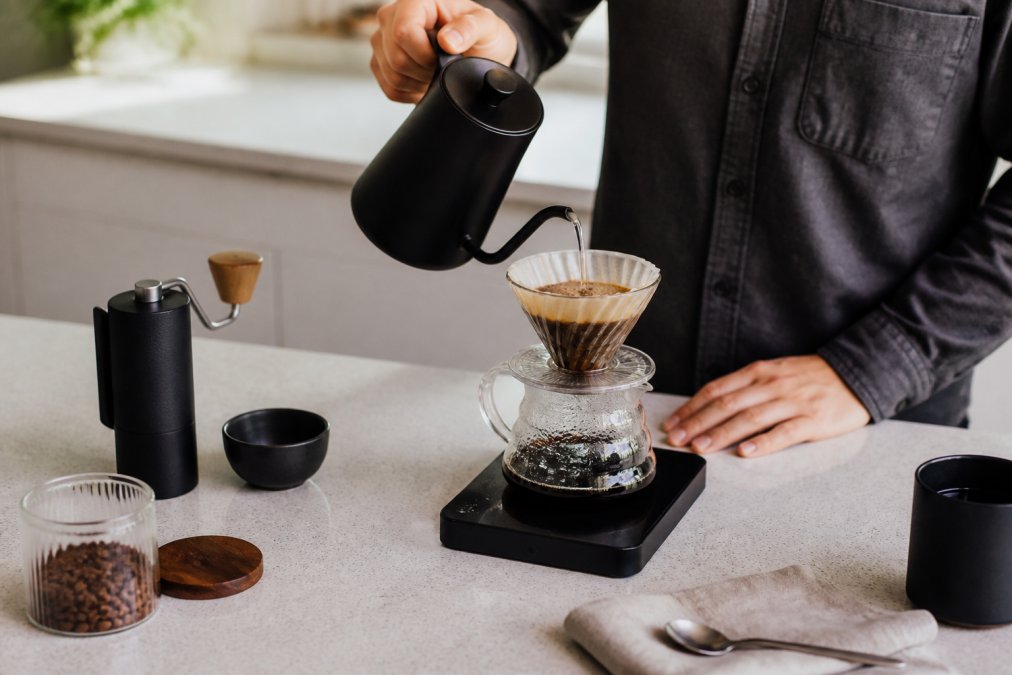
Heat water to 200°F, rinse the filter, and add 22 grams of coffee ground medium. Bloom for 30 seconds with 44 grams of water, then pour in slow circular stages to 360 grams total, finishing between 3 and 4 minutes.
Best Coffee Beans for Natural Sweetness and Roast Selection
The best coffee beans for natural sweetness come from high-elevation estates, where slower cherry maturation concentrates sugars, developing notes of caramel, chocolate, and stone fruit.
Light roasts preserve bright, fruity acidity. Medium roasts develop caramelization with notes of cacao and hazelnut. Dark roasts produce roasty, bitter flavors that mask the bean's character. For sweetness without sugar, a light to medium roast is the most reliable choice.
Processing also affects sweetness: washed yields a clean, bright cup; natural yields heavier body and fruit-forward sweetness; honey creates syrupy sweetness with moderate acidity.
Everything I Need roasts small batches of specialty-grade, single-origin arabica from high-elevation estates, using precision thermal mapping to eliminate the bitterness that comes from uneven roasting. The result is a coffee with complex natural sweetness and rich notes of cacao and hazelnut, delivered fresh to your door after roasting to order. If you are tired of ashy, bitter cups that demand sugar, the National Coffee Association's brewing guidelines confirm that proper roast and extraction are the foundation of a sweet, balanced cup.
Roast Level |
Sweetness Profile |
Best For |
Bitterness Risk |
|---|---|---|---|
Light |
Bright, fruity, floral |
Drinkers who want origin character |
Low |
Medium |
Caramel, cacao, balanced |
Most daily drinkers |
Low to moderate |
Dark |
Roasty, smoky, bold |
Those who want heavy body |
High |
Brewing temperature and water quality play a larger role in sweetness than most guides acknowledge. Water that is too soft fails to extract the sugars locked in the grounds, leaving the cup sour. Water with excessive mineral content extracts too aggressively, pulling bitter compounds. The Specialty Coffee Association's water quality standards recommend a specific mineral range for optimal extraction, and matching it transforms how sweetness comes through in the final cup.
A grind that is too fine pushes the brew into bitterness; too coarse leaves sugars undissolved. Dialing in your grind to a 3-to-4-minute brew time keeps extraction in the range where natural sweetness in coffee emerges most clearly.
Enhancing natural sweetness in coffee without sugar comes down to understanding that bitterness is a symptom of poor extraction. Choose beans from high-elevation estates, select a light or medium roast, and dial in your pour-over technique. Everything I Need supports this with small-batch craft roasting and precision thermal mapping that eliminates bitterness at the source.
Frequently Asked Questions
What can I add to coffee to enhance natural sweetness without sugar?
A pinch of salt is the most effective trick: it reduces bitterness and lets the bean's inherent sweetness come through. Spices like cinnamon and cardamom add their own sweetness, while a small amount of vanilla extract can round out the cup. Try a splash of maple syrup or honey if you want actual sweetness, though the goal is to need less of them as your brewing improves.
How does grind size affect the perceived sweetness of coffee?
Grind size directly controls extraction. A grind that is too fine over-extracts the coffee, pulling out harsh, bitter compounds that mask natural sweetness. A grind that is too coarse under-extracts, resulting in sour, weak coffee. Start with a medium-fine grind for pour-over and adjust from there. You are looking for a balanced cup where the sweetness is the dominant flavor note.
What is the best coffee roast for a naturally sweet cup?
Look for a light to medium roast from high-elevation estates. These roasts preserve more of the bean's origin characteristics, which is where you find the natural sweetness and complex flavor notes like caramel, chocolate, and fruit. Dark roasts, by contrast, rely on the roasting process for flavor, which often results in a bitter, ashy taste. A precise small-batch roast is key to maximizing sweetness.