

Essential Equipment for Brewing Specialty Coffee at Home
Table of Contents
-
Essential Equipment for Brewing Specialty Coffee at Home
- Best Burr Grinder for Specialty Coffee
- Coffee Brewing Ratios for Beginners
- The Importance of Digital Coffee Scales
- Gooseneck Kettles for Pour-Over
- Water Quality and Filtration for Specialty Coffee
- Coffee Storage Solutions
- Brewing Methods and Equipment
- Starter Kits for Beginners
- Workflow Ergonomics and Setup
- Water Quality and Filtration for Specialty Coffee
- Conclusion
- Frequently Asked Questions
Last Updated: September 11, 2026
Essential Equipment for Brewing Specialty Coffee at Home
Great specialty coffee at home comes down to four pieces of equipment: a burr grinder, a digital scale, a gooseneck kettle, and a pour-over dripper.
The difference between a good cup and a muddy one is rarely the bean: a burr grinder produces uniform particles, while a blade grinder makes coffee bitter and sour at once.
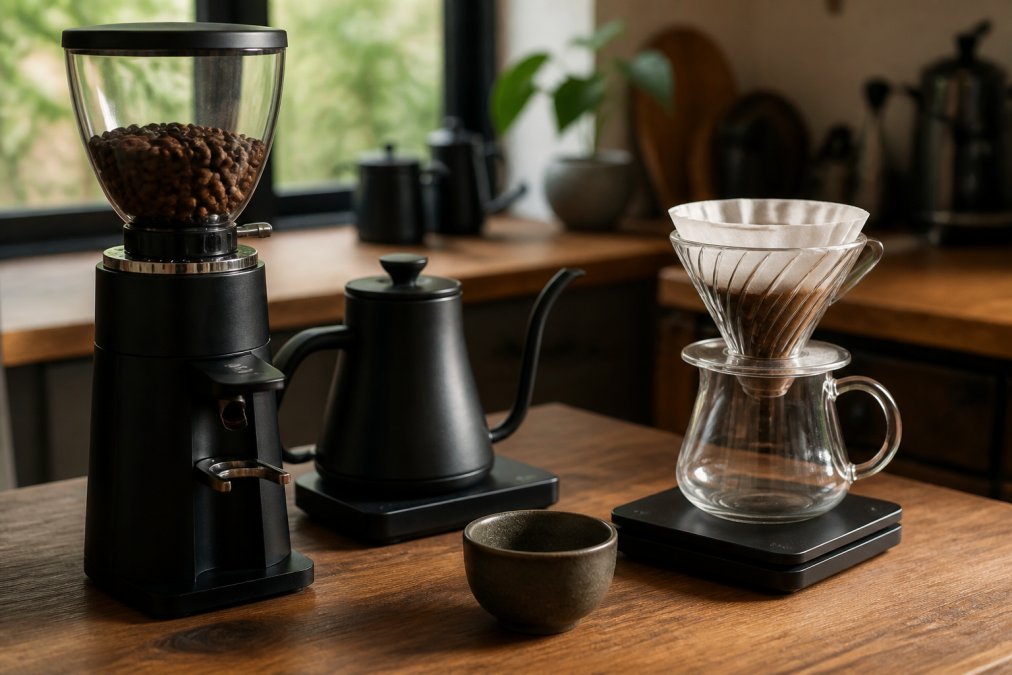
| Equipment | What It Does | Why It Matters | Priority |
|---|---|---|---|
| Burr grinder | Grinds beans consistently | Controls extraction and flavor clarity | Essential |
| Digital scale | Weighs coffee and water | Makes ratios repeatable | Essential |
| Gooseneck kettle | Controls flow and temperature | Prevents channeling | Essential |
Best Burr Grinder for Specialty Coffee
A burr grinder is the single most important purchase, crushing beans between two burrs for consistency blade grinders cannot match. Look for stepped or stepless adjustment, low retention, and burrs rated for your brew volume; hand grinders with steel conical burrs are a strong budget option.
Coffee Brewing Ratios for Beginners
Start at 1:15 to 1:17, such as 15 grams of coffee to 250 grams of water (peer-reviewed research). Weigh both, then adjust one variable at a time: sour and thin means grind finer or increase the dose; bitter and dry means grind coarser or reduce it. The bloom lets freshly roasted beans release carbon dioxide; skipping it flattens the cup.
The Importance of Digital Coffee Scales
The importance of digital coffee scales comes down to repeatability: a 0.1-gram resolution lets you hit the same ratio every morning. A built-in timer tracks brew time and flow rate by weight; for pour-over, aim for two to three minutes total.
Gooseneck Kettles for Pour-Over
A gooseneck kettle gives you control over flow rate and where water lands, keeping the coffee bed level and preventing channeling. Most specialty coffees brew best between 195°F and 205°F; electric kettles with PID control hold temperature within a degree or two (sca.coffee).
Water Quality and Filtration for Specialty Coffee
Coffee is roughly 98% water, so the minerals in your tap water end up in the cup. Too-hard water tastes chalky and mutes acidity; too soft tastes flat. A carbon filter removes chlorine without stripping helpful minerals, and most beginners can skip rebuilding brewing water from scratch (the EPA).
Coffee Storage Solutions
Oxygen, light, heat, and moisture degrade beans, so use an opaque, airtight container with a one-way valve. Store beans whole at room temperature and grind just before brewing. Freezing works if you portion beans into sealed bags and thaw them unopened; avoid the fridge.
Brewing Methods and Equipment
Pour-over passes water through a coffee bed and filter for a clean, bright cup; immersion steeps grounds fully before draining, giving heavier body and forgiving small mistakes. For beginners, a pour-over dripper with paper filters is the most transparent way to learn, while French press and AeroPress are forgiving alternatives.
Starter Kits for Beginners
A starter kit should include a burr grinder, a digital scale, a gooseneck kettle, a pour-over dripper, and a storage container. Skip the espresso machine until you have mastered a simpler method, a budget setup you actually use beats a pro setup that sits in a cabinet.
Workflow Ergonomics and Setup
Place the grinder, scale, kettle, and dripper in a single station with beans nearby. Rinse the filter and preheat the dripper while the kettle heats, weigh beans while the water comes to temperature, and grind last to preserve aroma. Same dose, same ratio, same temperature, every morning.
Water Quality and Filtration for Specialty Coffee
Water is the largest ingredient in your cup and the one most home brewers ignore. Start with a carbon filter to remove chlorine and odor; if your water is very hard or very soft, a test kit tells you where you stand, and you can blend filtered water with low-mineral bottled water or add a mineral packet to distilled water. When water is right, sweetness and acidity come through instead of getting buried.
Conclusion
Building a specialty coffee setup at home is a process, not a purchase. Start with a burr grinder and a digital scale, add a gooseneck kettle and a pour-over dripper, and fix your water before upgrading anything else.
Everything I Need roasts small-batch, high-elevation estate beans to order using precision thermal mapping to deliver a high-fidelity coffee experience defined by complex sweetness and rich flavor notes. Get started with Everything I Need and give your new setup beans worth brewing.
Frequently Asked Questions
What are the essential coffee accessories for home brewing?
The core essentials for specialty coffee at home include a burr grinder, a digital scale, a gooseneck kettle, and a brewing device like a pour-over dripper or French press. A burr grinder ensures grind size consistency, which directly affects extraction. A digital scale helps you measure coffee-to-water ratio accurately. A gooseneck kettle gives you control over flow rate and agitation. Together, these tools let you manage the variables that separate specialty coffee from standard drip.
Why is a burr grinder considered essential for specialty coffee?
A burr grinder crushes beans between two abrasive surfaces, producing uniform particles. This grind size consistency is critical because uneven grounds lead to channeling, where water bypasses some coffee and over-extracts others. The result is bitterness and sourness in the same cup. Blade grinders chop unevenly and generate heat that damages delicate aromatics. For specialty coffee, a conical burr grinder is the standard because it preserves the complex sweetness and nuanced flavors you paid for.
How does water quality affect the taste of home-brewed specialty coffee?
Water makes up over 98% of your brewed coffee, so its mineral content directly shapes extraction. Total dissolved solids (TDS) that are too high can mute flavors, while too low can make coffee taste flat or sour. For specialty coffee, aim for water with 75-125 ppm TDS and a neutral pH. A simple carbon filter removes chlorine and odors, but if your water is very hard or soft, you may need to adjust with mineral packets or use bottled water designed for brewing.