

How to Identify High Quality Specialty Coffee Beans
Table of Contents
- Why Coffee Roast Date Importance Decides Freshness
- How to Read Coffee Labels Like a Grader
- Visual Inspection: Uniformity, Density, and Defects
- Processing Methods and Terroir: Washed, Natural, and Origin
- Cupping, Tasting Notes, and Sensory Training for Beginners
- Spotting a True Specialty Coffee Roaster
- The Oily Bean Myth and Supply Chain Transparency Markers
- Conclusion: Building Your Grading Checklist
- Frequently Asked Questions
Last Updated: September 18, 2026
Why Coffee Roast Date Importance Decides Freshness
The fastest way to spot high quality specialty coffee beans is to find the roast date, not the expiration date. Roasted coffee hits peak flavor within days of roasting, then fades as oxygen slowly pulls the life out of it. That is why coffee roast date importance sits at the top of any serious buying checklist.
Here is the problem most shoppers run into. Supermarket bags rarely show a roast date at all. They print a "best by" date instead, often a year or more out. That tells you nothing about when the beans were actually roasted.
Fresh beans release carbon dioxide for the first several days after roasting, a process called degassing. That gas protects flavor. Once degassing slows, oxidation takes over and the cup turns flat, papery, or dull.
So the rule is simple:
- Buy beans roasted within the last 2-4 weeks
- Avoid bags with no roast date
- Treat "best by" dates as a red flag, not a green light
At Everything I Need, every lot is roasted to order, so the roast date on your bag is measured in days, not months.
How to Read Coffee Labels Like a Grader
Learning how to read coffee labels comes down to three things: origin, process, and roast level. If a label skips all three, walk away.
A real specialty label tells you where the coffee grew and how it was handled. Vague terms like "gourmet" or "premium" mean nothing. They are marketing words, not quality grades.
Look for these markers:
- Country and region (for example, Yirgacheffe in Ethiopia or Huila in Colombia)
- Processing method (washed or natural)
- Roast level (light, medium, or dark)
- Roast date
- Elevation or "high-grown" notes
The Specialty Coffee Association's grading standards define what actually counts as specialty. A true specialty coffee scores 80 points or higher on a 100-point scale set by trained graders.
That score matters. It separates genuinely great coffee from beans that only look fancy on the shelf.
Visual Inspection: Uniformity, Density, and Defects
You can judge a lot about specialty coffee beans just by looking at them. Pour a small handful onto a white plate under good light and check for even color, even size, and obvious flaws. This is the same first pass a grader makes before a single bean ever hits a cupping table.
Uniformity is the first signal. Well-sorted beans look like siblings, similar in size and shade. A scattered mix of dark and light beans usually means an uneven roast or poor sorting. Color variation within a single roast batch is one of the clearest tells that heat application was inconsistent.
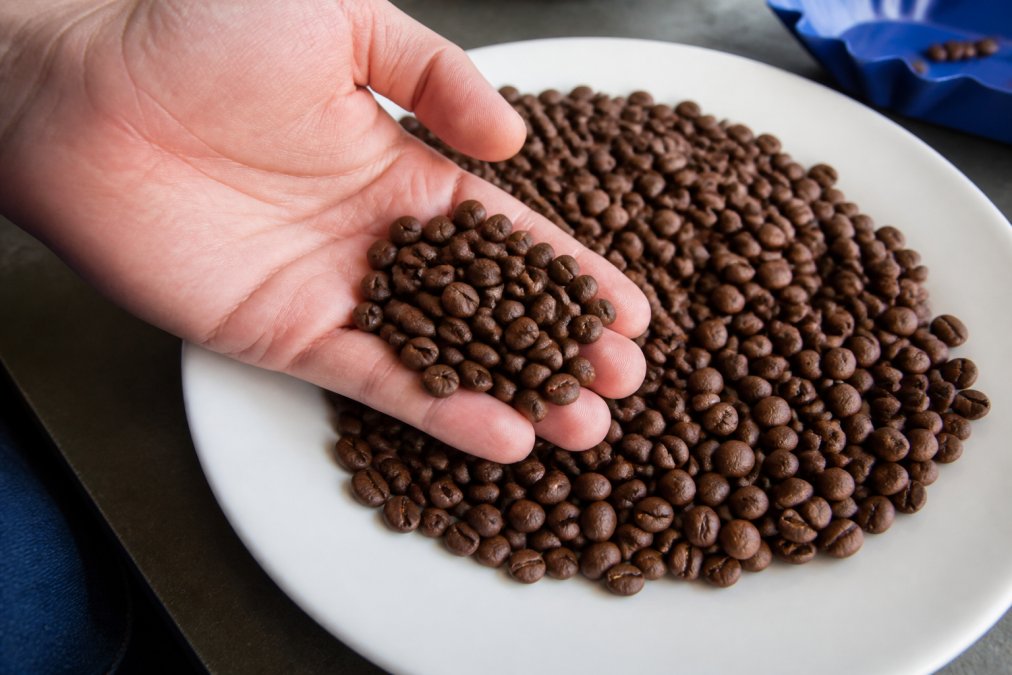
Next, check density. Pick up a bean and feel its weight against a known-good sample. Dense beans, often grown at high altitude, tend to carry more sweetness and complexity because slower cherry development concentrates sugars and acids. Light, hollow beans usually taste thin and papery.
Then scan for defects. Graders sort defects into categories, and knowing them helps you read a bag more critically:
- Full black, entirely black, opaque bean; caused by over-fermentation or disease
- Full sour, yellowish-brown to reddish-brown, often from improper fermentation or water damage
- Quaker, a pale, unripe bean that fails to brown during roasting; tastes like peanut or paper in the cup
- Broken, chipped, or cut, mechanical damage from processing or handling
- Foreign matter, small stones, sticks, or husk fragments
- Severe insect damage, visible boring holes or internal damage
A few defects are normal in any batch.
One more visual cue worth knowing: surface oil. Fresh, lighter-roasted specialty beans usually look dry and matte. Shiny, oily beans are often older or roasted darker than ideal, which is a separate topic covered below.
Processing Methods and Terroir: Washed, Natural, and Origin
The way a coffee is processed shapes its flavor as much as where it grew. Washed and natural are the two methods you will see most often, and each leaves a distinct fingerprint in the cup. But the details of how each method works are what separate a real specialty lot from a commodity bag with a trendy label.
Two more methods worth recognizing:
- Honey process, mucilage is left partially intact during drying, producing sweetness between washed and natural
- Anaerobic fermentation, beans ferment in sealed tanks with limited oxygen, often yielding intense, winey, or tropical profiles
That is why origin labels are worth reading closely:
- Ethiopia brings floral and fruit-forward notes
-
Kenya delivers bright acidity and deep berry sweetness

Kenya - Colombia offers balance with caramel and chocolate
- Bali leans earthy with dark chocolate and cedar
- Named farm, cooperative, or washing station, not just a country
- Harvest year, coffee is a crop, and year matters
- Elevation range, a specific band, not just "high-grown"
- Varietal information, Bourbon, Typica, Geisha, SL28, and so on
- Processing detail, washed, natural, honey, anaerobic, with specifics
- Producer relationship, direct trade, long-term contract, or importer named
Cupping, Tasting Notes, and Sensory Training for Beginners
Cupping is the professional method for tasting coffee, and you can do a simplified version at home. It trains your palate to notice what separates great specialty coffee beans from average ones.
The basic setup:
- Weigh a consistent ratio of coffee to water
- Grind coarse and pour hot water over the grounds
- Let it steep for about 4 minutes
- Break the crust with a spoon and smell the aroma
- Slurp from the spoon to spread the coffee across your tongue
- Note sweetness, acidity, body, and aftertaste
The five things graders score:
- Fragrance and aroma
- Acidity (bright versus flat)
- Body (light versus heavy)
- Sweetness and balance
- Aftertaste (short versus lingering)
Spotting a True Specialty Coffee Roaster
A specialty coffee roaster is a business that sources graded beans and roasts them in small batches with a clear roast profile. The label alone does not make it specialty. The practices do.
- They print roast dates, not just best-by dates
- They name the farm, region, or washing station
- They roast in small batches, not giant industrial runs
- They share roast profiles or sourcing details
- They sell beans that score 80+ on the SCA scale
The Oily Bean Myth and Supply Chain Transparency Markers
Shiny beans are not a sign of quality. They are a sign of age or a very dark roast, and that is the oily bean myth in a nutshell.
- Named farms, cooperatives, or washing stations
- Harvest year listed on the bag
- Elevation and varietal information
- Direct trade or fair trade relationships noted
Conclusion: Building Your Grading Checklist
Judging coffee well comes down to a repeatable routine, not a special talent. Use this checklist every time you buy:
What to Check |
Good Sign |
Red Flag |
|---|---|---|
Roast date |
Within 2-4 weeks |
No date, or "best by" only |
Origin |
Named region or farm |
Vague "gourmet" label |
Process |
Washed or natural listed |
No method stated |
Beans |
Even color and size |
Mixed, broken, or charred |
Surface |
Dry and matte |
Very oily |
Sourcing |
Farm, elevation, harvest year |
Nothing traceable |
Frequently Asked Questions
How can you tell if coffee beans are high quality?
Check the roast date first, ideally within two to four weeks of roasting. Look for uniform bean size and color, an intact bloom when brewed, and labels naming origin, elevation, and processing method. Specialty coffee beans should carry a cupping score of 80 or above from a certified grader, and any genuine specialty coffee roaster will print that information directly on the bag.
Does the roast date matter when buying specialty coffee?
Yes. Coffee roast date importance comes down to degassing and oxidation: beans release carbon dioxide for roughly seven to fourteen days after roasting, then begin losing aromatic compounds. Bags without a roast date usually hide stale stock. Buy from a roaster who prints the actual roast day, not just a best-by date, and brew within four weeks for peak sweetness and clarity.
What are the indicators of specialty-grade coffee?
Specialty-grade beans score 80 or higher on the Specialty Coffee Association scale, are grown above roughly 1,200 meters, and contain almost no primary defects. Look for single origin or micro-lot labeling, a named processing method like washed or natural, and tasting notes that describe specific flavors rather than generic words like smooth or bold. Uniform density and moisture content between 10 and 12 percent also signal careful handling.
How does high-elevation sourcing affect coffee bean quality?
Higher altitude slows cherry maturation, letting sugars and acids develop more fully. That produces denser beans with brighter acidity and more layered tasting notes. Estates above 1,500 meters in Ethiopia, Kenya, or Colombia typically yield the complex sweetness and floral aromatics buyers associate with top-tier specialty coffee. Lower-grown commodity beans ripen faster and taste flatter, which is why origin elevation is worth checking on the label.
Most coffee drinkers settle for stale beans because the label never told them the truth. Everything I Need removes that guesswork with small-batch craft roasting, precision thermal mapping, and high-elevation estate beans roasted to order, so every bag arrives fresh and full of complex sweetness. Ordering is simple, delivery is fast, and the roast date on your bag is always recent. Get started with Everything I Need and taste what fresh, disciplined roasting actually delivers.