

Impact of Roast Date on Coffee Flavor Profile
Table of Contents
- Why Coffee Roast Date Matters More Than You Think
- The Coffee Degassing Process: What Happens After Roasting
- Finding the Peak Flavor Window for Coffee
- How Roast Profiles Change with Time
- Signs of Stale Coffee Beans
- Matching Brew Method to Roast Age
- Conclusion
- Frequently Asked Questions
Last Updated: September 15, 2026
Why Coffee Roast Date Matters More Than You Think
The impact of roast date on coffee flavor profile is the single most underrated variable in home brewing. Most people obsess over origin, grind size, and water temperature while ignoring the one factor that determines whether those other efforts pay off at all.
Coffee is an agricultural product that keeps changing after it leaves the roaster. The bag you bought last month is not the same coffee today. At Everything I Need, we roast to order specifically because the clock starts ticking the moment beans leave the drum. The [Specialty Coffee(/blogs/news/keep-specialty-coffee-fresh) Association's freshness guidance | sca.coffee] notes that roasted coffee is a perishable good, not a pantry staple.
What follows is a practical breakdown of how roast date shapes your cup, when each coffee hits its stride, and how to tell when a bag has gone past its useful life.
The Coffee Degassing Process: What Happens After Roasting
The coffee degassing process is the controlled release of carbon dioxide and other volatile compounds trapped inside the bean during roasting. This release begins immediately and continues for weeks, fundamentally altering how the coffee extracts and tastes.
During roasting, beans undergo the Maillard reaction and caramelization, creating hundreds of aromatic compounds. Those compounds need time to stabilize. Carbon dioxide, meanwhile, needs time to escape. Brew too soon and the gas interferes with water contact; brew too late and the desirable volatiles have already oxidized away.
Carbon Dioxide and Extraction
Carbon dioxide trapped in the bean physically blocks water from reaching soluble solids. A very fresh roast will often produce an uneven, gassy pour-over where the bed bubbles aggressively and the resulting cup tastes flat or sour, not because the coffee is bad but because extraction was disrupted. Most roasters recommend a resting period of 3 to 7 days for filter methods to let the initial CO2 flush subside (SCA Best New Product Awards). Espresso typically needs longer, often 7 to 14 days, because pressure amplifies the effect of residual gas.
Finding the Peak Flavor Window for Coffee
The peak flavor window for coffee is the period when degassing has slowed enough for stable extraction but oxidation has not yet degraded the aromatic compounds. For most light and medium roasts, that window runs roughly 7 to 21 days after the roast date.
This is not a universal rule. Denser beans from high-elevation estates hold their structure longer and often peak later than softer, lower-grown beans. Processing method matters too: washed coffees tend to present their clearest acidity early in the window, while natural and honey-processed coffees often taste muddled for the first week and then open up into their full fruit character.
Titratable acidity and perceived sweetness both shift measurably across this window, which is why a coffee that tastes sharp on day 5 can taste balanced and syrupy by day 12. That transformation is the impact of roast date on coffee flavor profile in its most visible form.
How Roast Profiles Change with Time
Roast profiles do not stay fixed in the cup. A dark roast and a light roast age at completely different rates, and understanding this changes how you buy and store coffee.
Dark roasts, like our Italian Roast, are roasted longer and develop more porous cell structures. That porosity makes them extract easily and taste full-bodied early, but it also exposes them to oxygen faster. A dark roast may peak within 5 to 10 days and fade noticeably by day 21 (pubmed.ncbi.nlm.nih.gov). Light roasts, such as our Blonde, are denser, degas more slowly, and often reach their best expression between day 10 and day 25.


Roast Level |
Typical Peak Window |
Degassing Speed |
Best Early Use |
|---|---|---|---|
Light |
10-25 days |
Slow |
Filter, pour-over |
Medium |
7-18 days |
Moderate |
Drip, AeroPress |
Dark |
5-12 days |
Fast |
Espresso, moka |
Buying roasted-to-order coffee matters here because you control the clock. A bag stamped with a roast date lets you plan around the window instead of guessing.
Signs of Stale Coffee Beans
The signs of stale coffee beans are consistent and easy to spot once you know them: muted aroma from the bag, flat or papery flavor in the cup, and a distinct lack of sweetness or complexity. Stale coffee does not taste bitter so much as empty.
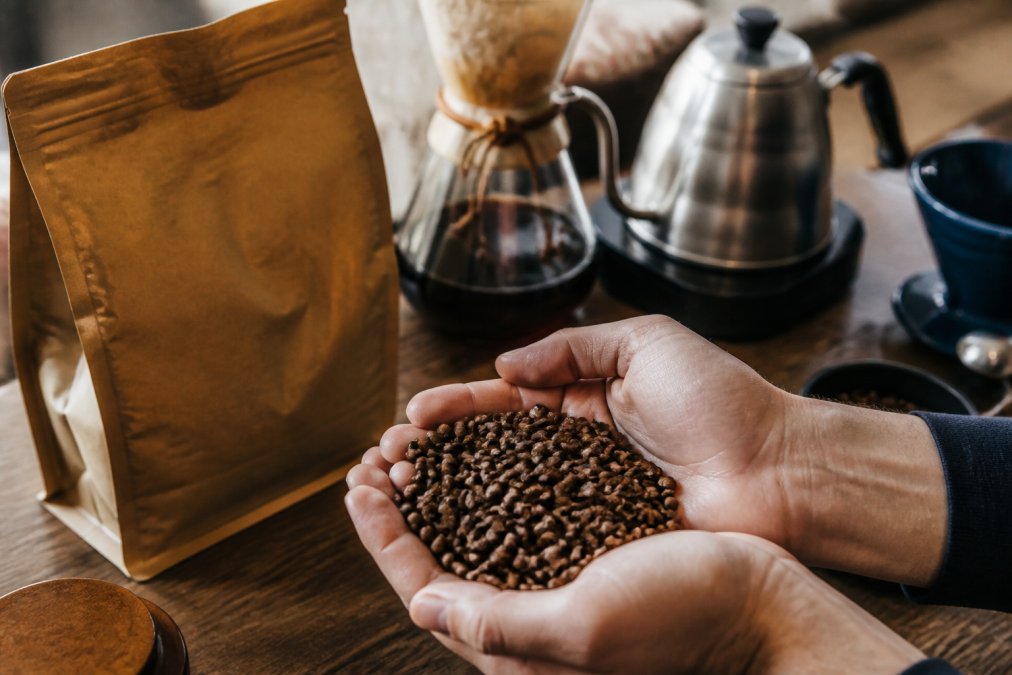
Roasting date impacts coffee flavor
But here is the problem most guides never address: stale and under-rested coffee can taste surprisingly similar to an untrained palate. Both can present as flat, hollow, or oddly sour. The difference is in the mechanism and the fix, and learning to tell them apart is the single most useful sensory skill a home brewer can develop.
Stale vs. Under-Rested: A Sensory Calibration Guide
Under-rested coffee is still releasing carbon dioxide. That gas interferes with extraction, so the cup tastes thin and sour because the water never reached the soluble solids. The aroma from the bag, however, is usually still vivid, sometimes aggressively so. If you open a bag and get a sharp, almost prickly burst of roast aroma, the coffee is likely too fresh, not too old.
Stale coffee has the opposite signature. The bag aroma is dull or smells like cardboard, dust, or dry hay. The beans look uniformly matte with no sheen. The bloom during brewing is minimal or nonexistent because the CO2 has already escaped. And the cup tastes hollow even when you increase the dose, a telltale sign that the problem is degradation, not under-extraction.
A simple calibration exercise: brew the same coffee at day 3, day 10, and day 25 after roast. Taste them side by side. Most people find the day-3 cup is sour and gassy, the day-10 cup is balanced and sweet, and the day-25 cup is flat and papery. Once you have tasted that arc once, you will never confuse the two again.
Other Indicators Worth Checking
- The beans look uniformly matte with no sheen or surface oils
- The bloom during brewing is minimal or nonexistent
- The aroma smells like cardboard, dust, or dry hay rather than fruit or chocolate
- The cup tastes hollow even when you increase the dose
- The bag has lost its one-way valve pressure (no hiss when you squeeze it)
Oxidation and moisture exposure drive most of this decline. Oxygen breaks down volatile compounds, while humidity accelerates staling and can introduce off-flavors. A sealed, one-way valve bag stored in a cool, dark place slows the process; a hopper exposed to light and air speeds it up considerably.
Matching Brew Method to Roast Age
Brew method changes how forgiving a coffee is at any given roast age. This is the part most guides skip, and it is where the practical payoff lives. The same bean that tastes sour and gassy in an espresso shot on day 4 can taste balanced and sweet in a French press on the same day, because contact time, pressure, and water temperature all interact with residual CO2 differently.
Espresso: The Least Forgiving Method
Espresso is the least forgiving. Residual CO2 creates channeling and inconsistent shots because the pressurized water finds paths of least resistance through gassy grounds. Espresso drinkers should target the later end of the window, typically 7 to 14 days after roast for medium and dark roasts, and 10 to 18 days for light roasts.
Pour-Over: Sensitive but Rescuable
French Press and Immersion: Most Tolerant of Fresh Beans
Cold Brew: The Exception to Every Rule
A Brew-Specific Timeline
Brew Method |
Earliest Good Cup |
Peak Window |
Latest Before Decline |
|---|---|---|---|
Espresso |
7 days |
10-14 days |
21 days |
Pour-over |
5 days |
7-12 days |
18 days |
French press |
3 days |
5-10 days |
15 days |
Cold brew |
2 days |
5-20 days |
30 days |
Conclusion
Frequently Asked Questions
How long after the roast date should I wait to brew coffee?
For most brewing methods, wait 3 to 7 days after the roast date. This allows carbon dioxide to escape during the coffee degassing process, preventing uneven extraction. Espresso benefits from 7 to 10 days of resting. If you brew immediately, you may notice excessive foaming and sour or sharp flavors. After the resting period, the coffee roast date becomes a reliable guide for when peak flavor begins.
What is the peak flavor window for specialty coffee?
The peak flavor window for coffee typically falls between 7 and 21 days after roasting. During this period, volatile compounds and aromatic oils are at their most expressive, delivering balanced sweetness and clarity. After 21 days, oxidation gradually degrades those compounds, and flavor complexity declines. Buying from a roaster that ships within days of the roast date helps you land inside this window more consistently.
What are the most common signs of stale coffee beans?
Signs of stale coffee beans include a flat, papery, or cardboard-like smell instead of bright aromatics. The beans may look dull or dry because surface oils have oxidized. When brewed, the cup tastes hollow, with muted acidity and a lingering bitterness that no grind adjustment fixes. If your bag has no roast date or was roasted months ago, those signs of stale coffee beans will show up quickly after opening.
Does bean density or processing method affect how roast date changes flavor?
Yes. Denser beans from high-elevation estates degas more slowly, so they hold peak flavor longer than less dense beans. Processing matters too: washed coffees tend to show clarity early and fade predictably, while natural or honey-processed beans may peak later because residual sugars and moisture slow the chemical reactions. Adjusting your brew schedule to bean density and processing helps you hit the best cup.