

Natural vs Washed Coffee: Flavor Differences Guide
Table of Contents
- Natural vs Washed Coffee: What the Labels Actually Mean
- Coffee Processing Methods: Washed, Natural, and Honey Compared
- Washed vs Natural Coffee Taste: Acidity, Sweetness, and Body
- Honey Process Coffee vs Washed: The Middle Ground
- Natural vs Washed Coffee for Pour-Over and Other Brew Methods
- How Roast Level and Freshness Change Process Flavors
- Defect Risks and Quality-Control Indicators
- Conclusion
- Frequently Asked Questions
Last Updated: October 5, 2026
Natural vs Washed Coffee: What the Labels Actually Mean
The natural vs washed coffee distinction comes down to one thing: how the fruit of the coffee cherry is removed from the bean before drying.
At Everything I Need, we roast small lots from high-elevation estates and cup them side by side, so we see the split constantly.
Processing is the step between harvest and export where the seed is separated from the fruit and dried to a stable moisture level. Get it right and you preserve clarity.
Why Processing Changes What You Taste
Coffee beans start as seeds inside a cherry that is roughly the size of a small grape. The fruit layer, called mucilage, is loaded with sugars and acids. How long that mucilage stays in contact with the seed decides how much of it ends up in your cup.
Drying also matters. A bean dried slowly on a raised bed holds onto more aromatic compounds than one rushed through a mechanical dryer. Specialty Coffee Association research on processing and sensory outcomes has documented how fermentation time and drying method shift the final flavor profile, which is why two coffees from the same hillside can taste nothing alike.
That is the whole game. Processing is not packaging. It is flavor, decided before the bean ever reaches a roaster.
Coffee Processing Methods: Washed, Natural, and Honey Compared
Three methods dominate specialty coffee: washed, natural, and honey. Each one leaves a different amount of fruit on the seed, and that amount predicts most of what you will taste.
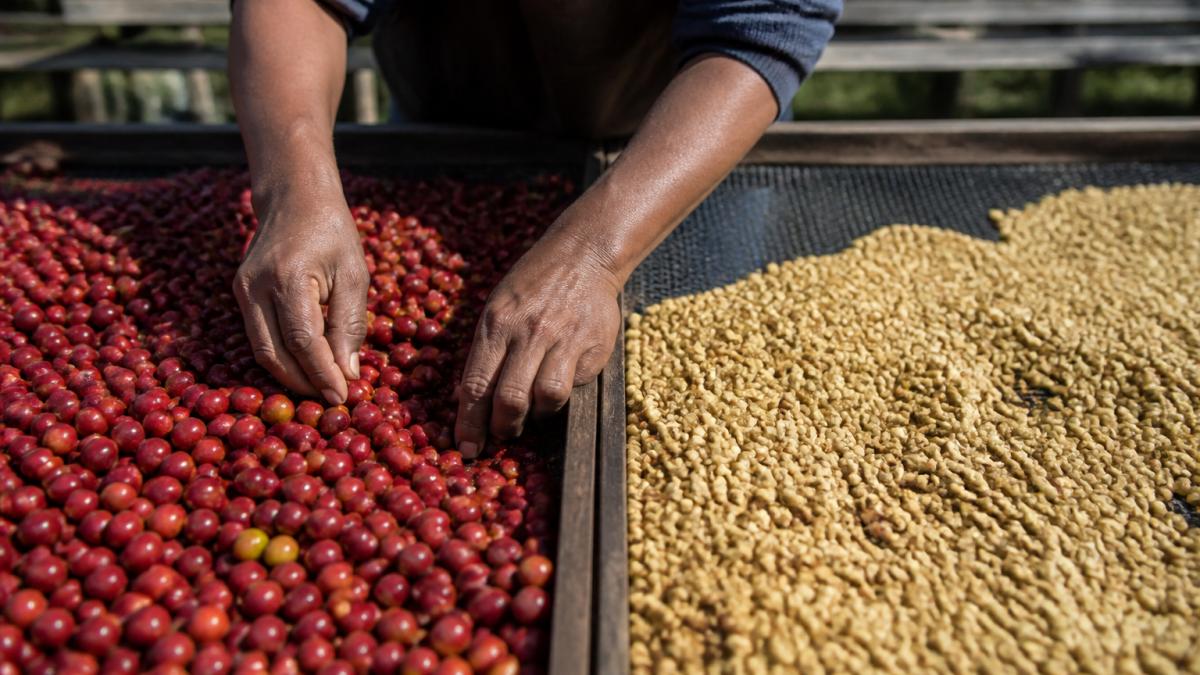
Here is the quick comparison before we go deeper:
Method |
Fruit Left On Bean |
Drying Time |
Typical Flavor Lean |
|---|---|---|---|
Washed |
None |
7-14 days |
Clean, bright, tea-like |
Natural |
All of it |
15-30 days |
Fruity, sweet, full-bodied |
Honey |
Some mucilage |
10-20 days |
Balanced, syrupy, mild fruit |
How the Washed Process Works
Washed coffee, also called wet process, removes the skin and pulp within hours of picking. The beans then sit in fermentation tanks to break down the remaining mucilage, get rinsed in clean water, and dry on raised beds or patios.
The result is a clean cup. Because almost no fruit sugar stays on the seed, washed coffees show the bean's own character: citrus, floral notes, black tea, and a sharp brightness.
How the Natural Process Works
Natural coffee, or dry process, skips the pulping step entirely. Whole cherries spread out on raised beds and dry in the sun for two to four weeks, turned regularly by hand to prevent mold.
The fruit slowly transfers its sugars into the seed. Our Ethiopia Natural is a textbook example, with ripe blueberry and strawberry jam up front and a jasmine perfume underneath.

The trade-off is risk. Any cherry that ferments too long or dries unevenly turns the whole lot muddy. Naturals reward careful monitoring and punish neglect.
Washed vs Natural Coffee Taste: Acidity, Sweetness, and Body
Washed coffees deliver higher, sharper acidity and a lighter body. Natural coffees deliver softer acidity, more sweetness, and a fuller, sometimes syrupy body. That is the short answer, and it holds across most origins.
The nuance is where it gets interesting. Washed acidity reads as tart and structured, closer to lemon or green apple.
But here is the part most guides skip: those generalizations only hold when you control for everything else.
How to Taste the Difference Yourself
You do not need a lab. You need two coffees from the same origin and variety processed both ways, and a repeatable method. A simple side-by-side cupping works:
- Dose: 8.25 grams of coffee per 5 ounces of water, both cups identical.
- Grind: medium-coarse, roughly the consistency of coarse sand, same grinder setting for both.
- Water: just off boil, around 200-205°F. Same temperature for both.
- Order: taste the washed first, then the natural. Washed sets a clean baseline; natural reads as a departure from it.
- Slurp, wait, revisit: taste at 4 minutes, then again at 10 minutes as the cups cool. Fruit and acidity shift as temperature drops, and naturals often open up later.
Keep a simple note sheet: acidity (low/high), sweetness (type and intensity), body (light/heavy), and the first three flavor words that come to mind. Compare notes, not impressions.
A common mistake is judging naturals as simply "better" because they are louder. In practice, a great washed coffee shows more complexity and consistency, while a great natural shows more intensity. They are different tools, not a ranking. And neither label guarantees a specific cup, cultivar, terroir, fermentation control, and drying decisions all push the final flavor in ways the process name alone cannot predict.
Honey Process Coffee vs Washed: The Middle Ground
Honey process coffee sits between washed and natural. Producers remove the skin and pulp but leave some mucilage on the seed during drying, and the amount left determines how far the cup leans toward fruit.
Yellow honey leaves the least mucilage and tastes closest to washed. Red and black honey leave progressively more, pushing toward the syrupy sweetness of a natural.
Where it falls short: honey process is finicky. The sticky mucilage makes beans clump and dry unevenly, so it demands more turning and closer monitoring than either extreme.
Natural vs Washed Coffee for Pour-Over and Other Brew Methods
Natural vs washed coffee for pour-over comes down to what you want the brew to emphasize. Pour-over rewards clarity, so washed coffees usually shine: the paper filter strips oils, and a clean bean has nothing to hide.
Naturals in a pour-over can taste muddled if you grind too fine or brew too hot.
For espresso and cold brew, naturals have the advantage. Their body and sweetness survive milk and long extraction. Washed coffees can taste thin or sharp under the same treatment.
How Roast Level and Freshness Change Process Flavors
Roast level can erase or amplify the processing signature. A light roast preserves the delicate floral and citrus notes in a washed coffee and the berry notes in a natural.
Freshness matters just as much. Coffee releases carbon dioxide for days after roasting, which flattens sweetness and mutes aromatics if you brew too soon.
This is where roasted-to-order matters. Our Colombia and Guatemala arrive close to the roast date, so the caramel, red grape, and dried apricot notes survive the trip to your grinder.

Defect Risks and Quality-Control Indicators
Processing is also where things go wrong, and the sensory line between "intentionally fruity" and "defective" is thinner than most drinkers realize. Naturals carry the highest defect risk: over-fermentation, mold, and uneven drying can all creep in when cherries sit too long on the bed. Washed coffees face fewer fruit-related risks but can show soapy, papery, or earthy notes if fermentation tanks or rinse water are mishandled.
What Defects Actually Taste and Smell Like
- Over-fermentation: sharp vinegar, nail polish remover, or solvent-like aromas. This is the most common natural-process fault and it does not improve with rest or brewing adjustments.
- Mold or mustiness: damp basement, wet cardboard, or a flat, dusty quality that persists across brew methods.
- Uneven drying: some beans in the lot taste clean while others taste fermented or woody, the cup is inconsistent from sip to sip.
- Under-fermentation in washed coffee: a raw, green, peanut-like or grassy note that signals mucilage was not fully broken down before rinsing.
- Water-related taint in washed coffee: soapy, papery, or faintly chemical notes traceable to dirty fermentation tanks or poor rinse water quality.
A useful rule: intentional fruitiness in a natural reads as sweet and integrated, blueberry, strawberry, dried fig. A defect reads as sharp, solvent-like, or hollow, and it sits on top of the cup rather than inside it.
How Producers Catch Problems Before They Ship
Quality control is a monitoring discipline, not a guess. Producers track three things closely:
- Moisture content. Beans are dried to a stable target, commonly in the 10-12% range, before storage. Too wet and the lot molds in the bag; too dry and it fades fast.
- Fermentation time. Washed tanks and natural beds are checked on a schedule, often every few hours during the active phase, with producers adjusting based on temperature and smell.
- Drying curve. Raised beds, patios, and mechanical dryers each produce a different drying speed, and slow, even drying preserves more aromatic compounds than a rushed finish.
Most disciplined producers cup every lot before it ships, often multiple times, once at the mill, once after resting, and sometimes again before export. That cupping is where defects get flagged and lots get downgraded or blended out.
What Buyers Can Actually Check
You cannot cup a lot before it ships, but you can look for signals of disciplined processing:
- A transparent roast date, not just a best-by date.
- Sourcing notes that name the farm, mill, or washing station rather than only the country.
- Consistent flavor across repeat purchases, variability harvest to harvest is normal, but a lot that tastes wildly different bag to bag usually signals loose quality control.
Variability is real. Two lots of the same natural from the same farm can taste different harvest to harvest, which is why consistency is a mark of a disciplined producer. Process labels describe a method, not a guarantee, the cup in front of you is the final word.
Conclusion
Choosing between natural and washed coffee is not about picking a winner. It is about matching the process to the moment: washed for clarity and brightness, natural for fruit and body, honey when you want both.
At Everything I Need, we roast small batches to order and use precision thermal mapping to keep bitterness out of the cup, so the processing character comes through clean. Explore our single-origin lineup, including Brazil Santos and Bali Blue, and taste the difference for yourself with fast, reliable delivery.

Frequently Asked Questions
What is the difference between natural and washed process coffee?
Natural process coffee dries the whole cherry, fruit and all, on raised beds for weeks, so the bean absorbs sugars and fruit compounds from the mucilage. Washed process coffee removes the fruit within hours of picking, ferments the bean in water, then dries it clean. That single decision drives most of the flavor gap: naturals lean fruit-forward and heavier, washed coffees lean cleaner and brighter.
Does natural process coffee taste fruitier than washed coffee?
Yes, and it is the most reliable difference between the two. Naturals routinely cup with berry, strawberry jam, and tropical fruit notes, plus a wine-like aroma. Washed coffees from the same origin show citrus, floral, and black tea notes instead. The fruit in a natural comes from the cherry itself, not from the bean's variety alone, which is why the gap holds up across origins.
Why does washed coffee taste cleaner?
Because the fruit is gone before drying. Pulping and washing strip the mucilage within hours of harvest, so there is almost nothing left to ferment onto the bean. The result is a cup where acidity reads as tart and precise, sweetness reads as cane sugar rather than syrup, and origin character, meaning variety and terroir, comes through without a fruit overlay. That is what tasters mean by clarity.
How do I choose between natural and washed coffee for pour-over?
Match the process to the brew method. Pour-over rewards clarity, so washed coffees at a medium grind and a 1:16 ratio show their citrus and floral notes cleanly. Naturals can clog a paper filter with their heavier oils and fruit sugars, so grind slightly coarser and expect a sweeter, heavier cup. If you want fruit on pour-over, pick a natural; if you want precision, pick washed.
Is natural process coffee less consistent than washed coffee?
It varies more, yes. Natural drying depends on sun, humidity, and how often the beds are turned, so over-fermentation and mold risk are real if monitoring slips. Washed coffee is more predictable because fermentation happens in controlled tanks over a set number of hours. Good naturals come from farms that track moisture and drying time closely; inconsistent ones taste boozy, muddy, or flat.