

Why Coffee Tastes Sour With Fresh Beans: Fix It Fast
Table of Contents
- Why Fresh Coffee Beans Taste Sour: Under-Extraction Explained
- Coffee Under-Extraction vs Over-Extraction: What's the Difference?
- How to Adjust Grind Size for Better Coffee Flavor
- Ideal Water Temperature for Coffee Brewing and Bean Resting
- What Else Causes Sour Coffee?
- Frequently Asked Questions
Last Updated: September 13, 2026
Why Fresh Coffee Beans Taste Sour: Under-Extraction Explained
If your coffee tastes sour with fresh beans, the culprit is usually under-extraction: water pulls acids before the sweeter compounds dissolve. Beans release carbon dioxide for days after roasting, and those gases push water away from the coffee bed, so a fresh bag brews tangy or thin. Read that sourness as a signal about grind, temperature, ratio, and rest, not a defect.
Coffee Under-Extraction vs Over-Extraction: What's the Difference?
Under-extraction and over-extraction sit at opposite ends of the same dial.
Under-extraction happens when water moves too fast or too cool, leaving behind the sugars that create sweetness and body. The cup tastes sour, sharp, and hollow.
Over-extraction is the reverse: water stays too long or runs too hot, pulling out bitter, dry, astringent compounds.
| Problem | Typical Taste | Common Cause | Quick Fix |
|---|---|---|---|
| Under-extraction | Sour, tangy, grassy | Grind too coarse, water too cool | Grind finer, raise temperature |
| Over-extraction | Bitter, dry, ashy | Grind too fine, water too hot | Grind coarser, lower temperature |
| Fresh bean sourness | Sour, gassy, uneven | Carbon dioxide still releasing | Let beans rest, adjust bloom |
Fresh beans can push a dialed recipe into under-extraction, which is why the same grind setting that worked last week tastes sour today.
How to Adjust Grind Size for Better Coffee Flavor
Grind size is the most powerful lever you control. A finer grind exposes more surface area, slowing flow and increasing extraction; coarser does the opposite. If your coffee tastes sour, move one step finer and brew again, changing one variable at a time. A burr grinder gives consistent particle size; blade grinders produce dust and boulders, causing channeling.
Ideal Water Temperature for Coffee Brewing and Bean Resting
Water temperature sets the speed of extraction, and most home brewers run it too cool.
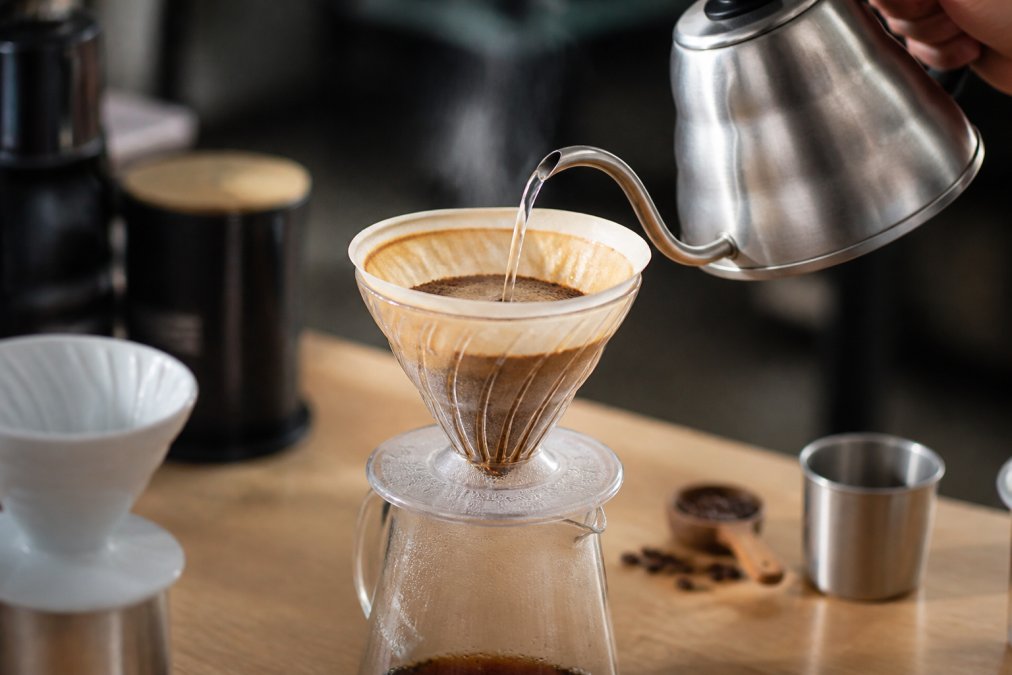
The commonly cited target is between 195°F and 205°F, and the Specialty Coffee Association's brewing standards treats that range as the baseline for proper extraction. Below 195°F, water struggles to dissolve the sugars that balance acidity, and sourness dominates; above 205°F, you risk scorching the grounds and pulling out bitterness. The resting period matters as much as temperature: beans need time to release carbon dioxide after roasting, and brewing too soon disrupts the bloom, creating uneven extraction that reads as sour. Many roasters suggest resting beans several days after the roast date, and lighter roasts benefit from longer still.
What Else Causes Sour Coffee?
Grind and temperature cover most cases, but three other variables can push a brew toward sourness.
Brew ratio. Too little coffee relative to water means too few dissolved solids to build body. Start around 1 gram of coffee to 15 or 16 grams of water, then adjust to taste.
Contact time. If your brew finishes noticeably faster than usual, the water did not have time to extract properly. Slow the flow, often by grinding finer.
Water chemistry. Water high in alkalinity buffers acidity, which can flatten flavor, while water that is too soft extracts poorly and tastes hollow (sca.coffee). the SCA's water quality guidance outlines target ranges for total dissolved solids and alkalinity.
Frequently Asked Questions
How to fix coffee that tastes sour?
To fix sour coffee, first check your grind size. A finer grind increases contact time and extraction, which reduces sourness. Next, raise your water temperature to between 195°F and 205°F. If the beans were roasted within the last few days, let them rest for 3 to 7 days to allow carbon dioxide to escape. Finally, adjust your brew ratio to use more coffee per ounce of water. These steps address under-extraction, the main cause of sourness.
Is sour coffee under-extracted or over-extracted?
Sour coffee is almost always under-extracted. Under-extraction happens when water pulls too few soluble compounds from the grounds, leaving behind bright, tangy acids. Over-extraction, by contrast, produces bitterness and a dry, ashy finish. If your cup tastes sharply sour or grassy, you are under-extracting. If it tastes bitter and hollow, you are over-extracting. Adjusting grind size, water temperature, and brew time will bring your coffee into balance.
Does water temperature affect coffee acidity?
Yes, water temperature directly affects how much acidity you taste. Water that is too cool, below 195°F, fails to extract enough of the bean's natural sugars and balanced acids, leaving sour notes dominant. Water that is too hot, above 205°F, can extract harsh, bitter compounds. The ideal range for most brew methods is 195°F to 205°F. Using a thermometer or a temperature-controlled kettle helps you stay in that zone and achieve a smoother cup.