

Special Coffee Selection: Best Artisan Beans Reviewed
Table of Contents
- What Defines a Special Coffee Selection
- How to Identify High-Quality Coffee Beans
- The Best Artisan Coffee in Our Selection
- Specialty Coffee Subscription Benefits
- Sustainability and Ethical Certification in Coffee
- Coffee Storage and Preservation Science
- Water Chemistry Impact on Your Brew
- Frequently Asked Questions
Last Updated: September 16, 2026
What Defines a Special Coffee Selection
A special coffee selection is a curated range of small-batch, specialty-grade beans chosen for traceable origin, consistent roast profiles, and flavor clarity rather than volume. It differs from commodity coffee because every lot is evaluated on measurable quality markers before it earns a place on the shelf.
How to Identify High-Quality Coffee Beans
High-quality coffee beans show four verifiable signals: a recent roast date, a named origin, a stated processing method, and a consistent bean size. If a bag omits any of those, you are guessing at quality rather than confirming it.
Roast Date and Freshness
Whole bean coffee peaks between roughly one and four weeks after roasting. A "best by" date tells you almost nothing; a roasted-on date tells you everything. Small-batch roasters who roast to order ship closer to peak than warehouse operations that hold inventory for months. A common pattern is that bags sitting on a grocery shelf have already spent two to three months in transit and storage before you open them.
Origin, Altitude, and Processing Method
Altitude slows cherry maturation, which concentrates sugars and produces the acidity and aroma that define a memorable cup. Processing method then shapes the profile: washed process delivers clarity and brightness, natural process pushes fruit and body forward, and honey process lands between the two. A cupping score above 80 generally separates specialty grade from commodity grade.
[Specialty Coffee(/blogs/news/keep-specialty-coffee-fresh) Association grading standards | sca.coffee]
Signal |
What to Look For |
Why It Matters |
|---|---|---|
Roast date |
Printed day and month |
Freshness window is 1-4 weeks |
Origin |
Named farm, region, or estate |
Verifiable traceability |
Processing |
Washed, natural, or honey |
Predicts flavor profile |
Altitude |
Stated growing elevation |
Higher elevation, denser bean |
Bean size |
Uniform screen size |
Even extraction, fewer defects |
Match Grind Size to Your Brewing Method
Grind size is the single variable most buyers overlook, and it changes extraction more than the bean itself. Too coarse and water races through, leaving the cup thin and sour. Too fine and water stalls, pulling out bitterness and astringency. The fix is a grind that matches contact time.
Brewing Method |
Grind Size |
Typical Contact Time |
|---|---|---|
French press |
Coarse, like sea salt |
4 minutes |
Drip machine |
Medium, like table salt |
4-5 minutes |
Pour-over |
Medium-fine |
2.5-3 minutes |
AeroPress |
Fine-medium |
1.5-2 minutes |
Espresso |
Fine, like powdered sugar |
25-30 seconds |
Read the Bag Like a Buyer, Not a Browser
A bag that names the farm, the elevation, the process, and the roast date is telling you the roaster tracks every lot. A bag that leads with a flavor name and nothing else is asking you to trust marketing over evidence. When two bags sit at the same price, the one with more verifiable detail is almost always the better cup.
The Best Artisan Coffee in Our Selection
The best artisan coffee in our selection balances a smooth medium roast with flavoring applied while the beans are still warm, so the oils absorb evenly instead of sitting on the surface. Each option below starts from specialty-grade single-origin arabica and is roasted in small batches.
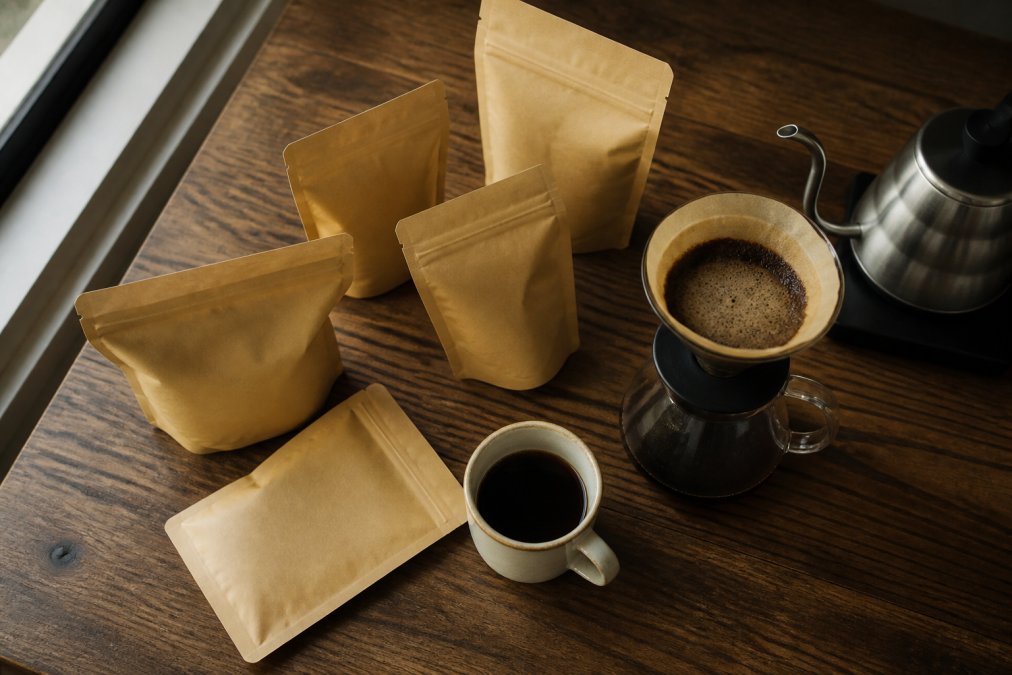
Flavored Coffees Sample Pack
The sample pack is the smartest entry point in the lineup. Six 2oz packs cover French Vanilla, Hazelnut, Cinnabun, Caramel, and Mocha, all built on the same medium roast base. It answers the question most buyers actually have: which flavor do I want to wake up to every day?

Candy Cane and Mint
Candy Cane opens with clean peppermint and a vanilla sweetness that finishes cool and refreshing. Mint takes a sharper path, a crisp peppermint note that cuts through the roast without overwhelming it. Both work hot or poured over ice.
French Vanilla and Hazelnut
French Vanilla is the silkiest cup in the range, creamy and rounded with a long, quietly sweet finish. Hazelnut leans on Brazilian arabica for a toasted, buttery quality with a hint of caramel warmth. These two are the safest recommendations for anyone who wants smoothness over intensity.
Mexican Chocolate and Chocolate Hazelnut
Mexican Chocolate layers cocoa, cinnamon, and vanilla in the traditional style, with the spice rising through the mid-cup. Chocolate Hazelnut pairs dark chocolate with toasted hazelnut so neither note dominates. Both make strong after-dinner cups.
Cinnabun, Pumpkin Spice, and Dubai Chocolate
Cinnabun delivers cinnamon and icing sweetness with no added sugar or calories. Pumpkin Spice brings pumpkin, cinnamon, and nutmeg without tipping into artificial territory. Dubai Chocolate finishes with dark chocolate, pistachio, and a tahini-and-cream depth that is genuinely different from anything else here.
Flavored Coffees Sample Pack →
Specialty Coffee Subscription Benefits
The main benefit of a specialty coffee subscription is timing: beans arrive near peak freshness instead of sitting on a shelf, and you stop running out midweek. For remote professionals, that removes a recurring decision from an already crowded morning.
Sustainability and Ethical Certification in Coffee
Sustainability in coffee comes down to price transparency and long-term farm relationships, not a single logo on the bag. Certification programs matter, but the roasters who actually improve outcomes are the ones paying above commodity rates and buying the same lots year after year.
Coffee Storage and Preservation Science
Oxygen, light, heat, and moisture are the four forces that stale coffee, and oxygen does the most damage. The mechanism is oxidation: oxygen reacts with the oils on the bean surface and inside the cell structure, breaking down the aromatic compounds that carry sweetness and fruit. Light accelerates that reaction, heat drives it faster, and moisture both speeds oxidation and adds a stale, papery note.
What Actually Happens After You Open the Bag
Roasted beans release carbon dioxide for several days after roasting, which is why a one-way valve on a fresh bag matters. Once that degassing slows, oxygen moves in and the clock starts. Most practitioners find that flavor clarity drops noticeably after two to three weeks in an open container, and the decline is not linear, the first week is gentle, then it accelerates.
The Storage Options, Ranked by What They Protect
Method |
Protects Against |
Trade-off |
|---|---|---|
Original bag, folded and clipped |
Light, some oxygen |
Valve helps, but the seal is weak |
Opaque airtight canister |
Light, oxygen, moisture |
Best for beans you finish in 2-3 weeks |
Vacuum container |
Oxygen |
Adds a step every time you brew |
Single-dose freezing |
Oxygen, heat, moisture |
Requires airtight sealing and no thaw-refreeze |
Hopper on the counter |
Nothing |
Fastest path to stale coffee |
Freezing, Done Correctly
Freezing works if you do it correctly. Seal beans in an airtight container, freeze them once, and grind from frozen without thawing and refreezing. Every temperature swing pulls moisture onto the bean surface and accelerates the decline. The mistake most people make is opening the container, scooping out beans, and putting it back, each cycle introduces humid air that condenses on the cold beans.
Buy to Your Drinking Rate, Not Your Shelf
Buy in quantities you will finish within a month. Storage slows the clock; it does not stop it. A simple rule: count how many cups you brew in a week, multiply by the grams per cup you use, and buy that amount times four. Two bags you finish in three weeks beat six bags that go stale in the cupboard, and the difference shows up in the cup long before the bag is empty.
Water Chemistry Impact on Your Brew
Water makes up roughly 98% of your brewed coffee, so its mineral content shapes extraction more than most gear upgrades. The two variables that matter are total hardness and alkalinity.
Frequently Asked Questions
What are some specialty coffees?
Specialty coffees are beans scoring 80 or above on the 100-point cupping scale, grown at high elevations and processed with care. They include single-origin offerings like Brazilian arabica, as well as small-batch flavored coffees such as French Vanilla, Hazelnut, and Mexican Chocolate. A special coffee selection focuses on beans that deliver complex sweetness, bright acidity, and a clean finish rather than the flat, bitter profile of commercial coffee.
How does high-elevation sourcing impact coffee flavor?
Beans grown at higher altitudes mature more slowly, developing denser structure and more concentrated sugars. This results in brighter acidity, more complex flavor notes, and a fuller body. In a special coffee selection, high-elevation beans from estates above 1,200 meters often show distinct fruit, floral, or chocolate characteristics that lower-grown beans lack.
What is the difference between specialty coffee and commercial coffee?
Specialty coffee is graded 80+ by certified Q graders, traced to a single origin or estate, and roasted in small batches to preserve nuance. Commercial coffee is mass-produced, often blended from lower-grade beans, and roasted darker to mask defects. A special coffee selection prioritizes freshness, transparency, and flavor clarity, while commercial coffee competes on price and consistency.
How should I store my specialty coffee to maintain freshness?
Store whole beans in an airtight, opaque container at room temperature, away from light, heat, and moisture. Avoid the refrigerator; condensation damages beans. For a special coffee selection, use beans within two to four weeks of the roast date for peak flavor. If you buy in bulk, freeze a portion in a vacuum-sealed bag and grind just before brewing to preserve aroma and oils.
What are the best brewing methods for artisan coffee beans?
Pour-over and drip methods highlight flavor clarity and acidity, ideal for light to medium roasts. French press delivers a fuller body and richer mouthfeel. Espresso works well for medium roasts with chocolate or nutty notes. For a special coffee selection, match grind size to your method: medium-coarse for French press, medium for drip, and fine for espresso. Freshly ground beans within minutes of brewing make the biggest difference.