

Specialty Coffee Subscription Customization: 2026 Guide
Table of Contents
- Why Coffee Subscription Customization Decides What Lands in Your Cup
- The Four Settings That Shape Every Delivery
- Setting Coffee Subscription Preferences: A Practical Walkthrough
- Single-Origin Coffee Subscription or Blend: How to Decide
- Coffee Subscription Grind Options Matched to Your Brew Method
- Coffee Delivery Frequency: Sizing the Schedule to Your Drinking Habits
- How Recommendation Algorithms Use Your Feedback
- Customization Trade-Offs and How to Manage Your Subscription
- Conclusion
- Frequently Asked Questions
Last Updated: October 19, 2026
Why Coffee Subscription Customization Decides What Lands in Your Cup
Coffee subscription customization is the set of preference controls a roaster offers, covering roast level, origin type, grind, and delivery cadence, that determines what arrives in each shipment. At Everything I Need, we build every order around four settings because those four decide whether a bag tastes like the coffee you wanted or like a stranger's guess.
Here is the uncomfortable truth most guides skip: a subscription is only as good as the preferences you set. The beans can be excellent and the roast date recent, yet a mismatched grind or an oversized bag will still leave you drinking stale coffee by week three.
The Four Settings That Shape Every Delivery
Four controls do almost all the work: coffee type, roast level, grind, and delivery frequency. Everything else, from bag size to flavor notes, is a refinement of those four.
Get them right and the subscription runs itself. Get them wrong and you will spend every shipment rearranging the shelf.
The first two settings, coffee type and roast level, determine flavor. The second two, grind and frequency, determine freshness. Most people obsess over flavor and ignore freshness, which is backwards. A medium roast ground for the wrong brewer tastes worse than a modest roast ground correctly.
Setting Coffee Subscription Preferences: A Practical Walkthrough
Most guides tell you to "set your preferences" without explaining what that actually looks like.
Step 1: Start with a sampler, not a full bag. Tasting across several origins before committing is the highest-value move a new subscriber can make. Our Best Sellers Sample Pack at $25.00 includes six 2-ounce packs spanning dark, medium, and single-origin roasts.

Step 2: Brew each one the same way. Keep your method constant so the only variable is the coffee.
Step 3: Write down three specific words per cup. Not "good" or "bad" but concrete: cocoa, citrus, caramel, ashy, thin, syrupy.
Step 4: Set your coffee subscription preferences from those notes, not from label copy. If your notes cluster around chocolate and caramel, you are a medium-to-dark drinker. Our Single Origin Favorites Sample Pack at $25.00 makes this concrete, with six origins running from cocoa-forward to fruity and floral.

Step 5: Order one full bag and confirm the match before setting a recurring schedule. A single bag tells you whether your preference settings translated correctly.
Step 6: Adjust one variable at a time. After your first full bag, change either origin or roast level, not both, so you learn what worked.
Building a Taste Profile From Flavor Notes
Flavor notes describe what a coffee tastes like, and a taste profile is the short list of notes you personally want to repeat. The walkthrough above produces that list in about two weeks.
A common pattern is that new subscribers over-index on roast level and under-index on origin. Roast level tells you how dark the bean was taken; origin tells you what the bean tasted like before roasting. Two medium roasts from different origins can taste completely different.
If you want to shortcut the process, start with one origin you already know you like and rotate seasonally. Our Colombia at $23.00 is a balanced starting point, with caramel, milk chocolate, and a bright red-grape acidity. If you want the opposite of exploration, our Breakfast Blend at $23.00 delivers the same blood orange and caramel profile on every order.

Single-Origin Coffee Subscription or Blend: How to Decide
Choose single origin when you want to taste one place clearly, and choose a blend when you want the same cup every single morning. That is the whole decision.
A single-origin coffee comes from one growing region, so its flavor shifts with each harvest. That variation is the point for drinkers who treat coffee like wine. A blend combines several coffees to hit a consistent target, which suits anyone who wants predictability before a workday.
For a first single-origin coffee subscription, pick one origin you already know you like and rotate seasonally. Our Colombia at $23.00 is a balanced starting point, with caramel, milk chocolate, and a bright red-grape acidity. If you want the opposite of exploration, our Breakfast Blend at $23.00 delivers the same blood orange and caramel profile on every order.
Coffee Subscription Grind Options Matched to Your Brew Method
Match grind to brewer and the rest follows: coarse for French press, medium for drip and pour-over, fine for espresso.
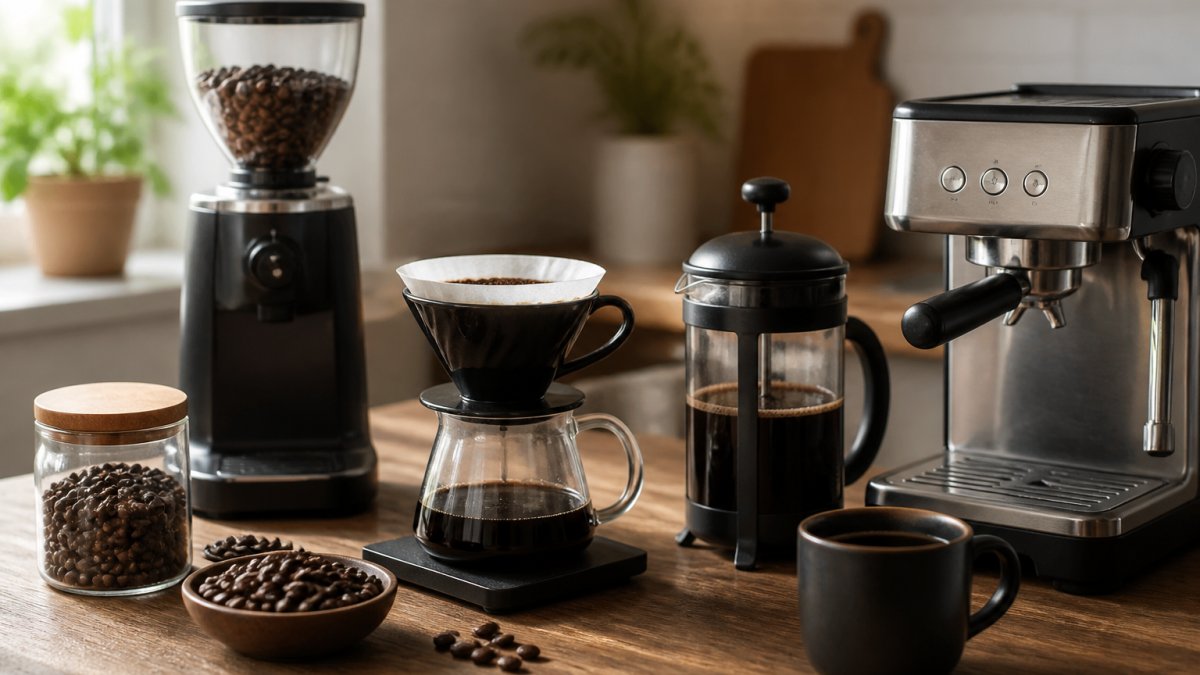
The rule of thumb: the longer water contacts coffee, the coarser the grind. But the practical question is what to select when you set up a subscription.
Best Sellers Sample Pack: Six Bean, Cowboy, Breakfast, Peru, Mexico, Bali →
- French press: coarse, like sea salt. Long steep, low pressure. Too fine and the press becomes muddy and bitter because sediment passes through the mesh.
- Drip machine: medium. The default for most home setups. Too coarse and the water runs through without extracting flavor; too fine and it over-extracts and turns bitter.
- Pour-over: medium-fine. Slightly finer than drip for a faster flow. This is the most forgiving method for beginners because you can adjust pour speed to compensate for a slightly off grind.
- Espresso: fine, and the most sensitive to small changes. A setting that works in one espresso machine may choke another. If you are buying espresso for a subscription, order whole bean and dial in per bag.
If you own more than one brewer, order whole bean and grind per cup.
Whole Bean, Ground, or Both
Whole bean is the better default for anyone with a grinder, because grind size becomes a choice you make per brew rather than a decision locked in at the roaster. Ground coffee suits households without a grinder, or offices where speed matters more than the last degree of freshness.
A practical compromise: whole bean for your primary brewer, and a small ground bag for the occasional second method. Our sample packs at $25.00 work well here, since 2-ounce bags let you test a grind without committing to a full pound.
Coffee Delivery Frequency: Sizing the Schedule to Your Drinking Habits
Set coffee delivery frequency from your actual consumption, not your optimism. Count the cups you brew in a typical week, multiply by the dose per cup, and compare that to the bag size you are ordering.
A common mistake is choosing the shortest interval because it feels fresher. It is not fresher if the previous bag is still half full. Coffee stales in the weeks after roasting, so the goal is a schedule where each bag empties just as the next arrives.
Most households settle into a two- or four-week cadence after one or two cycles. Adjust once, then leave it alone.
How Recommendation Algorithms Use Your Feedback
Recommendation systems learn from three signals: what you rate highly, what you reorder, and what you skip. The more specific your feedback, the sharper the suggestions become.
This is where most subscribers leave value on the table. Rating a coffee five stars tells the system almost nothing. Noting "loved the cocoa, too much citrus" tells it a great deal. Treat ratings as a short conversation with your roaster rather than a scorecard.
A useful habit is to review each bag within a day of finishing it, while the flavor is still fresh in memory.
Customization Trade-Offs and How to Manage Your Subscription
Every customization choice trades something away. More variety means less predictability. Fresher coffee means more frequent deliveries. Whole bean means buying a grinder. Naming those trade-offs up front prevents the slow drift toward an unused subscription.
To keep a subscription working:
- Review your cadence quarterly. Drinking habits change with seasons and schedules.
- Pause rather than cancel during travel or busy stretches.
- Rotate one variable at a time. Change origin or roast, not both, so you learn what worked.
- Keep one reliable bag in the rotation alongside experiments.
A coffee subscription you have to think about is a subscription you will eventually abandon. Set the four core controls deliberately, review them a few times a year, and let the rest run.
Conclusion
The gap between a subscription you love and one you forget about comes down to four settings and the discipline to review them. Most people set preferences once, never adjust, and blame the coffee when the schedule outpaces their drinking.
At Everything I Need, we roast small batches to order from high-elevation estate beans, using precision thermal mapping to keep bitterness out of the cup. Sample packs start at $25.00, single origins at $23.00, and every order ships fresh rather than from a warehouse shelf. Start with a sampler, set your grind and cadence deliberately, and let your feedback sharpen the rest.
Frequently Asked Questions
How do I customize a specialty coffee subscription?
Start with four settings: flavor direction, coffee type, grind, and delivery frequency. Choose a taste profile built from flavor notes you already enjoy, such as chocolate and caramel or bright citrus and berry. Then pick single-origin beans or a blend, select whole bean or a grind matched to your brewer, and set a schedule that arrives before your current bag runs out. You can adjust any of these after the first delivery once you know how the coffee actually tastes in your kitchen.
Can I choose single-origin coffee or blends in a subscription?
Most specialty services let you choose, and the right answer depends on what you want from the cup. A single-origin coffee subscription highlights one region's character, so a Colombia lot tastes of caramel and red grape while an Ethiopia lot leans floral and fruity. Blends trade that specificity for consistency, which helps if you drink espresso daily and want the same result every morning. A sample pack is the fastest way to test both before committing to full bags.
How often should a coffee subscription deliver coffee?
Match the schedule to how much you actually brew. A single daily 12-ounce cup uses roughly 20 grams of coffee, so a 12-ounce bag lasts about two weeks. Two cups a day cuts that to a week. Set delivery frequency one step shorter than your bag lifespan so a fresh bag arrives before the old one empties. If you travel or your routine shifts, most services let you skip, pause, or reschedule a shipment rather than cancel.
What grind should I choose for my coffee subscription?
Pick the grind your brewer needs. Pour-over and drip want a medium grind, French press wants coarse, and espresso needs a fine grind dialed to your machine. If you own a burr grinder, order whole bean and grind right before brewing, which preserves aroma longer than pre-ground coffee. If you do not have a grinder, choose the grind option that matches your main brewer and use the bag within a few weeks of the roast date.
How do I keep coffee fresh between subscription deliveries?
Store beans in an airtight container away from light, heat, and moisture, and skip the refrigerator, which introduces condensation. Keep the bag sealed at room temperature and buy bag sizes you can finish within about a month of the roast date. Ordering whole bean and grinding just before brewing slows staling. If a delivery is larger than you can drink, split it into smaller containers and freeze one portion, then let it come to room temperature before grinding.
Can I change my coffee preferences after subscribing?
Yes, and you should. Your first delivery is a baseline, not a verdict. If a bag tastes too acidic, move toward medium or dark roasts with chocolate and nut notes. If it tastes flat, try a brighter single origin. Rate each bag and note what you liked, because roasters use that feedback to steer future picks. Adjusting roast level, origin, and grind after two or three deliveries usually produces a much closer match than the initial questionnaire.