

Why Specialty Coffee Tastes Different: A 2026 Guide
Table of Contents
- What Makes Specialty Coffee Taste Different?
- How Coffee Processing Methods Shape Flavor
- High Elevation Coffee Benefits and Tasting Notes in Coffee
- Frequently Asked Questions
Last Updated: September 12, 2026
What Makes Specialty Coffee Taste Different?
Specialty coffee tastes different because of what happens before it reaches a roaster: high-elevation growing conditions, careful processing, and precise roasting that preserve a bean's volatile compounds instead of flattening them. This guide breaks down why some cups taste like cacao and hazelnut while others taste like ash and cardboard.
The short answer: specialty coffee is coffee that scores 80 points or higher on a 100-point scale set by the Specialty Coffee Association, graded for defects, flavor clarity, and origin character. (sca.coffee) Mass-market coffee rarely clears that bar. It's grown for volume, roasted for shelf life, and brewed for consistency, not nuance.
Most drinkers who say they "don't like coffee" have simply never had a cup that wasn't over-extracted or stale. Bitterness isn't a flavor note, it's a defect, fixable at every stage from farm to cup.
How Coffee Processing Methods Shape Flavor
Coffee processing methods determine how the fruit is removed from the seed, shaping sweetness, acidity, and body more than almost anything else.
- Washed: Fruit removed before drying. Clean, bright, high acidity.
- Natural: Whole cherry dried intact. Heavy sweetness, berry notes, fuller body.
- Honey: Some mucilage left on. Syrupy sweetness, balanced acidity.
A common mistake is assuming darker roasts equal stronger coffee. Dark roasting burns off the volatile compounds that carry origin-specific flavor, which is why commodity beans are roasted dark in the first place (PubMed).
High Elevation Coffee Benefits and Tasting Notes in Coffee
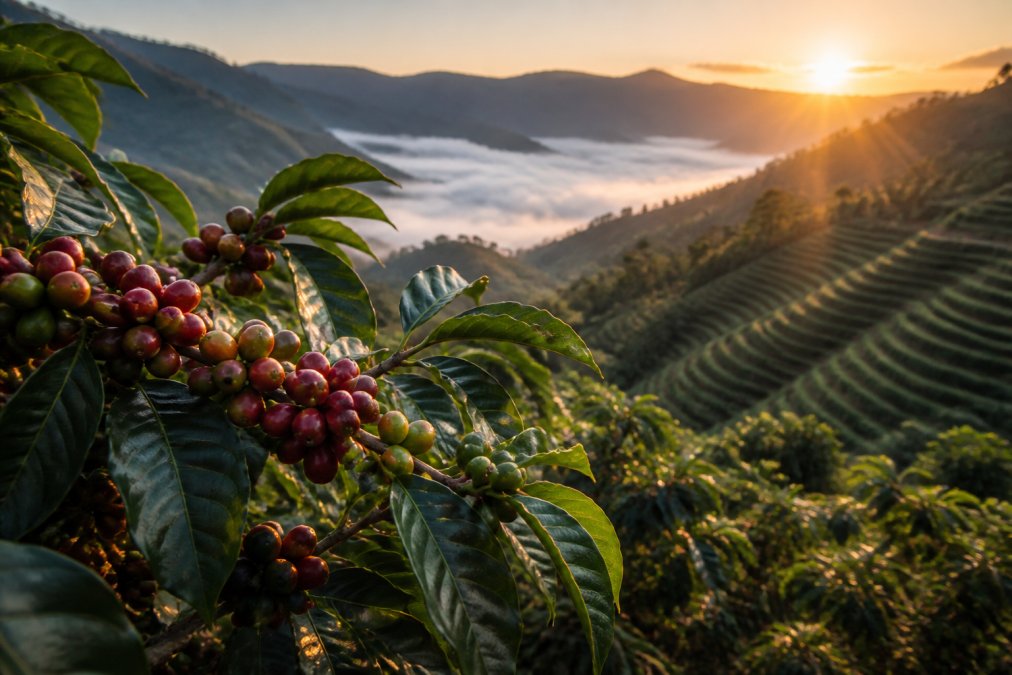
High-elevation coffee cherries grown on a terraced hillsides
High elevation coffee benefits start with slower cherry maturation. Cooler air means denser beans, and denser beans hold more sugar and aromatic complexity, which is why high-grown beans tolerate a lighter roast without tasting sour or grassy (PubMed).

Tasting notes in coffee aren't added flavorings, they describe what your palate detects: acidity, body, mouthfeel, sweetness, and aftertaste. A well-sourced Ethiopian might show jasmine and bergamot; a Kenyan often reads as blackcurrant and tomato-leaf brightness.

At Everything I Need, we source from high-elevation estates and roast to order using precision thermal mapping, keeping the roast curve consistent so origin notes survive the drum. Our Ethiopia Natural and Kenya single origins show how altitude and terroir translate into the cup.
Bitter, flat coffee usually traces back to low-grown beans, stale stock, or a roast that went too far. Fix the sourcing and roasting, and brewing becomes far more forgiving. Everything I Need roasts small batches to order, ships fast so nothing sits in a warehouse, and uses precision thermal mapping to eliminate the bitterness that turns people off coffee. Start with a single origin like our Ethiopia Natural or the Blonde for a brighter, sweeter cup.

Frequently Asked Questions
What defines specialty coffee versus commercial coffee?
Specialty coffee is graded 80 points or higher on the Specialty Coffee Association scale, which evaluates fragrance, flavor, acidity, body, balance, and aftertaste. Commercial coffee typically scores below 80 and is often blended from lower-altitude, mass-produced beans. The higher grade reflects better growing conditions, careful processing, and roasting that preserves origin character. This is why specialty coffee tastes different: it is grown, picked, and roasted with flavor clarity as the priority rather than uniformity or shelf life.
Does the processing method change how coffee tastes?
Yes. Coffee processing methods directly influence flavor. Washed process coffees tend to have clean, bright acidity and clear origin expression. Natural process coffees, like the Ethiopia Natural, develop fruity, wine-like notes from drying inside the whole cherry. Honey process sits between the two, retaining some mucilage for added sweetness and body. Each method changes how sugars and acids develop during drying, so the same bean variety can taste noticeably different depending on how it was processed.
Why does high-elevation coffee taste different?
High elevation coffee benefits from cooler temperatures and slower cherry maturation, which allows sugars and acids to develop more fully. Beans grown above 1,200 meters are denser, and denser beans roast more evenly and retain more volatile compounds. This produces more complex tasting notes in coffee, such as floral aromatics, stone fruit, and citrus, instead of the flat bitterness common in lower-grown beans. The Kenya and Bali Blue are both high-elevation examples that show this density-driven flavor clarity.