

Comparing Acidity Levels in High Altitude Coffee
Table of Contents
- How Growing Altitude Affects Coffee Acidity
- High-Altitude vs Low-Altitude Coffee: A Direct Comparison
- Coffee Acidity vs pH: Measured vs Perceived
- Coffee Acidity by Roast Level
- How to Taste Coffee Acidity
- Coffee Cupping Acidity: A Structured Evaluation
- Altitude Ranges and Regional Context
- Frequently Asked Questions
Last Updated: October 21, 2026
How Growing Altitude Affects Coffee Acidity
Comparing acidity levels in high altitude coffee starts with one fact: elevation changes how a bean matures, and maturation changes what you taste. Coffee grown at higher elevations develops more slowly in cooler air, and that slower ripening concentrates sugars and organic acids inside the bean. The result is the bright, lively character that defines high altitude coffee.
At Everything I Need, we source from high-elevation estates precisely because that slow maturation produces complexity you cannot rush. The Specialty Coffee Association's research on green coffee quality notes that elevation is one of the environmental factors graders consider when assessing a lot.
Why Cooler Air and Slower Maturation Change the Bean
Cooler temperatures at elevation stretch the growing cycle. Cherries ripen unevenly and slowly, which gives the plant more time to build density and sugar content. Denser beans roast more predictably and hold their acidity through the process. Warm, lowland growing conditions push fast ripening, and fast ripening tends to produce flatter, less defined cups.
High-Altitude vs Low-Altitude Coffee: A Direct Comparison
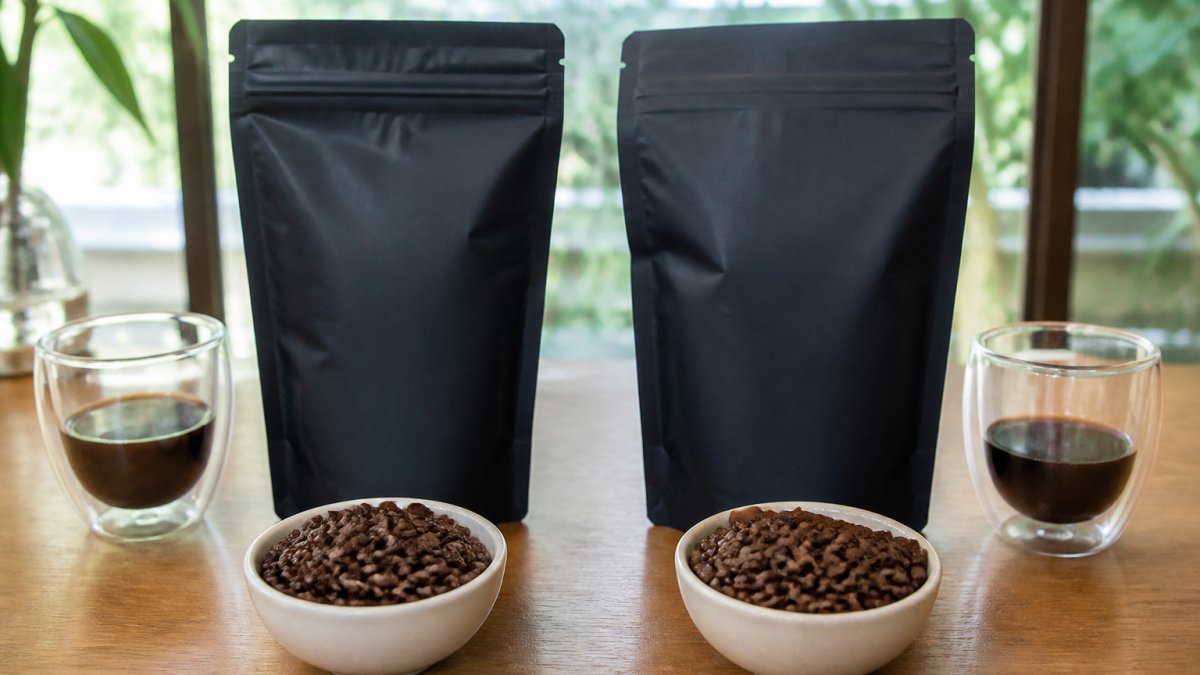
Most comparisons of high-altitude and low-altitude coffee are unfair: they pit a washed Ethiopian lot against a natural Brazilian lot, or a light roast against a dark roast, and then credit the altitude for every difference in the cup. A direct comparison holds variety, processing, roast level, and brew method constant and changes only the growing elevation. That is the only way to isolate what altitude actually does.
Here is the practical framework. Pick two lots of the same cultivar (Bourbon, Typica, or Caturra are widely planted at multiple elevations), the same processing method (both washed, for example), the same roast level, and brew them identically. Then compare.
What Changes and What Stays the Same
Variable |
High-Elevation Lot (above ~1,500 m) |
Low-Elevation Lot (below ~1,200 m) |
|---|---|---|
Maturation speed |
Slow, often 8-11 months to ripen |
Fast, often 6-8 months |
Bean density |
Higher; denser beans sink in water |
Lower; more floaters |
Sugar development |
More concentrated, complex |
Simpler, sometimes flatter |
Perceived acidity |
Brighter, more layered, longer finish |
Softer, rounder, shorter finish |
Body |
Often lighter and more tea-like |
Often heavier and syrupy |
These are patterns, not laws. A well-farmed low-elevation lot can out-cup a poorly handled high-elevation lot, and latitude shifts the effective elevation band: a lot grown at 1,400 meters near the equator can behave like a lot grown at 1,700 meters farther from it.
Why Density Is the Mechanism
Cool nights and warm days at elevation slow the cherry's development. The bean has more time to pack in sugars and organic acids, and it finishes denser. Dense beans roast more evenly and hold their acidity through the roast. Fast-ripening lowland beans are less dense, roast faster at the surface, and tend to flatten out. This is why density is one of the first things a green buyer checks, and why a density reading is a more reliable signal than the elevation number alone.
Growing Conditions, Climate, and Soil
Three variables separate the two growing environments:
- Temperature: Cool nights and warm days at elevation slow maturation and preserve acidity. A diurnal swing of roughly 15-20°F between day and night is a common high-elevation pattern.
- Humidity and cloud cover: Mountain mist reduces direct heat stress on the plant and evens out ripening.
- Soil: Volcanic and rich loam soils at elevation drain well and feed steady, even growth.
Bean density follows from all three. Dense beans from slow maturation hold up better in the roaster and carry more flavor into the cup. The takeaway for comparison is simple: control the variables you can, and treat elevation as one strong signal among several rather than a guarantee.
Coffee Acidity vs pH: Measured vs Perceived
Coffee acidity and coffee pH are not the same measurement, and confusing them is the most common mistake in this conversation. pH measures actual hydrogen ion concentration on a lab scale. Perceived acidity is what your palate registers as brightness, tartness, or liveliness. A brewed cup typically lands somewhere around pH 4.8 to 5.2, with darker roasts and colder brews drifting slightly higher and some bright light roasts dipping a little lower. Those numbers sit in a narrow band, yet the sensory difference between two cups in that band can be enormous.
The Three Measurements People Confuse
- pH: The concentration of free hydrogen ions. It is a narrow, fairly stable number across most brewed coffee.
- Titratable acidity: The total amount of acid present, measured by neutralizing the brew with a base. Two coffees can share a pH and differ widely in titratable acidity.
- Perceived acidity: The sensory impression of brightness, tartness, or liveliness. It is shaped by acids, sugars, body, and roast, not by pH alone.
This is why a coffee can sit at a similar pH to another and still taste far more acidic. Roast level, brew strength, and the balance of sugars all shift perception without moving the pH number much. "Low-acid coffee" marketing usually describes flavor, not chemistry.
The Acids Behind the Flavor
Acidity is not one quality. The main organic acids in coffee each read differently on the palate:
- Citric acid: Reads as bright, citrusy, and clean. Common in high-grown lots and often described as lemon or grapefruit.
- Malic acid: Reads as apple, pear, or stone fruit. Contributes a juicy, rounded tartness.
- Chlorogenic acids (CGAs): Present in green coffee and broken down during roasting. They contribute to perceived bitterness and astringency more than to brightness.
- Acetic acid: Reads as vinegar-like at high levels; a little can add complexity, too much reads as sour or fermented.
- Quinic acid: Forms as CGAs break down during roasting; associated with a heavier, sometimes bitter finish in darker roasts.
A high-elevation, light-roasted lot tends to show more citric and malic character, which is why it reads as bright and structured. A darker roast has less of those acids and more of the roast-derived compounds that read as bittersweet.
Coffee Acidity by Roast Level
Coffee acidity by roast level drops as the roast gets darker. Light roasts preserve more of the bean's original organic acids, so they taste brighter and more fruit-forward. Dark roasts break down those acids through heat, which is why they land heavier, smokier, and less tart.
Roast Level |
Acidity Character |
Best For |
|---|---|---|
Light |
Bright, crisp, fruit-forward |
Pour-over, single origin exploration |
Medium |
Balanced, rounded brightness |
Drip, everyday drinking |
Dark |
Low, muted, bittersweet |
Espresso, milk drinks |
Our Ethiopia Natural and Kenya lots are roasted to preserve that brightness. The Kenya in particular carries the sparkling acidity and blackcurrant notes that high-elevation growing delivers.

How to Taste Coffee Acidity
To taste coffee acidity, slurp a small amount so the liquid spreads across your whole palate, then note where the brightness lands and how long it lasts. Acidity shows up as a tingling sensation at the sides of the tongue and a juicy quality mid-palate.
Practical steps:
- Let the cup cool to around 140°F; heat masks acidity.
- Slurp air with the coffee to aerate it.
- Note the first impression, the middle, and the finish separately.
- Compare two coffees side by side to calibrate your palate.
Brightness that feels clean and structured is a good sign. Sharpness that reads as sour or vinegar-like usually points to under-extraction, not the bean.
Sour and acidic are not synonyms. Sour means the brew is unbalanced, often from too coarse a grind or too little contact time. Acidity means the coffee has life and definition.
Coffee Cupping Acidity: A Structured Evaluation
Coffee cupping acidity is scored on intensity and quality, not just presence. Graders assess how the acidity sits in the cup: is it crisp and clean, or muddled and harsh? The Coffee Quality Institute's cupping protocol sets the standard vocabulary professionals use.
A simple home version:
- Use equal doses of each coffee, same grind, same water temperature.
- Slurp each from a spoon and score brightness from 1 to 5.
- Note whether the acidity lifts the sweetness or fights it.
Altitude Ranges and Regional Context
Altitude ranges give you a shorthand for what to expect, though they are a guide, not a guarantee. Broadly, lower-grown lots sit under 1,200 meters, mid-elevation lots run roughly 1,200 to 1,500 meters, and high-elevation lots climb above that, where the brightest cups tend to come from.
East African origins like Ethiopia and Kenya are famous for high-elevation lots with vivid acidity. Our Peru and Colombia lots grow in high Andean valleys and mountain regions, delivering brightness with more rounded sweetness.

Evidence quality matters here. Most altitude claims rest on origin reporting and cupping notes rather than controlled lab studies, so treat elevation as one strong signal among several, alongside processing method and roast.
Frequently Asked Questions
Is high-altitude coffee more acidic?
Generally, yes, but the acidity is usually brighter and more complex rather than simply sharper. High altitude coffee grows in cooler temperatures, which slows cherry maturation and produces denser beans with more concentrated organic acids. The result is often described as a clean, lively, or crisp acidity rather than a sour or harsh bite. That said, processing method, roast level, and brewing all shift the final cup, so altitude alone does not guarantee a specific acidity level.
Does roasting reduce coffee acidity?
Roasting changes the acid profile rather than simply removing it. Light roasts tend to preserve more of the bright, fruit-forward acids that high altitude coffee is known for. As the roast moves darker, many of those compounds break down and the cup reads smoother and more bittersweet, though dark roasts can develop their own sharper, more bitter notes. Coffee acidity by roast level is one of the most reliable levers you control when dialing in a cup.
How can I compare the acidity of two coffees?
Brew both coffees identically: same grind size, same water temperature, same ratio, and same brew time. Taste them side by side and note where the acidity hits, whether it feels sharp or rounded, and how long it lingers. A structured coffee cupping acidity session, slurping from matched cups and scoring brightness, sweetness, and finish, gives you a fair comparison. Controlling variables is what separates a real taste comparison from a guess.
Does coffee-growing altitude affect pH?
Altitude has a modest effect on measured pH compared with roast and brew strength. Coffee acidity vs pH is not the same question as perceived acidity: pH measures hydrogen ion concentration, while your tongue registers brightness, sourness, and liveliness. Two coffees can share a similar pH and taste completely different. Look at pH as one data point, not the full story of how acidic a high altitude coffee will seem in the cup.
Coffee acidity is not a flaw to eliminate; it is the structure that makes a cup interesting. If you want to taste what high-elevation growing actually does, Everything I Need roasts small-batch, high-elevation estate beans to order, using precision thermal mapping to protect the brightness and sweetness that slow maturation builds. Our Ethiopia Natural and Kenya single origins are the clearest place to start. Order fresh, and taste the difference elevation makes.