

Is Specialty Coffee Worth the Price? An Honest Review
Table of Contents
- Specialty Coffee vs Regular Coffee: What the Label Actually Means
- Why Is Specialty Coffee So Expensive? Breaking Down the Real Costs
- How to Identify High-Quality Coffee Beans Before You Buy
- Coffee Flavor Notes Explained: What You're Actually Tasting
- Freshness, Storage, and How Long a Bag Stays Enjoyable
- Matching Specialty Coffee to Your Brew Method and Roast Preference
- Verdict: When Specialty Coffee Is Worth the Price (and When It Isn't)
- Frequently Asked Questions
Last Updated: October 7, 2026
Specialty Coffee vs Regular Coffee: What the Label Actually Means
Specialty coffee is coffee graded 80 points or higher on a 100-point scale by a licensed evaluator. That number separates it from commodity coffee and explains most of the price gap on the shelf.
The term gets used loosely in marketing, but it has a technical definition: the Specialty Coffee Association built the scale, and licensed Q graders assign the score through a formal cupping process.
The 80-Point Threshold and What It Measures
Graders score aroma, flavor, acidity, body, balance, sweetness, and aftertaste, then deduct for defects like mold, insect damage, or off-fermentation flavors. A coffee must clear 80 points with zero primary defects to earn the label.
The threshold isn't arbitrary. Below 80, you taste the flaws: flatness, papery notes, harsh bitterness. Above it, the cup gets cleaner and more distinct.
Where the Grading System Falls Short
The score is a snapshot, not a guarantee. It reflects how one sample tasted on one day and says nothing about storage or shelf time.
A high score on a bag that's sat for a year means little. Grading evaluates quality at origin, not quality in your cup.
Why Is Specialty Coffee So Expensive? Breaking Down the Real Costs
Specialty coffee costs more because every step from farm to roaster is slower and more selective than commodity production, the price reflects labor, sorting, and smaller quality-control volumes.
Here's where the money goes:
- Selective picking: Only ripe cherries get harvested, often by hand, sometimes in multiple passes over the same trees.
- Sorting and defects: Lots are screened for imperfections that commodity coffee simply blends away.
- Small-batch roasting: Lower volumes per roast mean higher cost per pound, but far more control.
When you buy from a roaster that pays producers fairly for that extra labor, part of the premium is the labor itself.
Cost Per Cup: The Math Most Buyers Skip
The per-bag price is the wrong number to stare at, cost per cup is what matters. Here is a reproducible framework you can run on any bag.
The four inputs:
- Bag size, the net weight on the label, in ounces or grams.
- Dose, how many grams of coffee you use per cup. A common starting point for drip or pour-over is roughly 15 to 18 grams per 8- to 10-ounce cup; espresso uses roughly 18 to 20 grams per shot.
- Brew ratio, the coffee-to-water ratio. A widely used starting range is about 1:15 to 1:17 by weight for drip and pour-over.
- Waste, the dial-in shots, the test brews, and the last stale scoop. A reasonable allowance is 5 to 10 percent of the bag.
The formula:
Cost per cup = (bag price ÷ bag weight in grams) × dose in grams ÷ (1 − waste percentage)
A worked example with round numbers:
- Bag: 12 ounces, which is about 340 grams.
- Dose: 16 grams per cup.
- Waste allowance: 10 percent.
Swap in whatever price you paid and divide.
Buying Scenario |
Typical Bag Size |
Dose Assumption |
Cups per Bag (after waste) |
What You're Really Paying For |
|---|---|---|---|---|
Grocery-store coffee |
12 oz |
16 g |
~19 |
Convenience, shelf stability |
Specialty whole bean |
12 oz |
16 g |
~19 |
Freshness, traceability, flavor clarity |
Café brewed cup |
12-16 oz |
n/a |
1 |
Labor, overhead, convenience |
Two things usually fall out of this.
Where the Premium Actually Shows Up in the Cup
Cost per cup tells you what you're spending, not what you're getting. The premium buys three things you can taste:
- Freshness: A roast date within the last few weeks versus a bag that has been sitting for months.
- Clarity: Fewer defects means fewer flat, papery, or harsh notes competing with the good ones.
- Traceability: A named farm, lot, and process means the flavor is repeatable, not a lottery.
If none of those three matter to how you drink coffee, the premium is hard to justify on math alone. If they do, the per-cup difference is usually the smallest line item in your morning.
How to Identify High-Quality Coffee Beans Before You Buy
High-quality coffee beans show three things on the bag: a roast date, a specific origin, and a stated processing method. If any of those are missing, you're guessing.
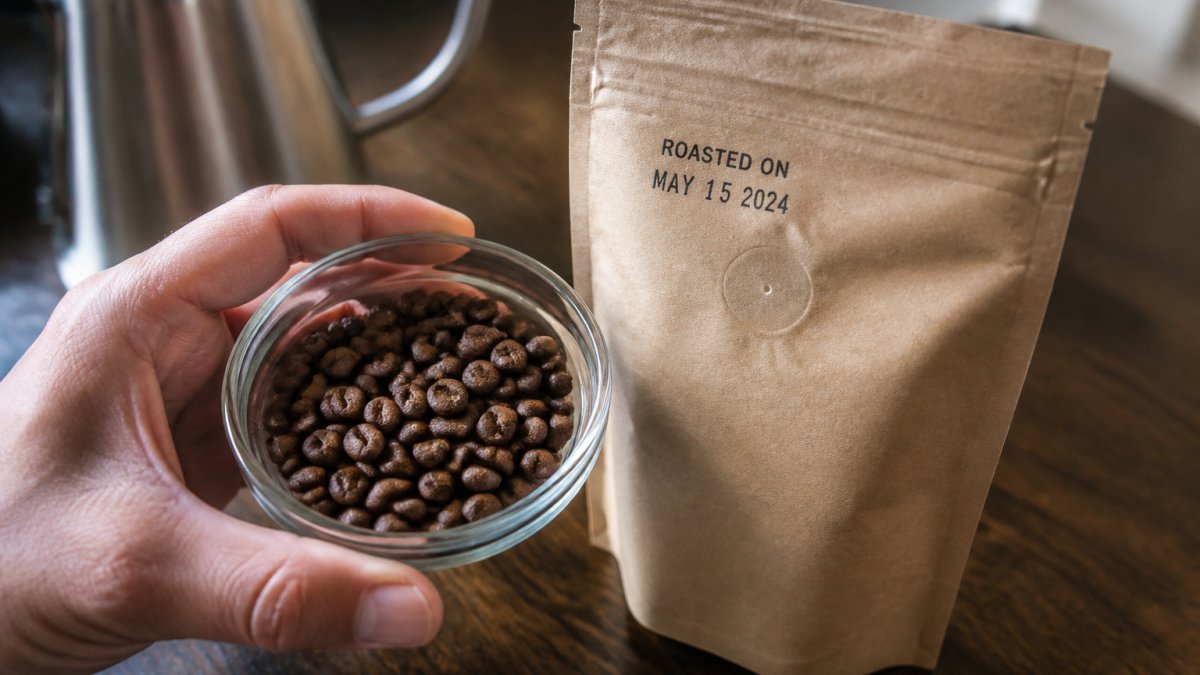
Roast Date, Origin, and Processing Method
A roast date tells you how fresh the coffee is. A "best by" date tells you almost nothing, because it's often set a year or more out.
Origin tells you where the beans grew. Processing method, washed, natural, or otherwise, tells you how the fruit was handled after picking and drives much of what you taste.
For a concrete example, our Ethiopia Natural is a single origin from Yirgacheffe, Sidama, and Guji, processed naturally on raised beds.

Coffee Flavor Notes Explained: What You're Actually Tasting
Flavor notes describe the aromas and tastes a coffee reminds you of, not ingredients added to the beans. "Blueberry and jasmine" means the coffee's natural compounds evoke those sensations.
Those notes come from three places: plant variety, growing-region terroir, and processing method. Natural process, where the whole cherry dries in the sun, pushes fruit-forward flavors; washed process delivers cleaner, more acidic cups.
Why Personal Preference Beats Cupping Scores
A 90-point coffee isn't objectively better than an 85-point coffee for you.
This is where buyers get burned: they chase the highest score, buy a bright, acidic Kenyan, and discover they prefer something rounder and sweeter.
Our Kenya is bold and bright, with blackcurrant and ripe tomato notes and a winey finish. Our Colombia is smoother, with caramel and milk chocolate.

Freshness, Storage, and How Long a Bag Stays Enjoyable
Freshness is the biggest variable you control after purchase.
Whole bean coffee holds its peak for roughly two to four weeks after the roast date if stored well.
Store beans in an airtight container, away from light, heat, and moisture. Skip the fridge, it introduces humidity swings.
A simple rule: buy in quantities you'll finish within a few weeks. Freshness beats volume every time.
Matching Specialty Coffee to Your Brew Method and Roast Preference
The right coffee depends on how you brew and what you like. A pour-over rewards a bright, delicate coffee; espresso or French press does better with something fuller and sweeter. But the more useful question is whether the specialty premium pays off across every roast style, and the honest answer is no.
Value by Roast Level
Roast level changes what you're paying for, the part most buying guides skip.
- Light roasts show the most origin character: the fruit, the acidity, the terroir. This is where specialty grading and traceability earn their premium most clearly, because a light roast has nowhere to hide a defect. If you want to taste why a coffee scored well, this is the roast to buy.
- Medium roasts balance origin character with sweetness and body. They are the most forgiving across brew methods and the easiest entry point if you are unsure what you like.
- Medium-dark and dark roasts push roast-driven flavors, caramel, chocolate, smoke, forward and mute the origin notes underneath. A dark roast can be excellent, but past a certain point the roast character dominates and the specialty premium buys you less, because you are no longer tasting the farm as much as the roaster's profile.
The trade-off in plain terms: the darker the roast, the more you pay for roast execution and the less for origin quality. Neither is wrong, they're just different purchases.
Value by Brew Method
Brew method determines how much of the coffee's character reaches your cup.
- Pour-over and drip: These methods reward clarity and acidity, so light and medium roasts shine. This is the highest-return pairing for specialty coffee.
- French press: Full immersion and a metal filter keep more oils and body, which flatters medium and medium-dark roasts.
- Espresso: Pressure amplifies sweetness and body but can bury delicate top notes, so medium and darker roasts with structure tend to perform best.
A useful rule: the more the brew method preserves nuance, the more the specialty premium shows up in the cup. A method that flattens nuance makes the premium harder to taste.
A Simple Tasting Framework
You don't need a cupping table to judge fit. Try this:
- Pick two coffees at the same roast level but different origins.
- Brew both the same way, same dose, same ratio, same day.
- Taste them side by side, warm and then cooled. Cooling reveals flaws and sweetness that heat masks.
- Note three things: what you taste first, what lingers, and whether you want a second cup.
The coffee you want a second cup of is your answer. A score can tell you a coffee is well made; only your palate can tell you it's worth the price to you.
If you're unsure where to start, a sample pack lets you test several styles without committing to a full bag. Our Best Sellers Sample Pack includes 2-ounce portions of six coffees, from the Six Bean Blend to single origins like Peru, Mexico, and Bali, so you can find your match before buying larger.

Verdict: When Specialty Coffee Is Worth the Price (and When It Isn't)
Specialty coffee is worth the price when you drink it regularly, care about flavor, and value freshness and traceability.
It's not worth it if you brew rarely, drink coffee purely for caffeine, or won't store it well.
For most daily coffee drinkers, the honest answer is yes, with one condition: buy fresh, buy whole bean, and buy from a roaster who tells you where the coffee came from.
Frequently Asked Questions
What makes specialty coffee different from regular coffee?
Specialty coffee is graded on a 100-point scale by licensed Q graders and must score 80 or above. It is grown at higher elevations, picked ripe, processed with care, and roasted in small batches. Regular grocery-store coffee is graded below 80, often blended from lower-altitude farms, and roasted in large volumes without attention to individual lot character. The result is a measurable difference in flavor clarity, sweetness, and aroma.
Is specialty coffee worth buying if I add milk or sugar?
Yes, though the difference is less dramatic. Milk and sugar mask some of the delicate floral and fruit notes that define specialty coffee. However, a well-roasted specialty bean still delivers a smoother base with less bitterness, which means you may find yourself using less sugar over time. If you drink milk-based espresso drinks, look for medium-dark roasts with chocolate and caramel notes, which hold up well against milk.
How fresh should specialty coffee be, and how long does a bag stay good?
Specialty coffee tastes best between 4 and 21 days after the roast date printed on the bag. After about 4 to 6 weeks, the aromatic compounds fade noticeably, and the coffee can taste flat or papery. Store beans in an airtight container away from light, heat, and moisture. Whole bean coffee stays fresh longer than pre-ground because the surface area exposed to oxygen is much smaller.
Does specialty coffee actually taste better, or is it just marketing?
Blind tastings consistently show that most people can tell the difference between specialty and commodity coffee, but personal preference matters more than any score. Some drinkers genuinely prefer a darker, more bitter cup. The 80-point threshold measures technical quality, not whether you personally enjoy it. If you are sensitive to bitterness and want to explore complex sweetness and fruit-forward flavors, specialty coffee is a worthwhile upgrade.
What is the most affordable way to try specialty coffee?
A sample pack is the lowest-risk entry point. Everything I Need offers a Best Sellers Sample Pack with six 2-ounce packs for $25.00, covering blends and single origins from Peru, Mexico, Bali, and more. That lets you taste across roast levels and origins before committing to a full 12-ounce bag at $23.00. It is also a practical way to figure out which flavor profiles you actually prefer.
The challenge is finding a roaster who actually delivers on freshness and traceability, not just claims it. Everything I Need roasts to order in small batches, sources from high-elevation estates, and uses precision thermal mapping to keep bitterness out of the cup. Our ordering is simple, our delivery is fast, and every bag tells you exactly what you're drinking. Get started with Everything I Need and taste the difference fresh, traceable specialty coffee makes in your morning routine.