

Fix Common Coffee Brewing Mistakes: A Troubleshooting Guide
Table of Contents
- Why Your Coffee Tastes Wrong: The Root Causes
- How to Fix Bitter Coffee
- How to Fix Sour Coffee
- Coffee Grind Size for Brewing: Getting It Right
- Mastering Your Coffee-to-Water Ratio
- Water Quality and Temperature: Often-Overlooked Factors
- Equipment Cleanliness and Brew Time Adjustments
- Conclusion
- Frequently Asked Questions
Last Updated: October 12, 2026
Why Your Coffee Tastes Wrong: The Root Causes
When your morning cup tastes bitter, sour, or flat, the problem rarely lies with the beans themselves. Most brewing mistakes stem from five core issues: bean quality and freshness, grind size, water temperature, coffee-to-water ratios, and equipment cleanliness. At Everything I Need, we've found that the vast majority of disappointing cups come from controllable variables in your brewing process, not the coffee itself.
The good news? Once you understand what causes each flavor problem, fixing it becomes straightforward. We'll walk you through the most common coffee brewing mistakes and show you exactly how to troubleshoot them.
The challenge is that coffee brewing involves multiple variables working together. Change one thing and you might fix the problem, or create a new one. That's why a methodical approach works best. You'll adjust one variable at a time, taste the result, and move forward from there.
How to Fix Bitter Coffee
Bitter coffee tastes harsh, ashy, or burnt. This happens when coffee is over-extracted, the water has pulled too many compounds from the grounds, including harsh tannins and oils.
Common causes of bitterness:
- Water temperature is too hot
- Brew time is too long
- Grind size is too fine
- Coffee-to-water ratio is too high (too much coffee)
- Equipment has old coffee oils buildup
How to fix it:
Start by lowering your water temperature. If you're using boiling water (212°F), try 195-205°F instead. This single change eliminates bitterness for many brewers.
If temperature doesn't solve it, check your brew time. For drip coffee, aim for 4-6 minutes. For pour-over, 3-4 minutes. For French press, 4 minutes. Shorter brew times mean less extraction and less bitterness.
Next, examine your grind. If it's very fine (like powder), coarsen it. Finer grinds extract faster and pull more bitter compounds. A medium grind works for most methods.
Also inspect your equipment. Old coffee oils coat the inside of brewers and create stale, bitter flavors. Run your machine through a cleaning cycle with vinegar or a commercial descaler monthly. Hand-wash pour-overs and French presses immediately after use.
How to Fix Sour Coffee
Sour coffee tastes tangy, acidic, or sharp, like the beans themselves are acidic rather than bright. This happens when coffee is under-extracted. The water didn't spend enough time pulling flavor compounds from the grounds.
Common causes of sourness:
- Water temperature is too low
- Brew time is too short
- Grind size is too coarse
- Coffee-to-water ratio is too low (not enough coffee)
- Beans are stale or low quality
How to fix it:
Raise your water temperature first. If you're using water below 195°F, increase it to 200-205°F. Hotter water extracts faster and more completely.
If temperature doesn't help, extend your brew time slightly. Add 30 seconds to your normal brewing time and taste the result. Keep adjusting in small increments until sourness disappears.
Check your grind size next. If it's very coarse (like breadcrumbs), make it finer. Finer grinds allow water to extract more compounds. A medium-fine grind often solves sourness.
Finally, confirm you're using enough coffee. A weak ratio (too much water, too little coffee) produces thin, sour cups. Use a kitchen scale to measure precisely, this matters far more than guessing.
Coffee Grind Size for Brewing: Getting It Right
Grind size controls how fast water flows through the grounds and how much surface area the water contacts. The finer the grind, the faster extraction happens. The coarser the grind, the slower.
Each brewing method requires a different grind:
Brewing Method |
Grind Size |
Texture |
|---|---|---|
French Press |
Coarse |
Like breadcrumbs |
Medium |
Like sand |
|
Drip Coffee Maker |
Medium |
Like sand |
Espresso |
Fine |
Like powder |
Turkish Coffee |
Very Fine |
Like flour |
Why grind size matters:
Using the wrong grind is one of the easiest ways to create coffee brewing mistakes. If your drip machine uses a coarse grind meant for French press, water rushes through too quickly and you get sour, weak coffee.
How to get it right:
Invest in a burr grinder (not a blade grinder). Burr grinders produce consistent particle size. Blade grinders create uneven chunks and powder, which leads to inconsistent extraction.
Start with the grind size recommended for your brewing method. Taste your first cup. If it's sour, go finer. If it's bitter, go coarser. Adjust in small steps, one notch at a time on your grinder.
Once you find the right grind for your method and beans, write it down. Different beans and different water temperatures may require slight adjustments, but you'll have a solid starting point.
Mastering Your Coffee-to-Water Ratio
The coffee-to-water ratio determines how strong or weak your cup will be. Too much coffee makes it over-extracted and bitter. Too little makes it sour and thin.
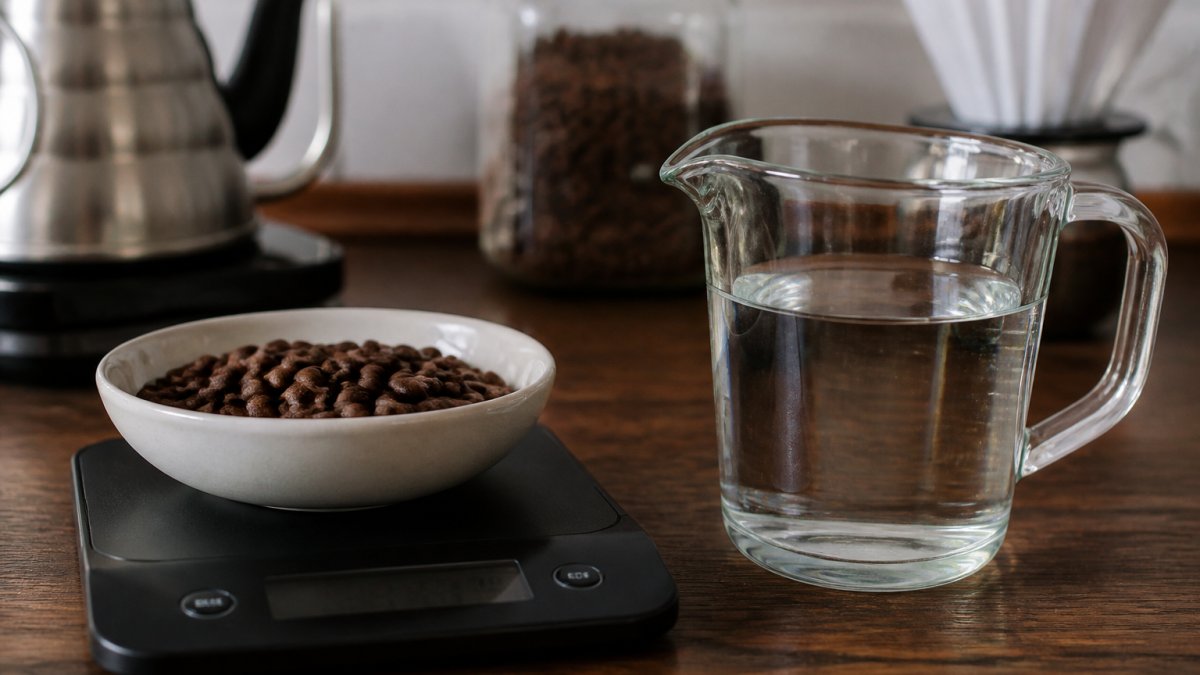
Mastering the coffee water ratio
The standard ratio: 1 part coffee to 16 parts water by weight.
This means:
- 1 gram of coffee to 16 grams of water
- 20 grams of coffee to 320 grams of water
- 30 grams of coffee to 480 grams of water
Why measure by weight, not volume:
Measuring by weight is far more accurate than using cups or tablespoons. Coffee beans vary in density depending on roast level and origin.
How to adjust the ratio:
If your coffee tastes weak or sour, increase the ratio to 1:15 (more coffee). Brew and taste again.
If it tastes bitter or too strong, decrease to 1:17 (less coffee).
Most specialty coffee drinkers prefer ratios between 1:15 and 1:17. Some prefer even stronger at 1:14. Find what tastes best to you, then stay consistent.
A simple digital scale costs under $15 and transforms your brewing consistency. This single tool eliminates more coffee brewing mistakes than any other single change.
Water Quality and Temperature: Often-Overlooked Factors
Water makes up 98% of your cup. Poor water quality or wrong temperature ruins even excellent beans.
Water temperature matters:
Ideal brewing temperature is 195-205°F. Below 195°F, extraction is incomplete and coffee tastes sour. Above 205°F, extraction becomes too aggressive and coffee tastes bitter and burnt.
If you're using a kettle, bring water to a boil, then wait 30 seconds before pouring. This brings boiling water (212°F) down to the ideal range.
Water quality issues:
Tap water varies widely depending on your location. Hard water (high mineral content) can create chalky, flat flavors. Soft water sometimes produces overly bitter coffee. Chlorinated water adds chemical notes.
If your tap water tastes off, consider:
- A simple pitcher filter (removes chlorine and some minerals)
- Bottled water for brewing (test a few brands to find one that works)
- A whole-house filter if you're serious about coffee
You don't need expensive water. Filtered tap water works fine for most brewers. The key is removing chlorine and extreme mineral imbalances.
Equipment Cleanliness and Brew Time Adjustments
Dirty equipment is invisible but devastating. Old coffee oils coat the inside of brewers and create stale, rancid flavors that contaminate every new cup.
Why cleanliness matters:
Coffee contains natural oils. When these oils sit in your equipment and oxidize, they turn rancid.
How to clean your equipment:
For drip machines: Run a cycle with white vinegar (1 part vinegar to 2 parts water). Then run 2-3 cycles with plain water to rinse completely. Do this monthly.
For pour-overs and filters: Rinse immediately after brewing with hot water. Wash with soap and hot water weekly. Let dry completely before storing.
For French press: Empty grounds immediately. Rinse the carafe and plunger thoroughly. Wash with hot soapy water.
Brew time adjustments:
Brew time is how long water contacts the grounds. Longer contact = more extraction = stronger, potentially bitter coffee. Shorter contact = less extraction = weaker, potentially sour coffee.
Standard brew times:
- Drip coffee: 4-6 minutes
- Pour-over: 3-4 minutes
- French press: 4 minutes
- Espresso: 25-30 seconds
If your coffee tastes off after adjusting temperature and grind, try adjusting brew time by 30 seconds. Small changes often solve the problem.
Conclusion
Coffee brewing mistakes usually come from five controllable variables: bean freshness, grind size, water temperature, coffee-to-water ratio, and equipment cleanliness. Once you understand how each one affects flavor, troubleshooting becomes simple.
Start with one variable at a time. Adjust, taste, and note what changed. This methodical approach reveals what your specific setup needs.
Everything I Need's precision thermal mapping and disciplined roasting process eliminate bitterness at the source, delivering complex sweetness and rich flavor notes. But even the finest beans deserve proper brewing.
Our Cold Brew Coffee and Single Serve Coffee Capsules are engineered for consistency, but the brewing method you choose still matters.


Common Coffee Brewing Mistakes and Fixes
Problem |
Most Likely Cause |
Quick Fix |
|---|---|---|
Bitter, burnt taste |
Water too hot or brew time too long |
Lower temperature to 200°F or reduce brew time by 1 minute |
Sour, tangy taste |
Water too cool or brew time too short |
Raise temperature to 205°F or extend brew time by 30 seconds |
Weak, thin flavor |
Too little coffee or coarse grind |
Use kitchen scale for precise ratio or make grind finer |
Stale, musty flavor |
Dirty equipment or old beans |
Deep clean brewer with vinegar or use fresh beans |
Inconsistent results |
Wrong grind size or uneven measurement |
Invest in burr grinder and use kitchen scale |
Troubleshooting Workflow: Adjust One Variable at a Time
- Taste your coffee. Identify if it's bitter or sour.
- If bitter: Lower water temperature by 5°F or reduce brew time by 30 seconds.
- If sour: Raise water temperature by 5°F or extend brew time by 30 seconds.
- Brew again. Taste and repeat until flavor improves.
- If still off: Move to the next variable (grind size, coffee-to-water ratio, or equipment cleanliness).
- Document what works. Write down your winning temperature, grind, and ratio.
This approach prevents you from changing multiple things at once, which makes it impossible to know what actually fixed the problem.
About This Guide
This guide from Everything I Need is designed for coffee enthusiasts who want to understand why their brewing isn't working and how to fix it systematically.
For more on coffee quality and sourcing, explore our specialty coffee sourcing practices and water chemistry for coffee brewing resources. The Specialty Coffee Association also publishes brewing standards that align with the methods covered here.
Frequently Asked Questions
Why does my coffee taste bitter?
Bitter coffee usually results from over-extraction, which happens when water stays in contact with grounds too long or is too hot. Common culprits include brewing time that's too long, water temperature above 205°F, a grind that's too fine, or using stale beans. Start by reducing brew time by 15-30 seconds, lowering your water temperature to 195-205°F, or switching to a coarser grind. Fresh, whole beans ground immediately before brewing also make a significant difference.
What's the correct coffee-to-water ratio for brewing?
The standard ratio is 1:16 (one part coffee to 16 parts water by weight). For a stronger cup, try 1:15; for lighter coffee, use 1:17. Always measure by weight rather than volume for consistency. A scale removes guesswork—most specialty roasters, including Everything I Need, recommend weighing both your coffee and water for repeatable results across different brewing methods.
How does grind size affect coffee flavor?
Grind size controls how quickly water extracts flavor from the grounds. Fine grinds increase contact area and speed extraction, risking bitterness if brew time is long. Coarse grinds slow extraction, which can leave coffee weak or sour if brew time is short. Match your grind to your method: espresso needs fine, pour-over needs medium, and French press needs coarse. Adjusting grind is often the fastest way to fix flavor problems.
How often should I clean my coffee maker?
Clean your brewer after every use by rinsing removable parts with hot water to remove coffee oils and residue. Descale monthly with a descaling solution to remove mineral buildup from your water, which affects flavor and extraction. Dirty equipment leaves behind stale coffee oils that make fresh brews taste rancid or off. Regular cleaning is one of the simplest ways to ensure every cup tastes as good as your coffee beans deserve.