

How to Fix Sour Coffee Taste: A 2026 Brewing Guide
Table of Contents
- Under-Extracted Coffee Symptoms: Is Your Cup Sour or Just Acidic?
- The Coffee Grind Size Chart: Your First Adjustment
- The Ideal Water Temperature for Coffee: Heat and Extraction
- Coffee Brewing Ratio for Beginners: Getting the Numbers Right
- The Scientific Method: Testing One Variable at a Time
- How Bean Origin, Roast Level, and Water Quality Shape Flavor
- Frequently Asked Questions
Last Updated: September 16, 2026
Under-Extracted Coffee Symptoms: Is Your Cup Sour or Just Acidic?
If your coffee tastes sharply sour rather than pleasantly bright, the culprit is almost always under-extraction. This guide from Everything I Need explains how to fix sour coffee taste by correcting grind, temperature, ratio, and technique, one variable at a time.
Under-extracted coffee symptoms are specific: a thin body, a hollow mid-palate, a finish that feels abrupt, and a sourness that sits on the sides of your tongue rather than rounding into sweetness. The good news is that most sour coffee taste problems trace back to a small number of correctable variables.
Sour vs. Acidic: Why the Distinction Matters
Acidity is a desirable flavor characteristic. It reads as brightness, citrus, or berry, and it sits alongside sweetness.
Sourness is a defect. It reads as vinegar, green apple, or unripe fruit, and it appears when water has not pulled enough soluble material from the grounds.
The distinction matters because the fix depends on it. A naturally acidic light roast is not broken. A sour shot of espresso is.
The Coffee Grind Size Chart: Your First Adjustment
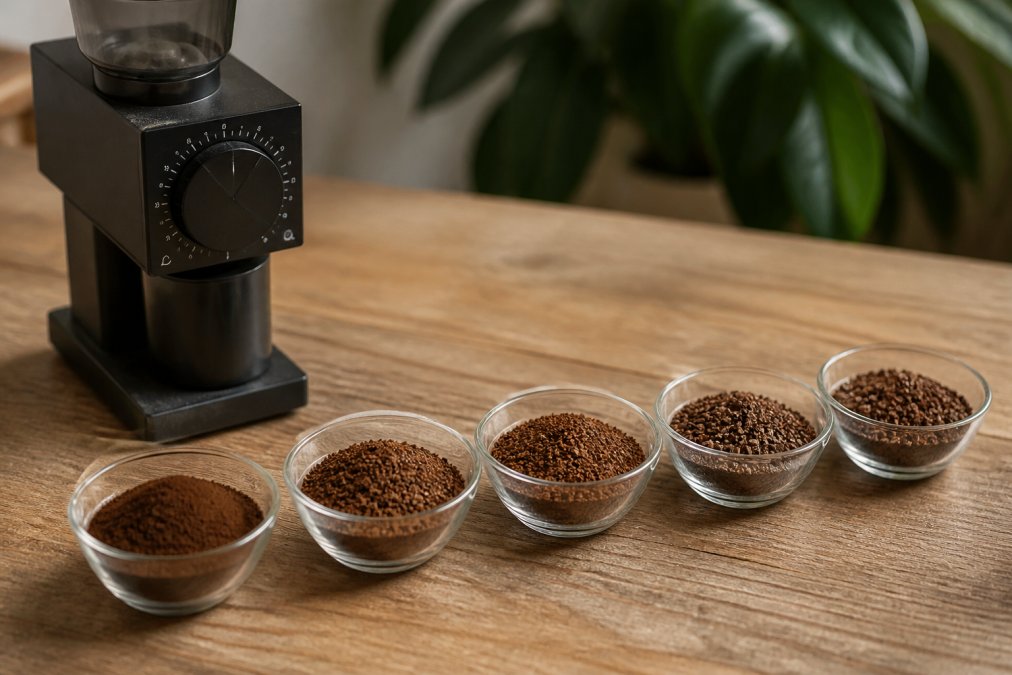
Grind size is the single most powerful lever you control, because it changes how much surface area the water can reach and how fast water moves through the bed. A finer grind increases surface area and slows flow, which raises extraction. A coarser grind does the opposite. That is the mechanism behind every grind adjustment you will ever make.
Brew Method |
Grind Setting |
Typical Brew Time |
If It Tastes Sour |
|---|---|---|---|
Espresso |
Fine |
25-30 seconds |
Go finer, then adjust dose |
Pour over |
Medium-fine |
2:30-3:30 |
Go finer in small steps |
Drip machine |
Medium |
4-5 minutes |
Go finer or check filter |
French press |
Coarse |
4 minutes |
Steep longer before plunging |
Extra coarse |
12-18 hours |
Extend steep time |
Finer vs. Coarser: Which Direction to Go
Sour coffee taste almost always calls for a finer setting. Move one step at a time on a burr grinder, and brew again before making a second change. A common mistake is jumping several settings at once. You end up with a bitter, over-extracted cup and no idea which adjustment caused it.

Read the Coffee Bed to Confirm the Diagnosis
Most guides stop at the chart. The bed of spent grounds tells you more than the chart can, because it shows you how the water actually moved through the coffee. Inspect the bed within a minute of the brew finishing, while the grounds are still wet.
- A flat, evenly saturated bed with a slight dome means water passed through the whole puck at a similar rate. If the cup is still sour, the fix is grind, temperature, or ratio, not technique.
- Craters, cracks, or dry patches mean channeling: water punched through one narrow path instead of saturating the grounds evenly. The water that did flow extracted heavily; the rest barely extracted at all. The result reads as sour because the average extraction is low even though part of the bed was over-extracted.
- A bed that is soupy and muddy with fines piled on top usually points to too fine a grind or too much agitation, which stalls flow and produces uneven extraction.
- A bed that is loose and dry with water sitting on top points to too coarse a grind, which lets water race through before it can dissolve sugars.
Match the Grind to the Bean, Not Just the Method
A light-roasted, high-elevation bean is denser and less soluble, so it often needs a finer setting than the chart suggests for its brew method. A dark roast at the same setting may already be over-extracting. Treat the chart as a starting point, then let the bed and the taste tell you which direction to move.
The Ideal Water Temperature for Coffee: Heat and Extraction
The ideal water temperature for coffee sits between 195°F and 205°F. Below that range, water cannot dissolve the sugars and acids that create sweetness, and the cup tastes sour.
Coffee Brewing Ratio for Beginners: Getting the Numbers Right
A coffee brewing ratio for beginners starts at 1:16, one gram of coffee to sixteen grams of water. That produces a balanced cup for most brew methods.
- Weigh your coffee on a scale rather than using a scoop
- Weigh your water too, rather than trusting a carafe line
- Keep the ratio fixed while you adjust grind and temperature
The Scientific Method: Testing One Variable at a Time
Change one variable per brew. That is the entire method, and it is the part most guides skip.
- Day 1: Brew with your current recipe and record the taste.
- Day 2: Grind one step finer. Keep everything else identical.
- Day 3: Grind one more step finer if the cup is still sour.
- Day 4: Raise water temperature by 5°F if grind changes plateaued.
- Day 5: Adjust the brew ratio slightly stronger if the cup still feels thin.
How Bean Origin, Roast Level, and Water Quality Shape Flavor
Bean origin, processing method, roast level, and water chemistry all shift how easily a coffee extracts, and, just as importantly, how acidic it tastes even when extraction is perfect. Two coffees brewed identically can land at opposite ends of the sour-bitter spectrum. Before you change another variable, rule out the possibility that your coffee is supposed to taste this way.
When "Sour" Is Actually the Bean
This is the nuance most guides miss. A washed, light-roast coffee from a high-elevation growing region, think the bright, citrus-and-berry profiles common to East African coffees, is naturally high in perceived acidity. That acidity is a feature, not a defect. It reads as brightness, lemon, blackcurrant, or stone fruit, and it sits alongside sweetness and a clean finish.
- Taste the coffee hot and again as it cools. Under-extraction intensifies as the cup cools, the last sip is the worst sip. Natural acidity tends to soften and integrate as the coffee cools, and the sweetness becomes more prominent.
- Look for sweetness underneath. A naturally acidic coffee has a sweet base beneath the brightness. An under-extracted coffee tastes thin and hollow, with nothing underneath.
- Brew the same bean two ways. If a coarser, longer brew still tastes sharply sour, the acidity is likely the bean. If the sourness fades, it was extraction.
- Try a different coffee. If a medium or dark roast brewed with your exact same recipe tastes balanced, your technique is fine and the light roast is simply a brighter coffee than you prefer.
Roast Level and Solubility
Light roasts are denser and less soluble, so they demand a finer grind and hotter water to extract fully. Dark roasts extract quickly and turn bitter before they turn sour. If you switch beans without adjusting your recipe, expect the cup to shift, a recipe dialed in for a dark roast will under-extract a light roast, and a recipe dialed in for a light roast will over-extract a dark roast.
Water Quality and Mineral Content
Water matters just as much as the bean. Water hardness and mineral content determine how efficiently water dissolves coffee solids. Very soft or distilled water lacks the minerals needed to pull flavor compounds and under-extracts, producing a flat or sour cup. Heavily mineralized water can mute flavor and slow extraction. Most practitioners find that water in the middle of the hardness range, neither distilled nor heavily mineralized, extracts most evenly.
Frequently Asked Questions
Why is my coffee tasting sour instead of bitter?
Sour coffee usually means under-extraction: water passed through the grounds too quickly to dissolve the sugars and caramelized compounds that balance acidity. Common causes include a grind that is too coarse, water below 195°F, or a brew ratio with too little coffee. Bitterness, by contrast, signals over-extraction. Adjusting one variable at a time, starting with grind size, will move your cup toward balance.
Does water temperature impact coffee sourness?
Yes. The ideal water temperature for coffee is 195°F to 205°F. Water below 195°F cannot dissolve enough of the organic acids, sugars, and tannins that create a balanced flavor profile, so the cup tastes sharp and sour. If your kettle lacks a thermometer, bring water to a boil and let it rest for 30 to 45 seconds before pouring. For dark roasts, aim for the lower end of the range.
How does grind size affect coffee acidity?
Grind size controls how fast water extracts flavor. A coarser setting creates more space between particles, so water flows through quickly and leaves behind sour, under-developed notes. A finer setting slows the flow and pulls out more sweetness and body. If your coffee tastes sour, move one or two steps finer on your burr grinder and brew again. Small changes matter more than large jumps.
Is it safe to drink sour-tasting coffee?
Sour coffee is not dangerous, but it usually signals a brewing problem rather than a health risk. The exception is coffee that tastes sour after sitting out for hours or shows visible mold, which you should discard. Freshly brewed coffee that tastes sour simply needs a recipe adjustment. Check your grind size, water temperature, and brew ratio before assuming the beans are the issue.