

Types of Specialty Coffee: A Complete Guide
Table of Contents
- What Defines Specialty Coffee
- Specialty Coffee Grading Scale and SCA Standards
- Coffee Processing Methods Explained
- Types of Specialty Coffee by Bean Variety and Origin
- Best Artisan Coffee Beans and Roast Profiles
- Espresso-Based and Black Coffee Variations
- Cold Brew and Specialty Brewing Methods
- Sustainability and Ethical Sourcing in Specialty Coffee
- Frequently Asked Questions
Last Updated: September 18, 2026
What Defines Specialty Coffee
Understanding the different types of specialty coffee isn't just about premium labels on expensive bags. It's a category defined by measurable quality standards, traceability, and a commitment to eliminating defects at every stage from farm to cup. The Specialty Coffee Association (SCA) established this definition to separate genuinely excellent coffee from commodity-grade beans that dominate most commercial roasting.
At Everything I Need, we source exclusively from high-elevation estates that meet these rigorous standards. The difference shows immediately: specialty coffee has a clean, complex flavor profile free from the bitterness and ashy notes that plague mass-produced roasts. These beans come from farms where elevation, soil composition, and careful harvesting create conditions that produce naturally sweet, nuanced coffee.

The core distinction between specialty and commercial coffee comes down to grading. Specialty-grade beans score 80 points or higher on the SCA's 100-point scale. Commercial coffee typically scores below 70. That 10-point gap represents the difference between coffee that tastes like itself and coffee that tastes like burnt rubber.
Specialty Coffee Grading Scale and SCA Standards
The SCA grading system is the industry's standard for evaluating coffee quality. Beans are scored across multiple dimensions: fragrance, aroma, flavor, aftertaste, acidity, body, balance, and overall impression. A coffee that scores 80-85 is considered specialty-grade. Scores above 85 indicate exceptional quality, with 90+ representing some of the world's finest coffees.
This grading process happens at cupping sessions where trained professionals brew samples identically and taste them blind.
Coffee Processing Methods Explained
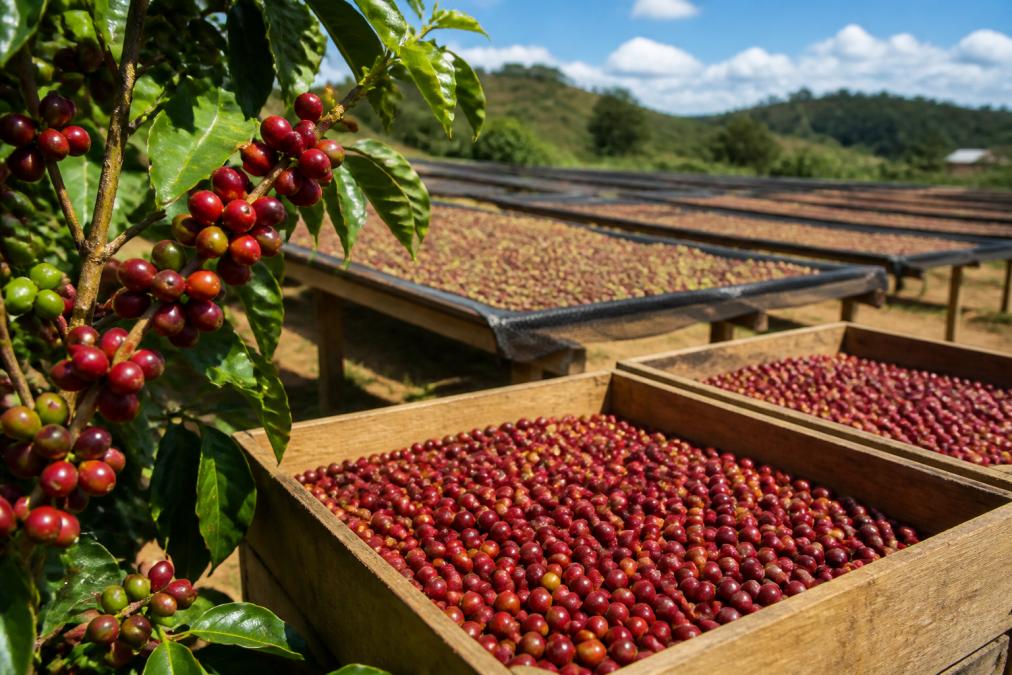
How coffee is processed after harvest fundamentally shapes its flavor. The three primary methods, washed, natural, and honey-processed, each produce distinctly different taste profiles. The choice of processing method is one of the most important decisions a farmer makes, and it's where terroir becomes flavor.
Washed Process
The washed process removes the fruit entirely before drying. Fresh cherries are pulped to separate the bean from the skin and flesh, then fermented briefly in water to break down the remaining mucilage. The beans are then washed clean and dried on raised beds or in mechanical dryers.
Natural Process
The natural process is the oldest method, still used extensively in Ethiopia and parts of Brazil. The entire cherry is dried intact in the sun, sometimes for several weeks. The fruit's sugars slowly seep into the bean during this extended drying period, creating a fundamentally different flavor experience.
Honey-Processed Coffee
Honey processing splits the difference. The cherry is pulped, but the sticky mucilage (called "honey" despite containing no actual honey) is left on the bean during drying. This partial fruit contact creates a middle ground: more complexity than washed, more clarity than natural.
Types of Specialty Coffee by Bean Variety and Origin
The coffee plant produces two primary species used commercially: Arabica and Robusta. But within Arabica, there are dozens of named varieties, Bourbon, Geisha, Caturra, Pacamara, each with distinct characteristics. Where the coffee grows matters just as much as what variety it is.
Arabica vs. Robusta
Arabica comprises roughly 60-70% of global coffee production and dominates the specialty market. It's more delicate, more flavorful, and more vulnerable to disease. Arabica beans are larger, more complex, and capable of expressing subtle regional differences. They're what you want in your cup.
Single-Origin and Micro-Lot Coffees
A single-origin coffee comes from one country, region, or even one farm. This traceability is central to specialty coffee. You're not buying a blend of beans from five countries, you're buying coffee from a specific place, grown by specific people, processed a specific way. That specificity is what allows the coffee's origin characteristics to shine.
Regional Flavor Profiles
Coffee's flavor is shaped by altitude, rainfall, soil composition, and processing method. Ethiopian coffees tend toward floral and fruity notes. Kenyan coffees are bright and wine-like. Colombian coffees offer balanced sweetness and chocolate notes. Indonesian coffees from high elevations develop earthy, full-bodied profiles with herbal complexity.
Best Artisan Coffee Beans and Roast Profiles
Roasting is where precision becomes essential. The same green bean roasted light versus dark produces completely different cups. Light roasts preserve origin flavors. Dark roasts develop roasted character that can mask defects, which is why commodity coffee gets roasted dark.
Light Roasts
Light roasts are pulled from the roaster shortly after the first crack, the audible pop that signals the bean's structure is beginning to expand. The bean retains its origin characteristics: the acidity is bright, the flavors are specific and nuanced, and the finish is clean.
Medium and Dark Roasts
Medium roasts hit the roaster's sweet spot for many drinkers. They develop some roasted character, caramel, chocolate, nuts, while preserving enough origin flavor to make single-origin coffees interesting. The acidity softens, the body rounds out, and the finish becomes sweeter.
Espresso-Based and Black Coffee Variations
The brewing method determines how water interacts with coffee grounds, which determines flavor extraction. Espresso forces hot water through grounds under pressure, creating a concentrated shot. Black coffee methods use immersion or pour-over techniques that give you more control over extraction time.
Espresso Fundamentals
Espresso is a 1-2 ounce shot made by forcing hot water through finely ground coffee under 9+ bars of pressure. The result is intense, concentrated, and topped with crema, the golden foam created by emulsified oils and CO2 gas.
Milk-Based Espresso Drinks
A cappuccino is espresso with equal parts steamed milk and milk foam. A latte uses more steamed milk and less foam. A flat white (popular in Australia and New Zealand) uses microfoam, milk that's been steamed to create tiny, uniform bubbles rather than large foam. A cortado balances espresso and steamed milk equally.
Cold Brew and Specialty Brewing Methods
Cold brew is steeped slowly in cool water over many hours, extracting coffee's sweetness while avoiding the bitterness that heat can develop. The result is smooth, mellow, and naturally sweet. Everything I Need's Cold Brew Coffee delivers notes of dark chocolate, toasted caramel, brown sugar, and vanilla, a completely different experience than hot-brewed coffee.

Sustainability and Ethical Sourcing in Specialty Coffee
Specialty coffee's premium pricing creates an opportunity for farmers to earn sustainable income. When you pay more for coffee, that money can reach the people who actually grew it.
Aspect |
What It Means |
Why It Matters |
|---|---|---|
Single-Origin |
Coffee from one specific region or farm |
Traceability and origin expression |
Micro-Lot |
Small harvest from one farmer or field |
Exceptional quality control |
Washed Process |
Fruit removed before drying |
Clean, clear flavor profile |
Natural Process |
Fruit dried intact on the bean |
Fruity, complex, wine-like notes |
Honey Process |
Partial fruit contact during drying |
Balanced sweetness and clarity |
Light Roast |
Pulled shortly after first crack |
Preserves origin characteristics |
Dark Roast |
Extended roasting developing roasted notes |
Full body, low acidity, chocolate notes |
Cold Brew |
Steeped in cool water for hours |
Smooth, sweet, low acidity |
Frequently Asked Questions
What is considered specialty coffee?
Specialty coffee refers to high-quality beans that score 80 points or higher on the Specialty Coffee Association (SCA) grading scale. These coffees are distinguished by their origin, processing method, and flavor complexity. Single-origin beans, carefully sourced from high-elevation estates, and roasted to preserve their unique characteristics define the specialty coffee category. The focus is on traceability, sustainability, and the elimination of defects that compromise flavor.
How do specialty coffee beans differ from commercial grade?
Specialty coffee beans score 80+ on the SCA scale, while commercial-grade coffee typically scores below 80. Specialty beans emphasize single-origin sourcing, precise roasting, and complex flavor profiles with tasting notes like berry, chocolate, or floral undertones. Commercial coffee prioritizes consistency and volume over flavor nuance. Specialty roasters often use precision thermal mapping to eliminate bitterness, whereas commercial operations focus on mass production efficiency.
What are the most common specialty coffee processing methods?
The three primary specialty coffee processing methods are washed (wet), natural (dry), and honey-processed (pulped natural). Washed processing removes the fruit before drying, producing clean, bright acidity and clarity of origin flavors. Natural processing dries the whole cherry, creating fruity, full-bodied cups with pronounced sweetness. Honey-processed coffee splits the difference, removing skin but retaining some fruit mucilage for balanced complexity. Each method directly influences the final cup's acidity, body, and flavor notes.
What is the difference between single-origin and blended specialty coffee?
Single-origin specialty coffee comes from one specific farm, region, or country, showcasing distinct terroir and varietal characteristics. Blended specialty coffees combine beans from multiple origins to create balanced, consistent flavor profiles. Single-origin coffees highlight unique regional tasting notes, such as Ethiopian florals or Kenyan berry notes, while blends aim for complementary flavor combinations. Both approaches can achieve specialty-grade status when sourced and roasted with precision and care.
Does roast level determine if a coffee is specialty?
Roast level does not determine specialty status, but it significantly impacts how specialty characteristics are expressed. Light roasts preserve origin flavors and acidity, highlighting the bean's unique terroir. Medium roasts balance origin character with roasted notes. Dark roasts emphasize chocolate and caramel while reducing acidity. A specialty-grade bean roasted poorly can taste mediocre, while skilled roasting using precision thermal mapping reveals the complexity and sweetness that define specialty coffee.
How does high-elevation sourcing impact coffee flavor profiles?
High-elevation farms produce denser, slower-maturing beans with more complex sugars and acids, resulting in brighter acidity, fuller body, and more nuanced flavor notes. Beans grown at higher altitudes develop concentrated tasting notes like berry, citrus, floral, and chocolate undertones. The cooler temperatures at elevation extend the growing season, allowing flavors to develop fully. This is why specialty coffee emphasizes high-elevation estates, the terroir directly contributes to the cup's structural elegance and refined character.
What varietal should I choose for complex, sweet flavor profiles?
Arabica varieties like Geisha, Bourbon, Caturra, and Pacamara are prized for complexity and sweetness. Geisha beans, grown in Panama's Boquete region, deliver floral and tropical fruit notes. Bourbon varietals offer chocolate sweetness with balanced acidity. Ethiopian Natural and Kenya single-origins showcase fruit-forward profiles with wine-like body. For those sensitive to bitterness, light-roasted single-origins with natural or honey processing preserve delicate sweetness and eliminate the ashy, bitter notes associated with over-extraction or dark roasting.