

7 Storage Rules That Extend Gourmet Food Shelf Life
Last Updated: October 27, 2026
Quick Summary
To improve gourmet food shelf life, control the four forces that cause decay: oxygen, heat, moisture, and light. Store most gourmet foods between 50 and 70°F in airtight, opaque containers in a dark cupboard, and match your packaging method to each product.
- Store specialty coffee in an airtight, opaque container at room temperature, away from the stove and window.
- Roasted coffee stays fresh for roughly two to four weeks after the roast date and peaks in the first week or two.
- Transfer flour, rice, and spices into sealed glass or metal containers and label them with the date you opened them.
- Keep oils and vinegars in their original dark bottle with the cap tight, and use within the after-opening window.
- Never taste a product that smells off; discard items with bulging lids, mold, slimy textures, or a sour smell.
Table of Contents
- Why Gourmet Food Shelf Life Depends on Storage Conditions
- How to Store Specialty Coffee So It Stays Fresh
- How Long Does Roasted Coffee Stay Fresh?
- How to Tell if Coffee Is Stale Before You Brew
- Food Packaging to Extend Shelf Life of Pantry Staples
- Temperature, Humidity, and Light: The Three Controls That Matter
- Product-by-Product Storage and Shelf-Life Guide
- Ordering Coffee That Arrives Fresh Enough to Keep
- Frequently Asked Questions
Why Gourmet Food Shelf Life Depends on Storage Conditions
Storage conditions decide how long good food stays good. That is the core of how to improve gourmet food shelf life: you cannot add freshness back once it is gone, but you can slow its loss. At Everything I Need, we treat storage as part of the product, not an afterthought.
Three forces do most of the damage: oxygen, heat, and moisture. Light plays a supporting role, quietly breaking down fats and aromatics. Control those four and a bag of beans, a tin of olive oil, or a jar of stock keeps its character far longer.
Most guides skip the hard part. They tell you to "store in a cool, dry place" and stop there. Real shelf life comes from specific habits, repeated every time you open a package. Below, we show you exactly how to set up those habits, product by product, so nothing you paid good money for fades before you finish it.
How to Store Specialty Coffee So It Stays Fresh
Store specialty coffee in an airtight, opaque container at room temperature, away from the stove and the window. Whole beans hold their flavor longer than ground coffee, so grind just before brewing. Buy in amounts you will finish within a few weeks.
The enemies are predictable:
- Oxygen flattens aroma and turns sweetness dull.
- Heat speeds up the loss of volatile oils.
- Moisture invites staleness and off flavors.
- Light degrades the oils that carry bright, fruity notes.
A common mistake is moving beans to the fridge. In practice, the cold pulls moisture onto the beans every time you open the door. Keep the bag sealed, squeeze out the air, and store it in a dark cupboard. For a deeper look at keeping beans at their peak, see our guide on keeping specialty coffee fresh longer.
How Long Does Roasted Coffee Stay Fresh?
Roasted coffee stays fresh for roughly two to four weeks after the roast date, and it peaks in the first week or two. After that, the coffee is safe to drink but the aroma and complexity fade.
That window is why roast date matters more than any "best by" stamp. A bag stamped months ago is already past its best, no matter how well you store it. Freshly roasted beans carry more of the sweetness and depth that make specialty coffee worth the price. If you want the full picture on why timing matters, read about the benefits of freshly roasted specialty coffee.
Watch out: a bag with no roast date is a warning sign. You cannot manage a freshness window you cannot see.
How to Tell if Coffee Is Stale Before You Brew
Stale coffee shows clear signals before it ever reaches your cup. Check these:
- Smell: fresh beans smell sweet and complex; stale beans smell flat or papery.
- Texture: beans that feel dry and brittle have lost oils.
- Brew: a thin, hollow, or sharply sour cup points to age.
- Crema: little or no crema on espresso suggests old beans.
Sourness can also come from under-extraction, so taste alone is not proof. If your cup tastes sharp and flat at once, the beans are the first suspect. Our guide on why coffee tastes sour and how to fix it walks through the diagnosis step by step.
Food Packaging to Extend Shelf Life of Pantry Staples
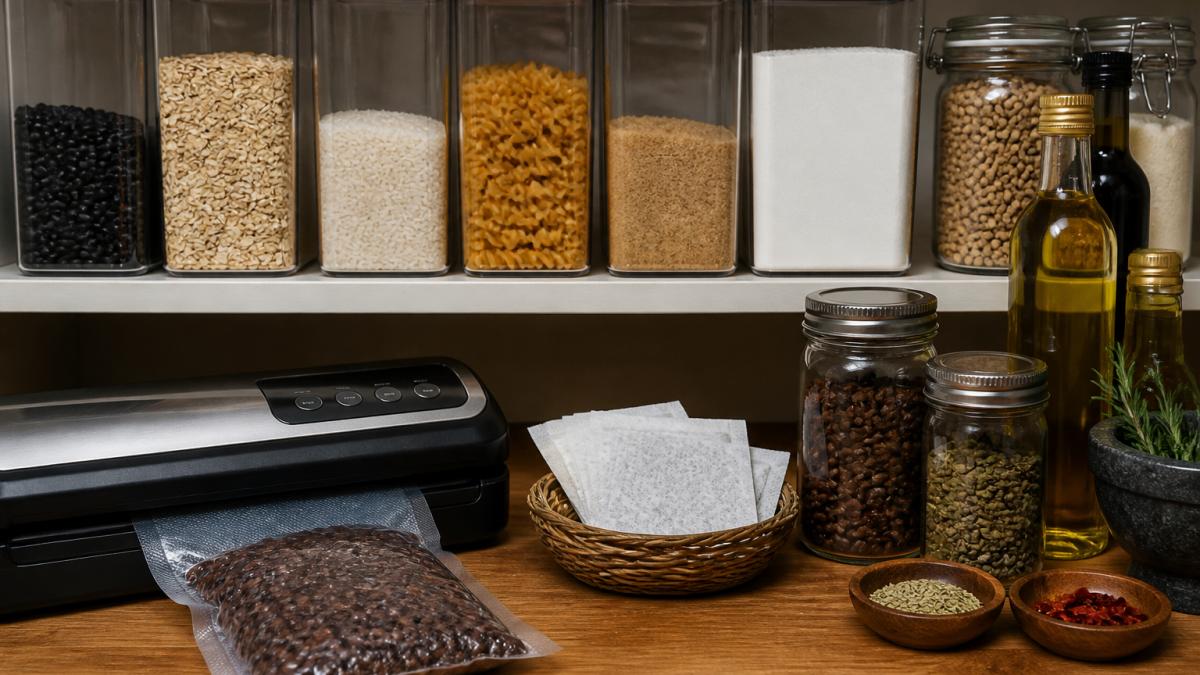
Packaging is your first line of defense for pantry staples, but not every method suits every food. Airtight containers block oxygen and moisture; opaque ones block light. The real gains come from matching the method to the product and understanding the trade-offs.
Here is how the main packaging approaches compare for gourmet pantry items:
Method |
What It Does |
Best For |
Watch-Outs |
|---|---|---|---|
Airtight glass or metal containers |
Blocks oxygen, moisture, and light; resealable |
Flour, rice, spices, coffee beans, teas |
Headspace still holds oxygen; label with open date |
Vacuum sealing |
Removes most air; slows oxidation and freezer burn |
Coffee beans, hard cheese, cured meats, nuts |
Soft or crushable foods deform; anaerobic pathogens can thrive if moist |
Oxygen absorbers |
Scavenge residual oxygen inside a sealed container |
Dry goods, crackers, spices, coffee |
Ineffective in moist foods; must be used with an oxygen barrier |
Nitrogen flushing (producer-side) |
Displaces oxygen before sealing |
Oils, coffee, snack foods, spices |
Only protects until the seal is broken |
Original dark bottle with tight cap |
Preserves light-sensitive oils and vinegars |
Olive oil, specialty vinegars, extracts |
Reopenings admit oxygen; use within the after-opening window |
For dry goods, transfer flour, rice, and spices into sealed glass or metal containers and label them with the date you opened them. For oils and vinegars, keep the original dark bottle and cap it tight. Many producers flush packaging with nitrogen to push out oxygen before sealing, which is why an unopened bag or tin lasts far longer than an opened one. Once you break the seal, the clock starts.
A few practical rules keep packaging working:
- Match the barrier to the threat. Light-sensitive oils need opaque or tinted glass; moisture-sensitive dry goods need a true airtight seal, not a folded bag.
- Skip vacuum sealing for soft or high-moisture foods like fresh berries or soft cheeses, which can crush or create anaerobic conditions.
- Use oxygen absorbers only in dry, sealed environments. They do little in a humid pantry or an open container.
- Reseal every time. Clips, vacuum sealers, and tight lids all help, but squeezing air out of bags before closing is the simplest habit.
The USDA food storage guidance is a solid reference for safe pantry and refrigerator timelines. Packaging extends shelf life only when it matches the food, the wrong method can waste money or create safety risks.
Temperature, Humidity, and Light: The Three Controls That Matter
Temperature, humidity, and light are the three controls you can actually adjust at home. Keep most gourmet foods between 50 and 70°F, away from the oven, dishwasher, and direct sun. Aim for low humidity, and store in dark cupboards or opaque containers.
Here is how to run each control:
- Temperature: pick one steady spot; avoid the top of the fridge and the windowsill.
- Humidity: keep dry goods dry, and do not store them above the sink.
- Light: move oils, coffee, and spices into cupboards or tinted glass.
A common mistake is storing everything in one crowded cabinet near the stove. Heat and steam from cooking shorten shelf life fast. Give delicate items their own cool, dark shelf.
Product-by-Product Storage and Shelf-Life Guide
Gourmet foods rarely behave like standard pantry staples. Specialty cheeses, cured meats, oils, spices, chocolates, and premium condiments each have their own storage logic and realistic shelf-life ranges. Use this table as a quick reference, and always check labels for specifics.
Product |
Best Storage |
After Opening |
Key Threat |
Spoilage Indicators |
|---|---|---|---|---|
Specialty cheese (hard) |
Refrigerator, wrapped in breathable paper |
1-3 weeks |
Moisture, mold |
Ammonia smell, slimy texture, fuzzy mold |
Specialty cheese (soft) |
Refrigerator, coldest shelf |
3-7 days |
Moisture, bacteria |
Sour smell, weeping, discoloration |
Cured meats |
Refrigerator, wrapped |
3-5 days sliced; weeks whole |
Oxygen, moisture |
Slimy surface, off smell, dull color |
Olive oil |
Dark bottle, cool cupboard |
1-2 months |
Light, heat, oxygen |
Rancid, crayon-like smell; flat taste |
Spices (ground) |
Airtight, dark, cool |
3-6 months |
Heat, light, moisture |
Faded color, weak aroma, clumping |
Chocolate |
Cool, dry, 60-70°F |
2-4 weeks |
Heat, moisture |
Bloom (white streaks), dull surface, off taste |
Premium condiments |
Cool pantry; fridge after opening |
1-3 months |
Oxygen, contamination |
Mold, off smell, changed texture |
Coffee beans |
Airtight, opaque, room temp |
2-4 weeks |
Oxygen, heat |
Flat aroma, brittle beans, thin brew |
Stocks and broths |
Cool, dark pantry; fridge once open |
3-4 days refrigerated |
Bacteria, air |
Bulging lid, sour smell, cloudiness |
Meat, fish, poultry |
Coldest part of fridge or freezer |
Use fast or freeze |
Temperature |
Off smell, slime, discoloration |
Fruits and vegetables |
Produce drawer, separated |
Days to weeks |
Ethylene gas, moisture |
Soft spots, mold, fermentation smell |
A few rules tie the table together. Keep fruits and vegetables apart when one ripens fast, since ethylene gas speeds spoilage in neighbors. Freeze meat, fish, and poultry you will not cook soon. Store stocks and broths in the fridge once opened and use them quickly. For how bean origin shapes aroma and shelf life, see our guide to bean origin and aroma.
For gourmet items opened and served repeatedly, oils, condiments, cured meats, portion out what you need and reseal the rest immediately. Cross-contamination from utensils or crumbs shortens shelf life fast, so use clean tools and keep opened products covered.
Ordering Coffee That Arrives Fresh Enough to Keep
Fresh coffee only stays fresh if it arrives fresh. Order from roasters who roast to order and ship fast, so the roast date on the bag is days old, not months. Then apply the storage rules above the day it lands.
At Everything I Need, we roast in small batches. Our focus on high-elevation estate beans and a disciplined roast gives you complex sweetness and rich flavor notes. Ordering is simple. You can browse our House Blend to find a coffee you can order and store properly.
Frequently Asked Questions
How can you make gourmet food last longer?
Cut off oxygen, light, and moisture, then keep temperatures stable. Transfer dry goods into airtight containers, keep oils and nuts away from the stove, and store coffee in an opaque, sealed container at room temperature. Buy in quantities you will finish within the product's realistic window rather than stocking up on items that lose character quickly. Label each container with the date you opened it so you can track how long it has been sitting.
How should specialty coffee be stored to keep it fresh?
Keep whole beans in an opaque, airtight container at room temperature, away from the stove, dishwasher, and windows. Buy bags sized to what you drink in two to three weeks and grind right before brewing. Skip the freezer for daily-use beans because repeated thawing pulls moisture onto the beans. If you must freeze a large order, portion it into sealed bags first and thaw each one only once.
Does refrigeration extend the shelf life of gourmet foods?
It depends on the item. Refrigeration helps dairy, meat, fish, poultry, and opened sauces, but it hurts bread, tomatoes, basil, and whole coffee beans. Cold temperatures slow spoilage organisms but also stale bread faster and dull the aroma of beans. Check each product's label and match storage to the item rather than refrigerating everything by default.
What packaging helps protect food from moisture, oxygen, and light?
Opaque, airtight containers with tight-sealing lids handle all three at once. Glass jars with rubber gaskets, metal tins, and vacuum-sealed bags block light and oxygen well. For pantry staples, a vacuum sealer removes the air that drives staleness in nuts, crackers, and coffee. Avoid clear plastic bins for light-sensitive items like olive oil and whole beans, and keep original packaging inside the container when it carries a roast or lot date.
Good food deserves better than a slow fade in a warm cupboard. The fix is not complicated: control oxygen, heat, moisture, and light, and buy from a source that ships fresh. Everything I Need roasts to order in small batches, sources high-elevation estate beans, and delivers fast so your coffee arrives ready to keep. Get started with Everything I Need and protect the flavor you paid for.
