

Comparing Breakfast Blend Coffee Varieties
Last Updated: October 23, 2026
Quick Summary
Breakfast blend coffee combines beans from different regions selected for balance, smoothness, and approachable flavor that works black or with cream. Most breakfast blends are medium roast, blending Central American beans for sweetness and body with East African origins for brightness and fruit notes.
- Medium roast breakfast blends strike a balance between light roasts' brightness and dark roasts' body, forgiving brewing mistakes more gracefully.
- Washed coffees provide structure and clarity; natural-processed beans add sweetness and body, so blends combining both create layered, complex flavor.
- Brew at 195-205°F with a 1:16 coffee-to-water ratio and medium grind for consistent results across different breakfast blend varieties.
- Peak freshness occurs two to four weeks after roasting, so buy whole beans roasted recently and grind immediately before brewing.
- Bitterness typically comes from over-extraction or over-roasting, not the blend itself, and is avoided by following proper temperature and timing guidelines.
Table of Contents
- What Makes a Breakfast Blend Different
- Light Roast vs Medium Roast Coffee: The Breakfast Blend Spectrum
- Washed vs Natural Coffee Taste in Breakfast Blends
- Bean Origin and Flavor Profile Comparison
- How to Brew Light Roast Coffee for Optimal Flavor
- Choosing a Breakfast Blend Without Bitterness
- Freshness, Roast Date, and Storage Considerations
- Conclusion
- Frequently Asked Questions
What Makes a Breakfast Blend Different
A breakfast blend coffee combines beans selected for balance, smoothness, and approachable flavor without the heaviness of dark roasts or the sharpness of light ones. The goal is simple: a cup that tastes good from the first sip and fits any morning routine.
What separates a breakfast blend is intentionality. Rather than roasting a single origin to its peak, breakfast blends combine regions to smooth out rough edges. Central American beans bring sweetness and body; East African origins add brightness and fruit.
The appeal lies in reliability. A well-made breakfast blend doesn't demand technique, doesn't punish imperfect brewing, and tastes equally good black or with cream.
Light Roast vs Medium Roast Coffee: The Breakfast Blend Spectrum
Most breakfast blends fall into the medium roast category, though some specialty roasters experiment with lighter profiles. Understanding this spectrum matters because roast level directly shapes what you taste and how the coffee behaves in your cup.
Light roast coffee preserves more origin character. Less time in the roaster keeps bright acidity and floral or fruity notes prominent, so you can taste the terroir.
Medium roast strikes the balance most breakfast blend drinkers seek. Roasting develops enough body and sweetness to satisfy while preserving origin character.
When comparing breakfast blend varieties, note where each sits on this spectrum. A medium roast feels warmer and more indulgent; a lighter medium roast preserves more nuance and acidity. Neither is objectively better.
Washed vs Natural Coffee Taste in Breakfast Blends
Processing after harvest shapes flavor as much as roast level. Learn how specialty coffee processing methods create distinct flavor profiles. Two methods dominate specialty coffee: washed and natural.
Washed coffee (wet-processed) removes the fruit immediately after harvest, then ferments and dries the bean.
Natural coffee (dry-processed) skips washing: the whole fruit dries on the bean, creating deeper, fruitier, sweeter cups with lower perceived acidity.
When evaluating breakfast blend varieties, check the processing methods. A washed-heavy blend tastes cleaner and more approachable; one with natural-processed beans tastes richer and more indulgent.
Bean Origin and Flavor Profile Comparison
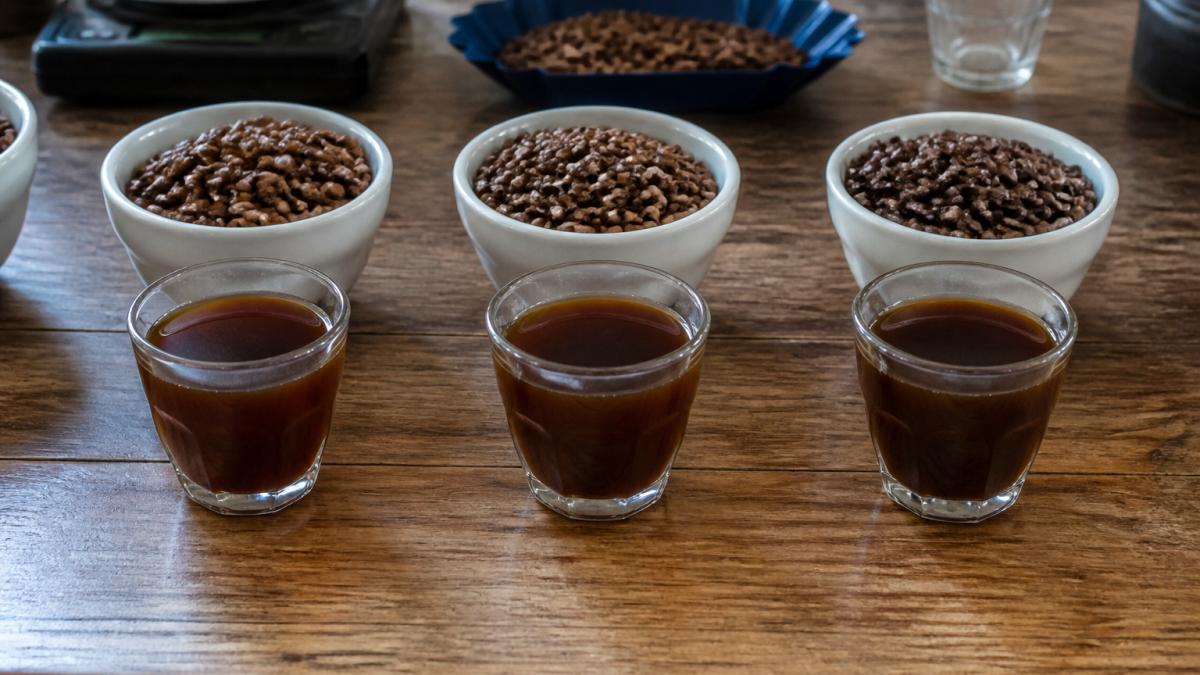
Origin shapes how a coffee tastes. Central American, East African, and South American beans each bring distinct characteristics to a breakfast blend, and recognizing these signatures helps you choose blends aligned with your preferences. But origin alone doesn't predict performance in your cup, so the most useful comparison is side by side, using the same brewing method and evaluation criteria.
A Standardized Way to Compare Breakfast Blend Varieties
Most blend guides describe flavor in isolation. A more reliable approach is to brew every sample under identical conditions so differences reflect the coffee, not the method. Experienced tasters hold these variables constant:
- Dose and ratio: 1:16 coffee to water by weight (for example, 20 g coffee to 320 g water).
- Water temperature: 200°F for medium roasts, adjusted down slightly for dark roasts.
- Grind: medium, calibrated so a drip brew completes in roughly 4 minutes.
- Method: a flat-bottom drip brewer or a pour-over cone, used for every sample.
- Evaluation: score aroma, acidity, body, sweetness, finish, and bitterness on a simple 1-5 scale immediately after brewing and again after the cup cools to about 140°F.
No professional equipment is required: a kitchen scale, a thermometer, and a consistent grinder make comparisons meaningful. The point is to remove brewing variables so the blend itself is what you taste.
Side-by-Side Comparison of Common Breakfast Blend Styles
The table below compares breakfast blend varieties by their typical composition and cup profile. Values describe common patterns, not guarantees, because every roaster builds its blend differently.
Blend style |
Typical origin composition |
Roast level |
Acidity |
Body |
Common flavor notes |
Best for |
|---|---|---|---|---|---|---|
Classic medium breakfast blend |
Central American backbone with South American sweetness |
Medium |
Medium |
Medium |
Caramel, milk chocolate, orange |
Drip, black or with cream |
Bright and fruity breakfast blend |
East African washed plus Central American |
Light-medium |
High |
Light-medium |
Citrus, berry, floral |
Pour-over, black |
Sweet and full-bodied breakfast blend |
Brazilian natural plus Colombian |
Medium |
Low-medium |
Full |
Cocoa, hazelnut, brown sugar |
French press, with milk |
Balanced house breakfast blend |
Central American, South American, and East African |
Medium |
Medium |
Medium |
Blood orange, caramel, dark chocolate, roasted hazelnut |
Any method, everyday drinking |
Darker breakfast blend |
South American plus Asian Pacific |
Medium-dark |
Low |
Full |
Dark chocolate, molasses, toasted nut |
Espresso, milk drinks |
How to Read the Comparison
Start with acidity if you drink coffee black: high-acidity blends taste lively and tea-like, low-acidity blends rounder and heavier. If you add milk, prioritize body and sweetness, since full-bodied blends hold up better.
A practical next step: buy two small bags from the same roaster, one brighter and one sweeter, and brew them on consecutive mornings with the same recipe. Note which you finish first and which tastes better as it cools. That test tells you more about your palate than any label.
Everything I Need's origin sourcing reflects this logic. By selecting high-elevation estate beans and combining regions strategically, the roaster builds breakfast blends where each component serves a purpose, so the result tastes cohesive rather than scattered.
For readers wanting deeper insight into how origin impacts aroma and complexity, read our guide on bean origin and coffee aroma.
How to Brew Light Roast Coffee for Optimal Flavor
Brewing technique matters more with lighter roasts, which have less margin for error: too hot extracts harshness, too cool tastes thin and sour. If your breakfast blend leans light or light-medium, the goal is sweetness and clarity without bitterness. These variables change the cup most and behave differently by blend.
Brewing Variables That Matter Most
Water temperature. Aim for 195-205°F. Lighter roasts tolerate hotter water because shorter development leaves the bean denser.
Grind size. Use medium-fine for pour-over, medium for drip, and fine for espresso.
Brew ratio. Start at 1:16 coffee to water by weight. A high-acidity light roast benefits from a stronger 1:15 for body and sweetness; a delicate, floral blend keeps clarity at 1:17.
Brew time. Pour-over and immersion methods typically take 3-4 minutes; drip machines vary by model. Under-extracted light roast tastes sour and thin, over-extracted bitter and dry, and the window is narrower than with darker roasts.
Matching the Recipe to the Blend
Different breakfast blend varieties respond differently to the same recipe. A bright, washed, East African-forward blend rewards a finer grind and hotter water to balance its acidity. A sweeter blend with Brazilian natural components can taste muddy if ground too fine, so go coarser and pour gently. A balanced house blend is the most forgiving across drip, pour-over, and French press.
A practical comparison: brew the same blend three ways in one week at 195°F, 200°F, and 205°F, keeping everything else constant. Note which cup tastes sweetest and which sharpest, then repeat with two grind settings. It's the fastest way to learn how a specific breakfast blend wants to be brewed.
For comprehensive guidance on equipment and technique, explore our guide to specialty coffee brewing equipment.
Choosing a Breakfast Blend Without Bitterness
Bitterness comes from over-extraction, over-roasting, or both. If you've had bitter breakfast blends, the problem likely wasn't the blend but the roast profile or the brew.
Over-roasting is the most common culprit: sugars caramelize past sweetness and turn acrid. Dark roasts are intentionally bitter, but a breakfast blend should be medium roast, stopped before bitterness develops.
Over-extraction creates bitterness too: water too hot, grind too fine, or brew time too long pulls harsh compounds into the cup.
Water quality matters as well. Distilled water under-extracts; tap water with moderate minerals extracts ideally.
Storage affects flavor too. Stale coffee tastes flat and bitter, so buy whole beans roasted recently, grind just before brewing, and store airtight away from light and heat.
Freshness, Roast Date, and Storage Considerations
Freshness is non-negotiable for specialty coffee. Unlike commodity beans that sit in warehouses for months, specialty beans are roasted to order and meant to be consumed within weeks.
Ideal freshness window is two to four weeks after roasting, as beans release trapped CO2 and degas for more even extraction. After two weeks the coffee is still excellent; after four it's drinkable but losing vibrancy; beyond six weeks most specialty coffee tastes flat.
That's why direct-to-consumer roasters like Everything I Need roast to order: beans are roasted within days of your order and shipped immediately, so you receive coffee at peak freshness rather than after months on a shelf.
Storage matters after you receive your beans. Keep whole beans airtight in a cool, dark place, like a pantry or cabinet. Avoid the freezer, since freezing and thawing creates condensation that accelerates staling.
For detailed information on how roast date affects flavor development, check out our guide on roast date impact.
Conclusion
Comparing breakfast blend coffee varieties comes down to understanding what you're tasting: the interplay of origin, processing, roast level, and freshness. A well-made breakfast blend balances brightness with body and complexity with approachability, tasting good every morning without demanding perfect technique.
When you're ready to experience this balance firsthand, explore our Breakfast Blend. We've combined Central American and East African beans, crafted to deliver a cup that is rich and satisfying without ever feeling heavy. From the first pour, notes of blood orange and caramel rise to meet you, bright and inviting, with just enough complexity to make you pause and appreciate the moment.

Frequently Asked Questions
What is breakfast blend coffee?
Breakfast blend coffee is a medium to medium-dark roast blend designed to deliver a balanced, approachable cup that pairs well with morning routines. Typically combining beans from Central America and East Africa, breakfast blends emphasize smoothness and body over sharp acidity. They're crafted to be satisfying without heaviness, offering notes like caramel, chocolate, and subtle citrus that complement rather than overwhelm your morning.
How does light roast vs medium roast coffee affect breakfast blend flavor?
Light roasts preserve more origin characteristics and brightness, highlighting floral or fruity notes. Medium roasts develop richer, sweeter flavors through deeper caramelization while retaining some acidity. For breakfast blends, medium roasts are traditional because they balance complexity with approachability. A light roast breakfast blend will taste brighter and more tea-like; a medium roast delivers fuller body and deeper sweetness, making it more forgiving for various brewing methods.
Does washed or natural processing taste better in a breakfast blend?
Washed coffees produce cleaner, more delicate flavors with pronounced acidity, while natural processing creates heavier body and fruitier, sometimes winey notes. In breakfast blends, washed beans typically dominate because they contribute clarity and balance. Some blends incorporate natural-processed beans from East Africa to add complexity and body without overwhelming brightness. Your preference depends on whether you want a crisp, articulate cup or something richer and more textured.
How should I brew light roast coffee to avoid bitterness?
Use water between 195-205°F and brew for 3.5-4 minutes to avoid over-extraction. Light roasts are more delicate and extract faster than darker roasts, so shorter brew times prevent astringency. Use a medium-fine grind and fresh, filtered water. If you're using an automatic drip brewer, opt for a shorter cycle or select a light roast setting if available. Freshly roasted beans brewed within two weeks of roasting deliver the cleanest, least bitter result.
The difference between a forgettable cup and one that makes your morning feel intentional starts with choosing a breakfast blend built on precision. Everything I Need's approach uses high-elevation estate beans and disciplined thermal mapping to eliminate the bitterness that turns people away from specialty coffee. The result is a cup that tastes like it was made for you, familiar, satisfying, and worth savoring before the day takes over.
