

How to Choose the Right Coffee Filter
Table of Contents
- Understanding Coffee Filter Types
- Paper vs Metal Coffee Filters: Key Differences
- Matching Filter Size and Shape to Your Brewer
- Best Coffee Filter for Pour Over Brewing
- How Filter Choice Affects Flavor and Brew Quality
- Preparation and Maintenance Tips
- Making Your Final Selection
- Frequently Asked Questions
Last Updated: October 17, 2026
Understanding Coffee Filter Types
How to choose the right coffee filter starts with understanding what's available. Paper, metal, and cloth each filter differently, affecting which oils and sediment reach your cup.
Paper filters are the most common choice.
Filter type directly shapes flavor. Filter type directly shapes flavor, and getting this right is essential to experiencing the complex sweetness precision-roasted beans deliver.
Paper Filters
Paper filters are made from cellulose and come in bleached and unbleached varieties. Both work well, though some drinkers detect a slight papery taste from either type if not rinsed first; rinsing removes loose fibers and reduces this.
Paper filters trap oils effectively, producing the cleanest cup. If you prefer clarity and want to taste the subtle flavor notes in your beans, paper is your best bet. Thicker paper filters more aggressively but can slow flow rate slightly.
Metal Filters
Metal filters use stainless steel or gold-plated mesh to catch grounds while letting oils through, creating a fuller-bodied cup. They're durable and reusable, but need thorough rinsing after each use, and some find fine sediment slips through, leaving a slightly gritty texture.
Metal filters work best if you enjoy bold, rich coffee and don't mind the maintenance. They're ideal for brewing methods like French press alternatives or metal basket drip brewers.
Cloth Filters
Cloth filters, made from cotton or hemp, offer a middle ground: they trap more oils than paper but fewer than metal, producing a cup that's clean yet full-bodied. They must be kept wet or refrigerated between uses to prevent mold, and absorb oils over time, developing odors if not maintained properly.
Cloth filters work well for pour-over brewing and are a sustainable choice. They last longer than paper filters and require less maintenance than metal filters.
Paper vs Metal Coffee Filters: Key Differences
The choice between paper and metal filters depends on what you value most: clarity, body, convenience, or sustainability. Paper filters excel at a clean cup, trapping oils and fine sediment so you taste the subtle floral notes, fruit undertones, and caramel sweetness in specialty beans. Metal filters let oils and sediment pass through for a fuller mouthfeel, and while reusable, they require cleanup and can leave sediment in your cup.
For specialty coffee, paper or cloth filters can showcase the complex flavor profile roasting creates. Paper is simplest for everyday brewing.
Filter Type |
Taste Profile |
Maintenance |
Best For |
|---|---|---|---|
Paper |
Clean, clear, bright |
Rinse and discard |
Tasting subtle flavor notes |
Metal |
Full-bodied, rich, textured |
Rinse thoroughly after each use |
Bold, strong coffee |
Cloth |
Balanced, clean with body |
Rinse, store wet or refrigerated |
Sustainable brewing |
Matching Filter Size and Shape to Your Brewer
Filter sizing is where most brewing problems start. A filter that's close but not correct lets water bypass the grounds or collapses and stalls flow. Check basket shape, filter base dimension, and height relative to the basket rim before buying.
Know the two shape families
Almost every dripper and automatic brewer uses one of two geometries:
- Flat-bottom (basket) filters sit in a basket with a flat base and fluted or straight sides. They are standard in most automatic drip machines and in flat-bed pour-over drippers.
- Cone filters sit in a V-shaped dripper. The cone angle and the base opening vary by brand, so a cone filter that fits one dripper may not seat correctly in another even when the nominal size matches.
A wrong-shaped filter won't seal against the basket walls, so water runs down the gap instead of through the grounds, producing a weak, uneven cup regardless of grind or ratio.
Check the fit in four steps
- Match the base. The filter's base should rest flat with no folding or tenting; a wider base creases and channels form along the folds.
- Check the rim height. A correct filter rises just to or slightly below the basket rim. Too high and the top edge folds over and restricts flow; too low and water spills over and bypasses the grounds.
- Look for wall contact. Sides should touch the basket walls along their length; side gaps are the most common cause of watery, under-extracted coffee.
- Test the flow with water only. Run a full reservoir through the empty filter. A steady stream with no pooling means a good fit; pooling, a trickle, or water running around the outside means resize.
Sizing conventions and what the numbers mean
Numbers on filter boxes are nominal capacity labels, not standardized dimensions; a #2 from one brand can differ by millimeters from another. Treat the number as a starting point and confirm with the base and height measurements on the box or brewer's manual.
If your brewer's manual lists a filter part number, buy to that number rather than to a cup count.
Metal and cloth filters need the same fit check
Reusable filters are sold by brewer model more often than nominal size, because the mesh or cloth frame must seat precisely to seal. An undersized basket lets grounds past the edge; an oversized one won't sit flat and brews unevenly. For cloth cones, confirm the seam angle matches your dripper.
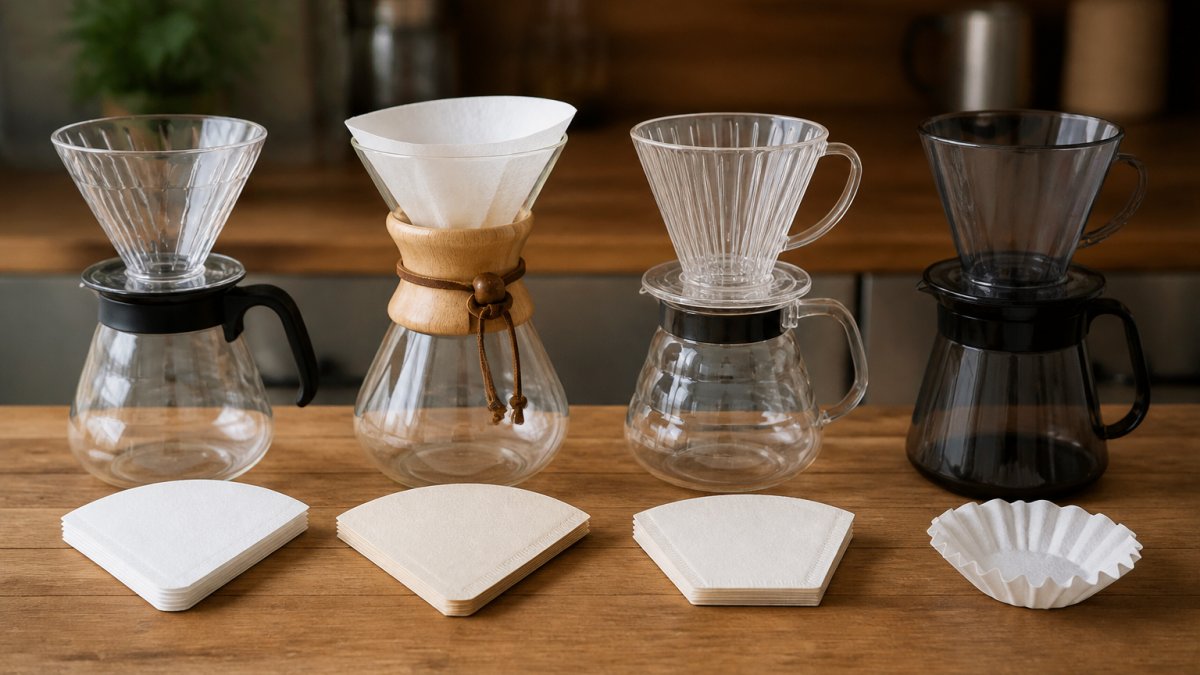
When a filter almost fits
Fix a near-miss rather than tolerate it. If a paper filter is slightly tall, fold the top edge down evenly rather than crumpling it. If it's slightly narrow at the base, don't force it, because creases channel water; return it and size up. For reusable filters, check the manufacturer's compatibility list by brewer model before buying.
Best Coffee Filter for Pour Over Brewing
Pour-over brewing is a manual method giving you control over water temperature, pour speed, and brew time, and the right filter affects how water moves through the grounds. We recommend paper cone filters for the cleanest cup, letting you taste the full complexity of specialty coffee while trapping oils and sediment for a bright, clear brew.
When brewing pour-over coffee, use a paper filter and water just off the boil, around 195 to 205 degrees Fahrenheit, to bring out complex sweetness and rich notes.
How Filter Choice Affects Flavor and Brew Quality
Most guides stop at "paper is clean, metal is rich." That's true but not useful when your cup tastes wrong and you're unsure whether the filter, grind, or pour is to blame. Here's what the filter does versus other variables, plus a troubleshooting path.
What the filter physically removes
A coffee filter is a particle and oil barrier; its pore size and thickness decide how much fine sediment and oil reaches the cup. Paper has the tightest pore structure, holding back most fine particles and a large share of oils for a cleaner, brighter cup, though thicker paper slows drawdown. Metal mesh has larger openings, letting oils and some fine particles through for body and texture but sometimes a gritty layer. Cloth sits between the two, catching more than metal but passing more oil than paper.
A controlled way to compare materials
To judge filter effect honestly, hold every other variable constant: use the same coffee, grind setting, dose by weight, and water temperature; brew the same volume and time each drawdown; taste blind if you can, noting clarity, body, sweetness, and any grit or papery note; and repeat once, since a single cup is noise. Most tasters find a consistent pattern rather than a dramatic one: paper reads brighter and thinner, metal heavier and rounder, cloth in the middle.
Troubleshooting: is it the filter or the brew?
Diagnose a cup that tastes off before blaming the filter. Weak, watery, or sour: check for bypass first, since a too-small or poorly seated filter lets water run around the grounds; if the fit is good, tighten the grind slightly. Bitter or harsh: the filter is too thick or clogged, or the grind too fine, so loosen the grind or switch to thinner paper. Muddy with grit: sediment is passing the barrier, usually from metal mesh or worn cloth, so move to paper or tighten the grind. Faint papery taste: rinse the paper filter with hot water before brewing. Inconsistent cups: a slightly wrong-shaped filter can channel water down one side, so recheck the fit first.
The grind-and-filter relationship
Filter and grind are a pair. A thin paper filter with a fine grind stalls the drawdown; a coarse grind with wide metal mesh drains too fast and under-extracts. Set the grind to the filter's flow rate, then adjust dose and time to taste, and expect to shift the grind a notch or two when switching filter materials.
A note on health claims
Some sources connect paper filtration with lower levels of certain coffee oils and metal filters with higher levels. Those discussions refer to specific compounds and population-level associations, not guaranteed personal outcomes. Paper removes more oil than metal or cloth, and anyone making a health decision should treat filter choice as one small variable and consult a qualified professional.
Preparation and Maintenance Tips
Proper preparation and care extend filter life and ensure consistent results. Paper: rinse with hot water before brewing to remove loose fibers and reduce papery taste, store cool and dry, and use within the expiration date. Metal: rinse immediately while grounds are soft, brush stuck particles from the mesh, soak in hot water if buildup occurs, dry completely before storing, and replace when the mesh develops holes or tears. Cloth: rinse thoroughly after each use, store in the refrigerator in a container of water to prevent mold, boil weekly to sanitize, and replace every 6-12 months.
Making Your Final Selection
Choosing the right coffee filter comes down to what matters most: taste, convenience, cost, or sustainability. Choose paper filters for the cleanest, brightest cup and simplicity; they're affordable, need minimal maintenance, work with most brewers, and are best for specialty coffee where you want to taste every flavor note.
Precision-roasted beans can perform best with paper or cloth filters that let you experience full complexity. Starting with paper is often the safest bet for experiencing what specialty coffee can offer.
Choosing the right coffee filter shapes your entire coffee experience, affecting taste clarity, body, convenience, and cost. Everything I Need's specialty coffee is roasted with precision thermal mapping to eliminate bitterness and deliver complex sweetness.
Frequently Asked Questions
What types of coffee filters are there?
The three main coffee filter types are paper, metal, and cloth. Paper filters, available in bleached and unbleached varieties, trap coffee oils and fine sediment for a cleaner cup. Metal filters allow oils through, creating a fuller body and richer mouthfeel. Cloth filters offer a middle ground, filtering some oils while remaining reusable. Each type works with specific brewing methods and affects flavor differently.
How do I choose the right coffee filter size?
Filter size depends on your brewing equipment. Basket filters fit standard drip coffee makers and come in sizes like #2, #4, and #6, referring to cup capacity. Cone filters work with pour-over setups and come in #1, #2, and #4 sizes. Check your brewer's manual or measure the filter basket diameter to ensure proper fit. Using the wrong size causes overflow or uneven water distribution, affecting extraction and flavor.
What is the difference between paper and metal coffee filters?
Paper filters trap coffee oils and fine particles, producing a cleaner, brighter cup with less body. Metal filters allow oils and sediment through, creating a fuller-bodied, more robust flavor with higher mouthfeel. Paper filters require replacement after each use, while metal filters are reusable and more sustainable. Paper filters work well for highlighting delicate flavor notes; metal filters suit those who prefer a heavier, oil-rich cup.
Which coffee filter is best for a smooth cup?
Paper filters produce the smoothest cup by removing coffee oils and fine sediment that can create bitterness or grittiness. Bleached paper filters are slightly more efficient at this than unbleached. For maximum smoothness, pre-wet your paper filter with hot water before brewing to remove paper dust and improve flow rate. If you prefer reusable options, cloth filters offer smoothness closer to paper while being more sustainable than disposable alternatives.